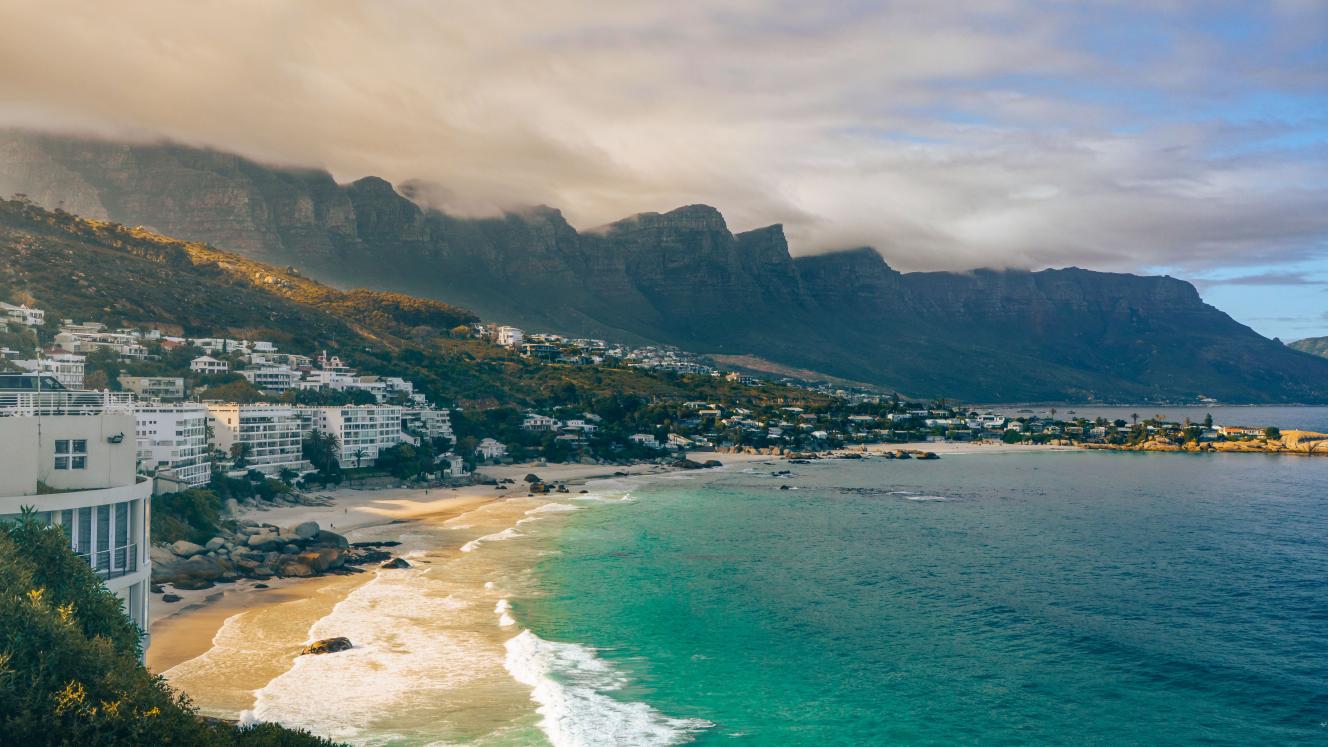
Growing demand for authentic local experiences is not necessarily translating into greater opportunities for small tourism businesses with high rents, established visitor circuits and perceptions about safety resulting in concentrated tourist spend in Cape Town’s traditional tourism hubs.
City data presented by the Mayoral Committee Member for Economic Growth and Tourism at the City of Cape Town, James Vos, shows that tourism contributed approximately R24,5 billion (US$1.5 billion) to Cape Town’s economy in 2025. However, Dennis Molewa, Founder of Unexplored Cape Town, argues that the benefits are not being spread widely enough.
“The circle that these tourism benefits move through is small and, wherever revenue clusters that tightly, inequality doesn't just persist, it deepens,” argued Molewa.
Small businesses squeezed out
Molewa said Unexplored Cape Town offers food and city tours incorporating a diverse range of restaurants and small businesses. However, rising costs have forced him to change some of his itineraries.
“Minkah and Nazley both sold Cape Malay cuisine inside the Old Post Office. The two kitchens served affordable, home-cooked ‘Kaapse kos’. Both first struggled with high rent and later told me their leases either weren't renewed or the rent increases made staying impossible. Minkah left in August last year and Nazley followed this past March,” said Molewa.
“We rerouted after Minkah left, then rerouted again after Nazley followed her in March, replacing both stops with a different South African food business.”
According to Molewa, they offered authentic food experiences to his foreign tourists while introducing District 6 history and the local community.
“These businesses only survive by changing who they serve, pricing community customers out and prioritising foreign visitors who can pay more for the same food.”
However, Molewa stressed that these pressures are not limited to businesses serving lower-income communities as independent cafés and restaurants in more affluent tourism areas also face challenges.
“Many higher-priced artisanal food businesses make real contributions of their own: employment, training in valuable artisan skills and, in some cases, genuine historical narrative,” he said. “I've seen plenty of these businesses struggle too, especially those that rent rather than own.”
The authenticity paradox
Molewa believes there is also tension between growing demand for “authentic” and concerns about safety.
“Many visitors are genuinely tired of inauthentic, staged or sanitised experiences but the same traveller often arrives with real anxiety about African cities. It’s a demand to get close to something ‘authentic’ while still being kept at a safe distance from it.”
He argued that this can limit exposure to smaller tourism businesses outside established visitor circuits.
In his Tourism Month speech, Vos acknowledged that small and emerging tourism businesses are at the heart of the visitor economy, noting that government must continue creating opportunities for businesses to learn, connect and grow.
“City service providers such as Cape Town Tourism support small businesses and entrepreneurs with training, mentoring, accreditation support and connections to established operators and trade partners,” Vos told Tourism Update.
He explained that the city’s strategy focuses on educating, engaging with and creating an environment that enables small tourism businesses through initiatives like the Learners Lounge educational workshops and the Local Tourism Forum, which offers tourism operators a platform to engage with government to improve its tourism policies and strategies.
“While demand for trading opportunities in high-footfall locations often exceeds available space, the city continually assesses opportunities to improve trading environments and support inclusive access to economic opportunities within the broader public realm,” said Vos.
However, Molewa emphasised that the tourism trade is also guilty of perpetuating limited visions of South African authenticity in their offerings.
“Carefully escorting tourists within a certain bubble of Cape Town to avoid contact with the real population and city altogether or squeezing in a single ‘authentic’ element here and there is not enough. We need to do better.”
Many tourist guides, DMCs and travel agents have unrealistic hygiene concerns about informal and small African businesses, which creates creating a gap between what’s officially required and what is customary across the continent, Molewa added.
“As tourism professionals, we need to stop feeding those pre-conceived ideas with fear-mongering because the current model is structured in a way that rewards exactly that fear rather than addressing it. As long as visitors feel safer staying inside a curated, escorted circuit, tourism revenue keeps concentrating with the handful of operators who control that circuit.”
Beyond the hotspots
Vos revealed that his ambitions for the new Cape Town Tourism strategy include prioritising the inclusion of small businesses and diversifying Cape Town’s tourism offering.
“We need to encourage visitors to stay longer, experience more and explore more of our city. Table Mountain, the V&A Waterfront and our other iconic attractions will always be important gateways into Cape Town but they should also be gateways to everything else our city offers,” he said.
“It means creating pathways into places such as Langa and Gugulethu and supporting township tourism and other emerging products. This is not about replacing our traditional attractions. It is about adding more to the basket.”
Tourism must benefit more communities across Cape Town, added Vos “Not because our established tourism areas have done anything wrong but because our city has so much more to offer. That requires us to get the mechanics right.”