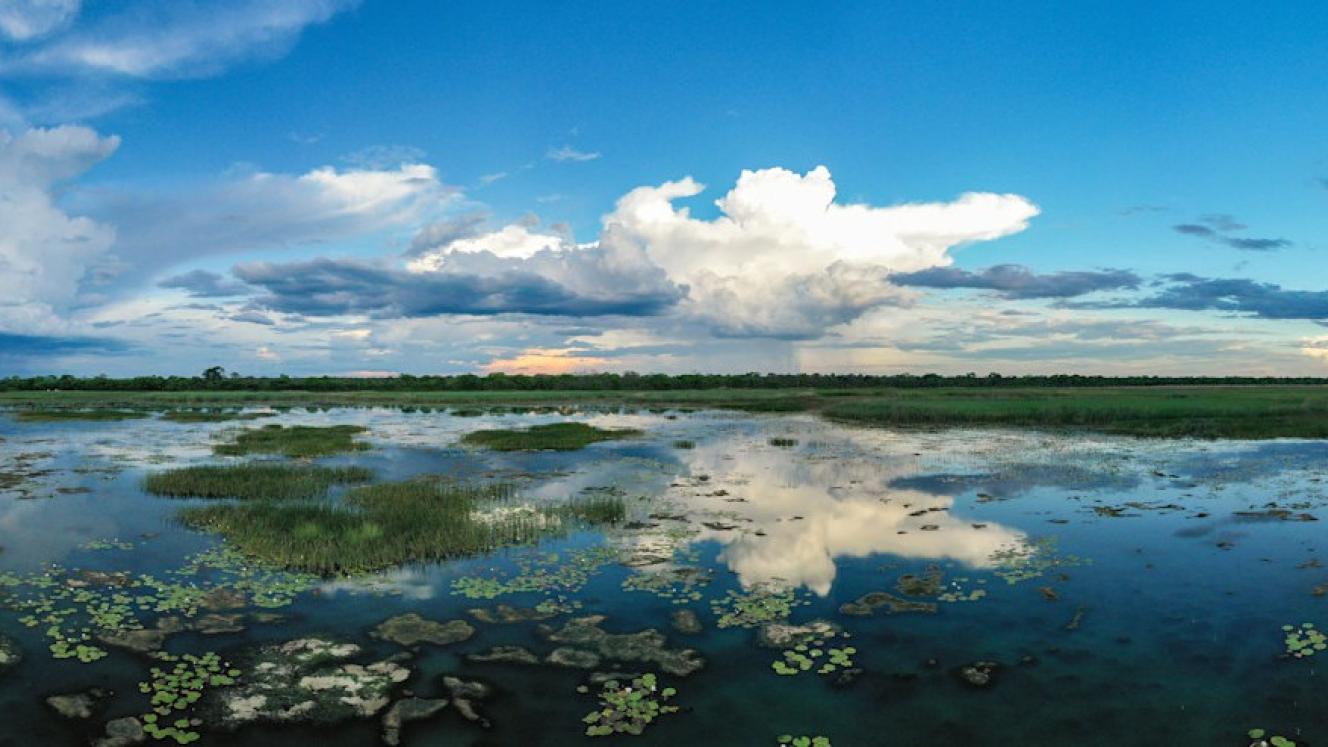
The headwaters of the Okavango Delta are now officially protected after the declaration of a more than 53 000 km2 Ramsar wetland site in the Angolan highlands.
Angola designated the country’s first-ever Wetland of International Importance – Lisima Lya Mwono – in January.
In the central and southeastern highlands, the site is home to the Angolan Highlands Water Tower, which supplies 95% of the Okavango Delta’s water.
Ramsar pointed out that the site’s groundwater system supports extensive Miombo forests and peatlands across an area of more than 110 000 km2.
In addition to hosting rare and threatened wildlife such as cheetah, lion, African wild dog and the critically endangered giant sable, the site holds exceptional freshwater diversity with at least 18 endemic or near-endemic fish species – several may be new to science.
“Lisima Lya Mwono plays a central role in safeguarding biodiversity and maintaining hydrological systems of regional and global significance. Water abstraction and unspecified development are current threats to its ecological character,” Ramsar states.
The National Geographic Okavango Wilderness Project, in collaboration with De Beers, played a critical role in conducting research to facilitate the designation through the Okavango Eternal project.
Ian Miller, Chief Science Officer at the National Geographic Society, said the designation has been years in the making.
“This is a testament to the power of collaboration between governments, organisations and local communities who have stewarded this ecosystem for millennia and our partners through Okavango Eternal. Their rigorous scientific research, preservation of traditional knowledge and storytelling about the importance of these water resources helped raise the profile of the critical ecological and cultural importance of this area.”
The designation was the first of many actions needed to achieve the goal of permanent, sustainable protection for the Okavango Basin, Miller added.