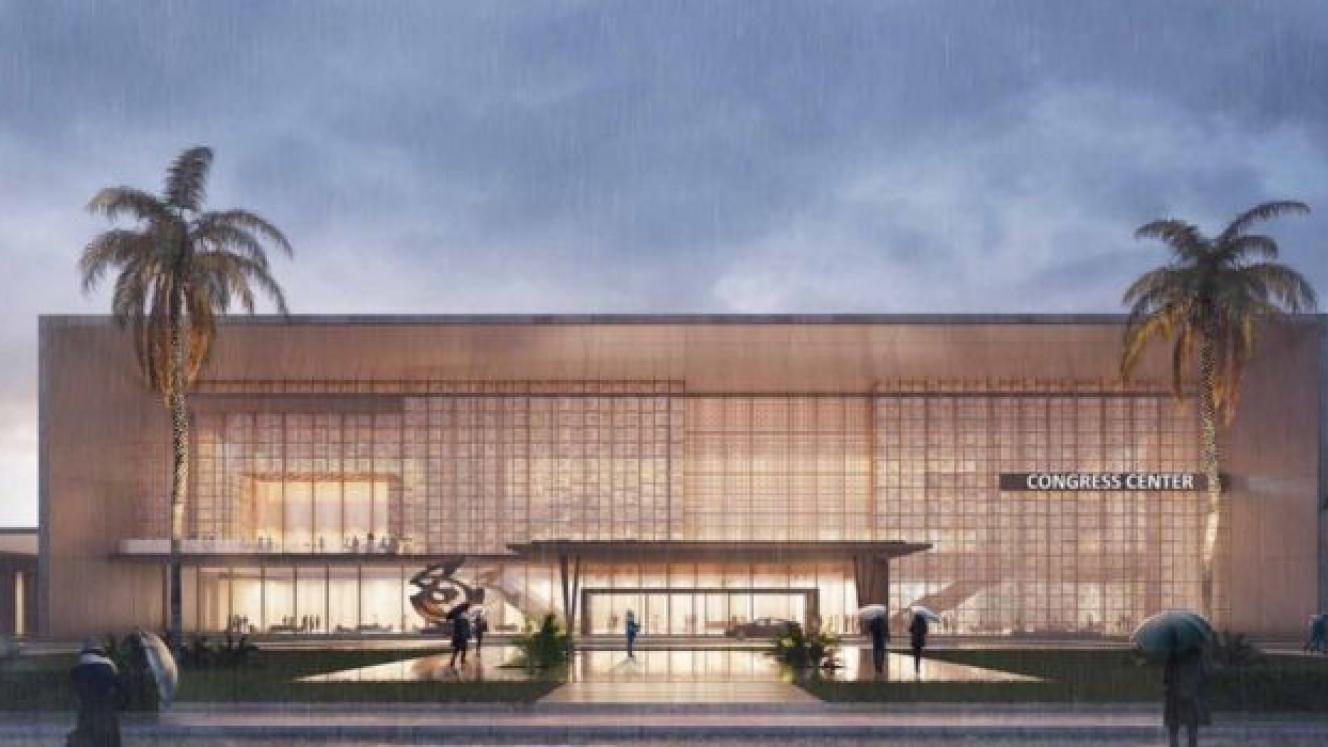
Kenya’s ambitious plan to transform Nairobi into one Africa’s leading conference hubs is beset by challenges due to delays, rising costs and procurement controversies surrounding the Bomas International Convention Complex (BICC) project in Nairobi.
Initially marketed as a game-changing investment for Kenya’s MICE sector, the BICC was envisioned as a facility that would complement the aging Kenyatta International Convention Centre (KICC) and finally elevate the country into direct competition with Rwanda, South Africa and Morocco for high-value global summits and conventions.
However project costs have ballooned beyond Sh42 billion (US$324 million), construction delays persist and Parliament has intensified its investigations into the project’s funding and procurement model.
Tourism Cabinet Secretary Rebecca Miano recently received a 48-hour ultimatum to appear before Parliament to explain the funding structure, operational framework and implementation strategy behind the massive redevelopment project. Members of Parliament are questioning how billions were committed to the project before full parliamentary approval and why procurement processes allegedly bypassed competitive tendering procedures.
Auditor-General Nancy Gathungu has already flagged what lawmakers describe as irregular and illegal procurement practices, particularly concerning direct procurement and the use of Tourism Fund resources without adequate oversight. Legislators are also demanding disclosure of subcontractors involved in the project amid fears that politically connected firms may have benefited from opaque tendering processes.
The controversy comes at a critical moment for Kenya’s tourism sector, particularly conference tourism, which has emerged as one of the fastest-growing contributors to the economy. In 2024, Kenya recorded approximately 2.4 million international arrivals with more than 643 000 visitors coming specifically for conferences, exhibitions and business events.
Stakeholder concerns
MICE industry players argue that the country has consistently underperformed despite its strategic advantages. Association for Kenya Business Events Secretary General Jeffers Miruka says the delays surrounding the BICC and the stalled operationalisation of the Kenya National Convention Bureau have cost Kenya valuable opportunities on the global stage.
According to Miruka, the most visible casualty of the delays was the relocation of the highly anticipated Africa-France Summit, which Kenya hoped to host as a showcase event for the new convention complex.
“The Africa-France Summit was supposed to become Kenya’s defining MICE moment,” Miruka said. “But, because the convention infrastructure could not be delivered on time, the country lost an opportunity to demonstrate its capacity to host one of the continent’s biggest multilateral gatherings.”
He noted that the original completion target for the BICC has been pushed to September 2026, significantly behind earlier projections that informed Kenya’s aggressive conference tourism marketing strategy.
Miruka argued that the delay has broader implications beyond a single summit.
“Conference tourism is highly competitive. Countries bid years in advance and international event organisers look at infrastructure certainty, operational readiness and government coordination,” he explained. “When timelines keep shifting, Kenya’s credibility in the global MICE market is weakened.”
Miruka also pointed to the escalating cost of the project, which has reportedly risen from an initial estimate of Sh31.5 billion (US$243 million) to over Sh42 billion (US$324 million). Analysts attribute the increase to inflation, project redesigns, delayed implementation timelines and administrative restructuring. Critics, however, argue that poor planning and procurement inefficiencies are equally responsible for the ballooning costs now being borne by taxpayers.
For decades, the KICC remained the country’s flagship conference facility despite being more than 50 years old. While the iconic tower remains a symbol of Nairobi’s conference tourism legacy, it no longer meets the scale and technological demands of modern global events, according to stakeholders.
Miruka said Kenya relied too heavily on KICC while regional competitors aggressively modernised their convention infrastructure. “The reality is that KICC, despite its historical significance, cannot carry Kenya’s MICE ambitions alone anymore. Countries like Rwanda invested early, modernised quickly and built integrated convention ecosystems around hotels, technology and aviation connectivity.”
Labour issues
As controversy surrounding the BICC intensifies, the project also faces labour-related challenges. In March and April 2026, workers at the construction site staged protests over alleged fatalities, lack of safety equipment and unpaid wages. More than 200 workers reportedly faced contract terminations instead of compensation, which triggered work stoppages and road blockades around the site.
Despite mounting criticism, supporters of the BICC insist the long-term economic gains will outweigh the current turbulence. Tourism officials argue that, once completed, the facility will significantly increase Kenya’s ability to host large-scale international conventions, stimulate hotel investments, create employment opportunities and increase foreign exchange earnings.