The Greatest Wildlife Photographer – Kenya competition has unveiled its October 2025 finalists, spotlighting striking images of Kenya’s biodiversity while raising funds for conservation organisations.
Proceeds from the initiative support key conservation partners including the Elephant Queen Trust, Ewaso Lions, Grevy’s Zebra Trust, Kenya Bird of Prey Trust, Mara Elephant Project and the Pangolin Project.
The competition continues monthly, offering a platform for amateur and professional photographers to contribute to wildlife protection through visual storytelling. The winners of this year’s competition will be announced on November 30.
Here are the finalists for October 2025:
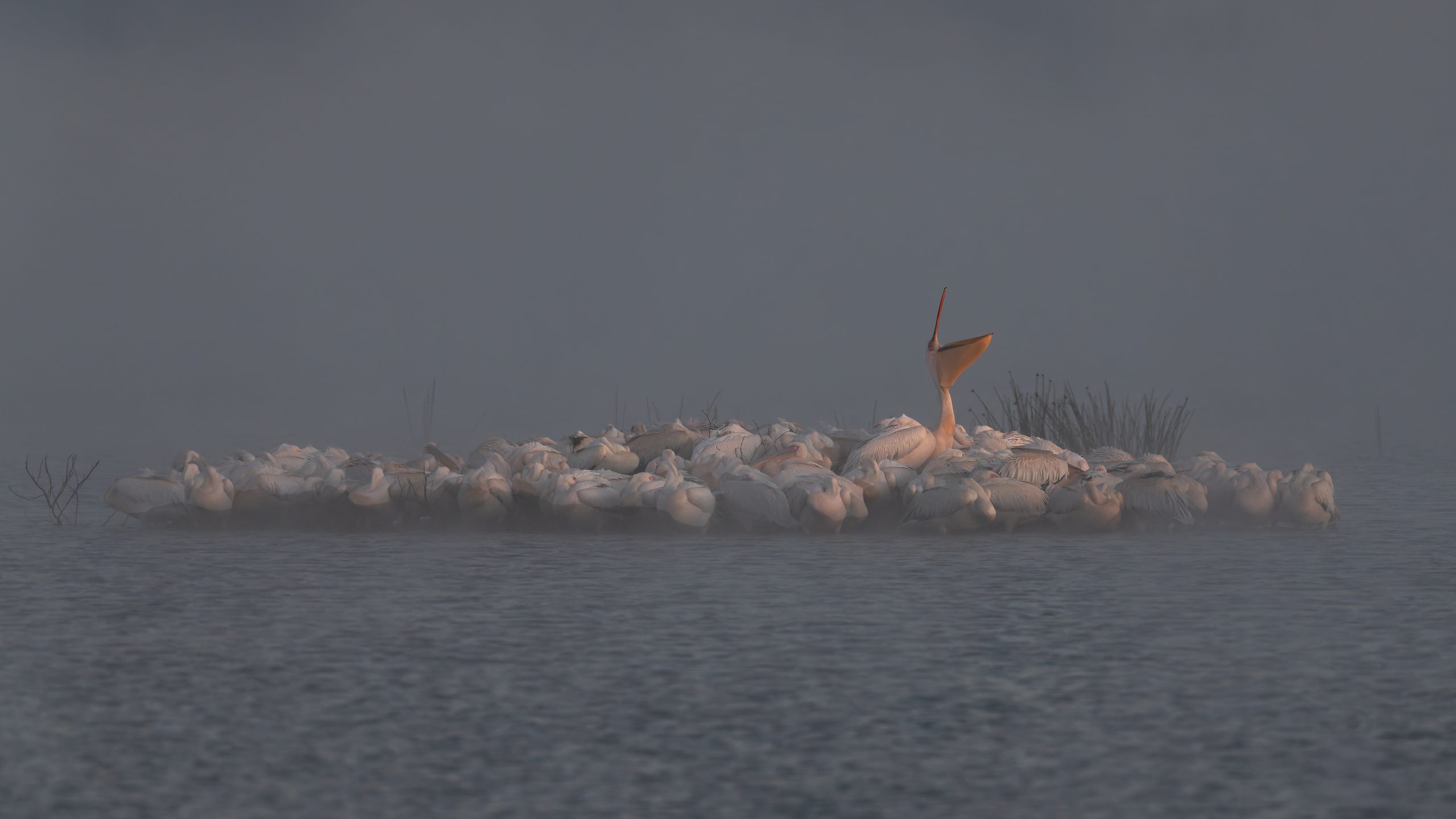
“The morning was still and shrouded in a soft, silver mist when I came upon this gathering of great white pelicans resting on the quiet waters of Lake Nakuru. Only one bird stirred, stretched its neck and opened its beak to greet the day as though breaking the silence of dawn itself. In that fleeting moment, serenity and movement coexisted and I felt a quiet awe watching life awaken from the fog. To capture the scene, I chose the lowest angle possible from the safari car, allowing the viewer’s eye to rest on the single awakened pelican rising above the group. The composition relies on simplicity – an island of life adrift in a sea of mist. I used a telephoto lens to compress the distance, bringing intimacy to a distant, tranquil world without disturbing the birds. I hope viewers feel the same calm and reverence I experienced in that moment – a reminder of nature’s quiet poetry – where even a single gesture can illuminate the stillness of the world.”
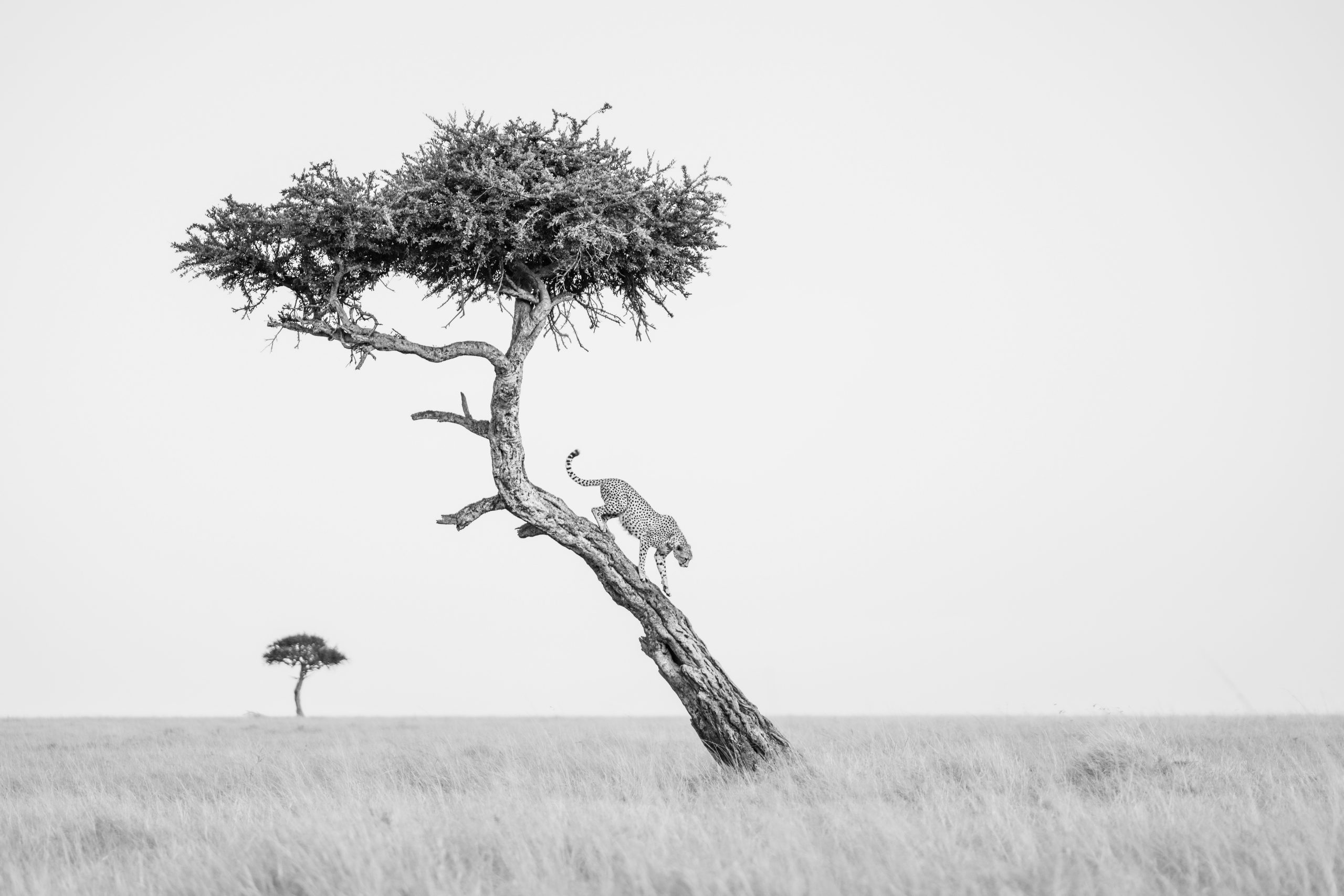
“These moments are hard to beat. The brief moments when everything comes together and the days and weeks spent driving round the Maasai Mara pays off. I positioned our vehicle with the tree off in the distance, thinking that, if he climbed the tree from this angle, he would stand out against the sky. Watching Milele walk towards the tree, I was hoping desperately that he was going to climb up to get a better view of any prey in the area. In the blink of an eye, he was at the top and marking his territory before heading back down into the long grass.”
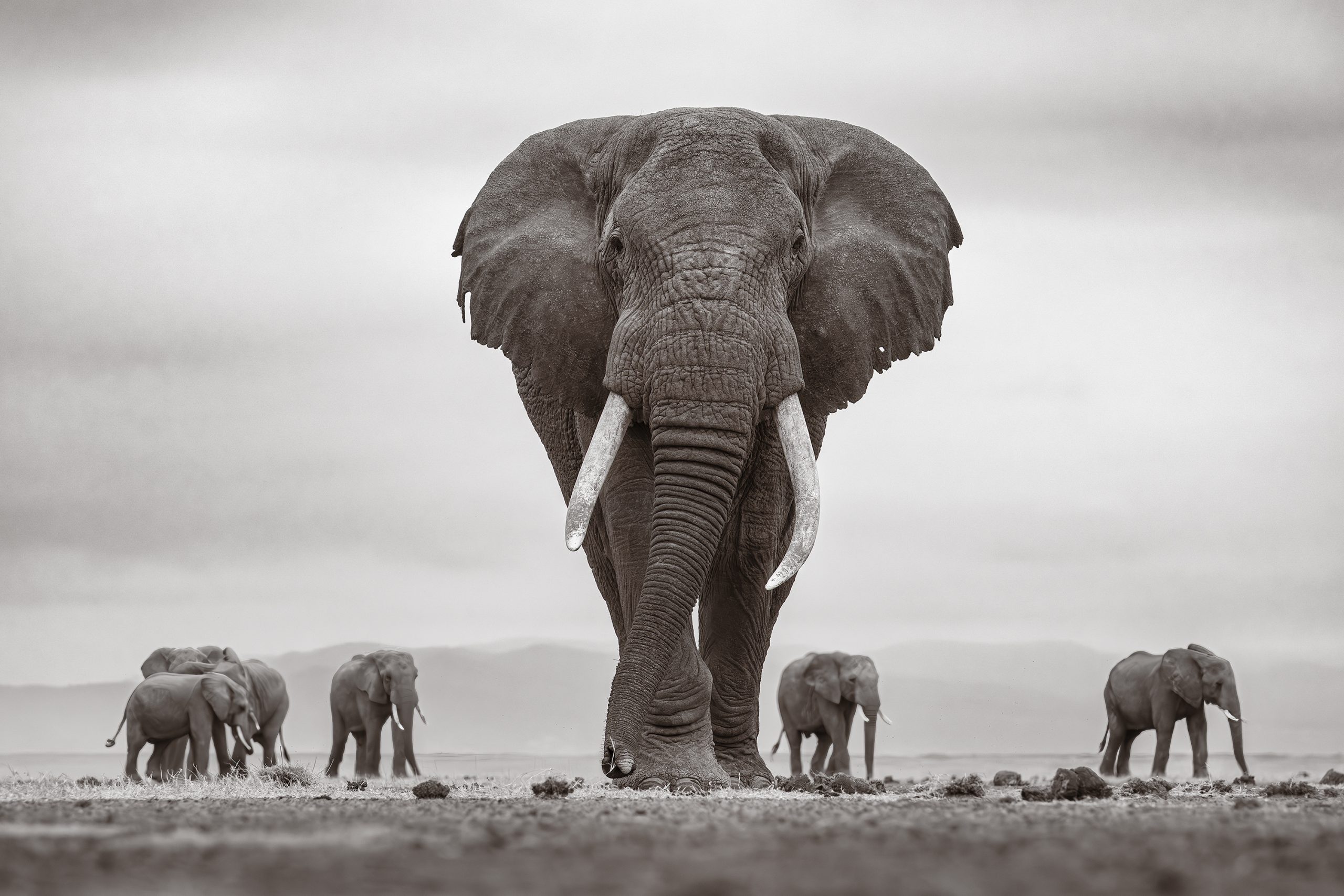
“This massive bachelor male was travelling across Amboseli’s dry lake bed with a group of other bachelor males. My goal was to capture him in the foreground with the rest of his herd behind him, using the close perspective to accentuate his immense stature. Each photo opportunity was flawed as the other elephants were either too tightly spaced or their bodies overlapped with his. Finally, a gap opened and allowed me to take a properly composed image.”

“This image shows Giza in one of the most striking settings I’ve ever seen her in: standing in a field of plume grass, the soft purple tones blending with the deep green of the Laikipia bush. The light was perfect: warm, clean and rich, making the whole scene glow. What I love about this photograph is how the colours almost seem painted, the cool purple grass, the lush green backdrop and her dark coat standing out perfectly between them. It’s not a scene you normally associate with a leopard – open, soft and full of colour but that’s what makes it so special. She was relaxed and calm, completely at ease in the open. There’s a quiet balance to the image – strength and beauty, predator and peace. It’s one of those rare moments that reminds me how wild Laikipia can surprise you, even after years of watching the same cat.”
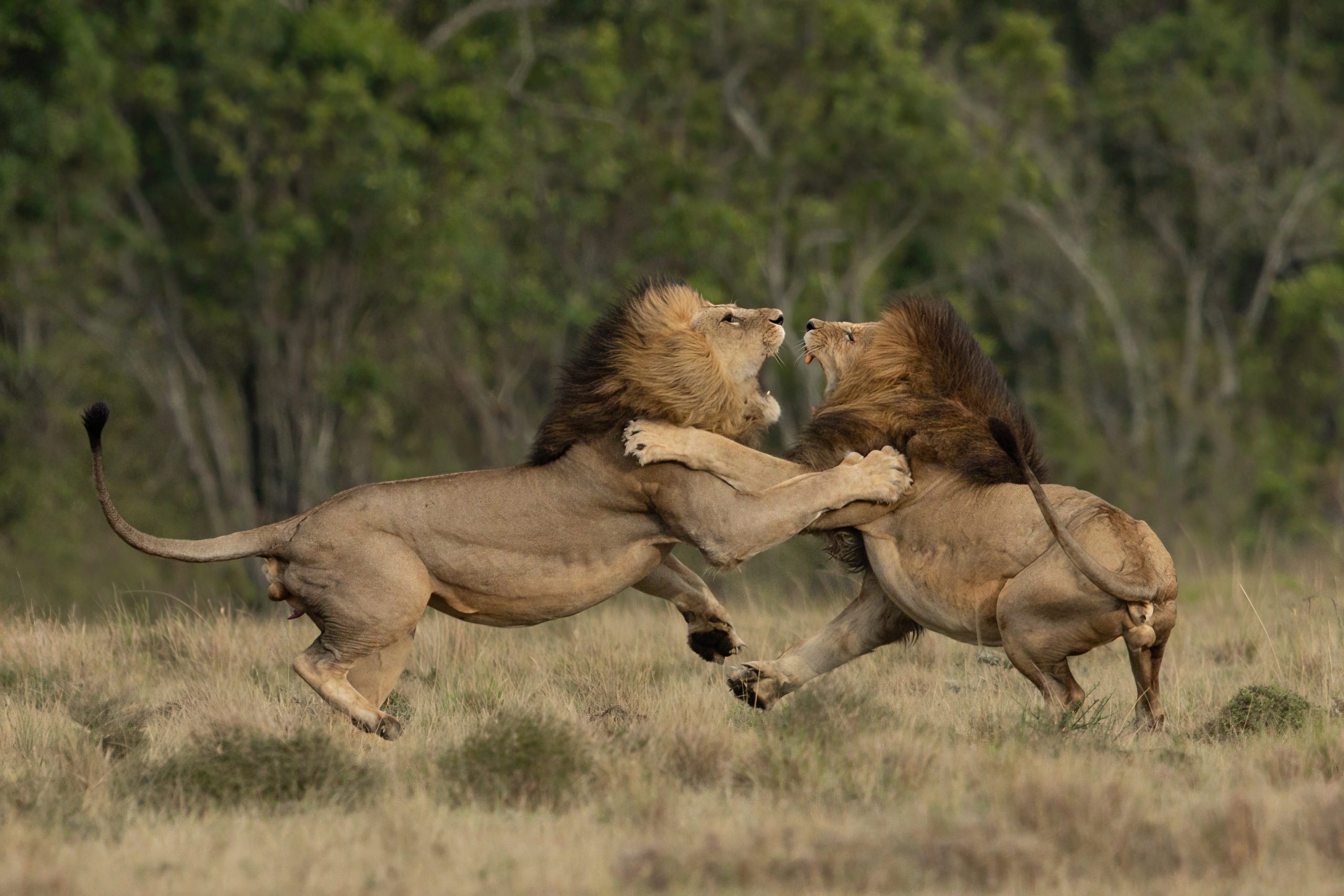
“Very early in the morning, we came across a magnificent male lion and decided to stay with him for a while – at least until there was a bit more light. Suddenly, two lionesses emerged from the bushes, each trying to win him over with their charms. Although he was clearly impressed by both, he tried to satisfy the desires of at least one of them. The other lioness didn’t appreciate that at all and repeatedly attempted to interrupt their intimacy. In the end, the rejected lady turned her attention to his brother who had been keeping his distance the entire time. The older brother didn’t like that idea one bit and made his feelings very clear in a brief skirmish. Hands off! I’ve witnessed quite a few lion fights over the years but never have all the conditions come together so perfectly: beautiful light, a stunning background, no distracting grass or branches in the foreground and both lions perfectly in frame.”
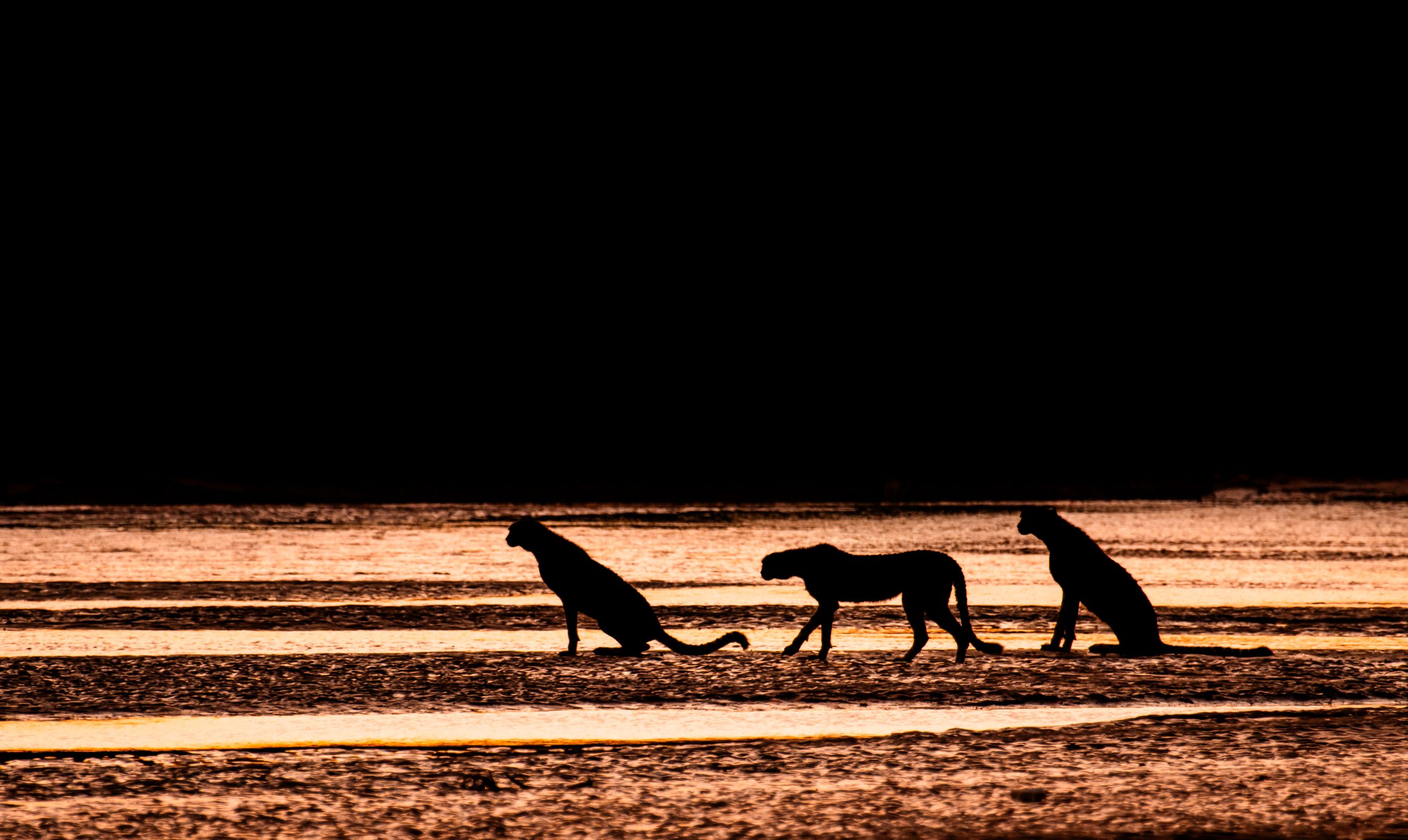
“We spent three unforgettable days following three magnificent cheetahs – sleek, fast and perfectly in sync with one another. Each day, we learned a little more about their rhythm – how they moved, rested, hunted and read the land like a map written in instinct. On the final evening, we found them finishing off a fresh kill. The air was thick with the sounds of the wild – the rustle of vultures nearby, the soft growls between brothers. As the last light began to fade, we made a quiet decision: instead of following, we’d predict. We had studied their patterns and our gut told us they would head toward the river. So we drove ahead, picked a spot by the dry crossing and waited. The world grew still, the sky painted itself in soft golds and pinks – and then, out of the silence, they appeared. The three of them emerged from the bush, moving gracefully toward the riverbed. We held our breath as they walked halfway across, then paused – perfectly framed by the setting sun. The golden light reflected off the water, wrapped them in fire and beauty. We were the only car there. Just as, the river and the three brothers bathed in sunset. Moments like that can’t be planned, only earned through patience, respect and time spent understanding the rhythm of the wild.”
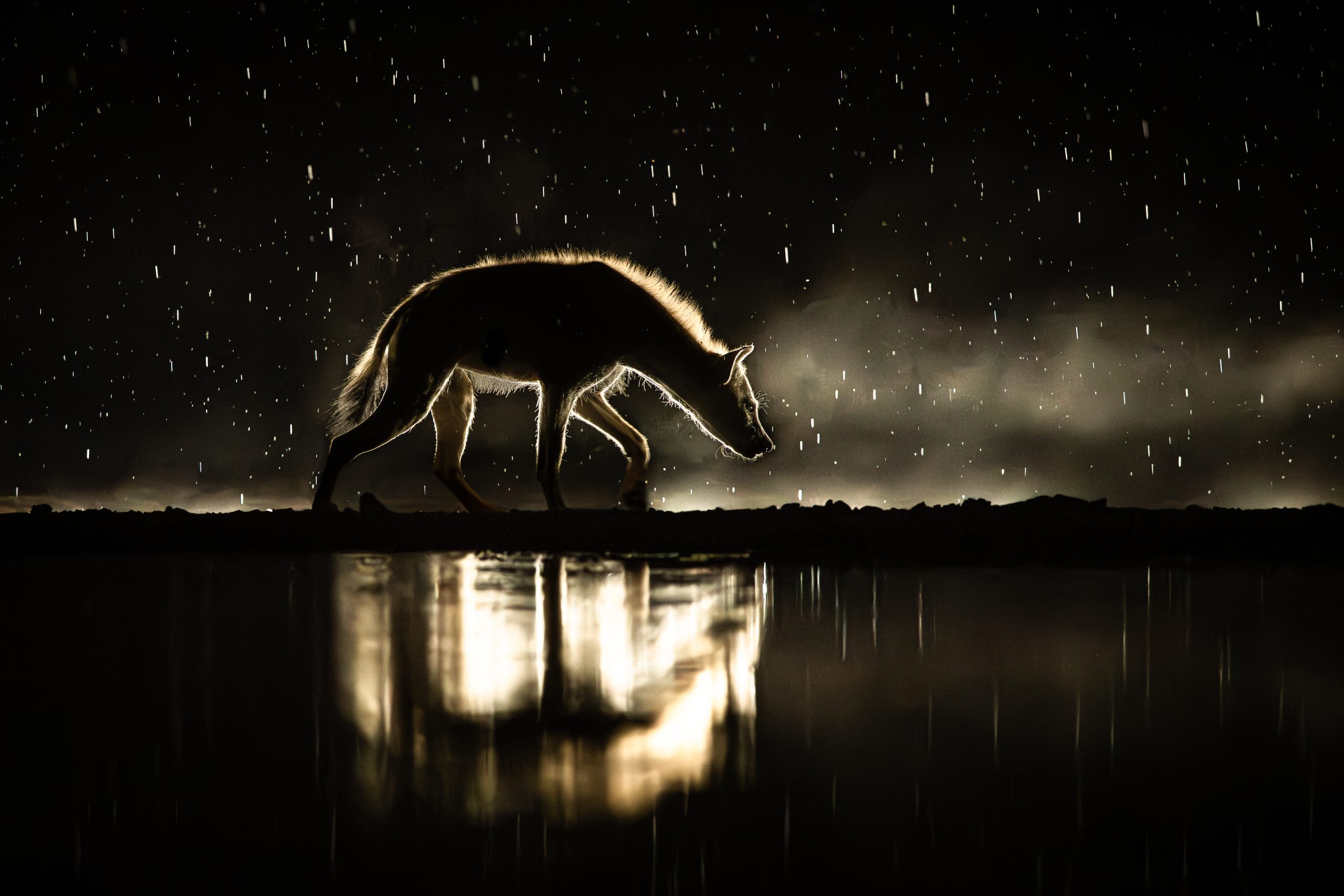
“The Plains Hide at Shompole Wilderness offers a lighting set-up like a rock concert – only with wild animals. However, the opportunities to fully exploit the backlighting are fleeting. The hyenas were aware of the presence of lions, which heightened their wariness. I liked the arched, sloping back and skanky walk, which reminded me of Liam Gallagher of Oasis working the stage.”
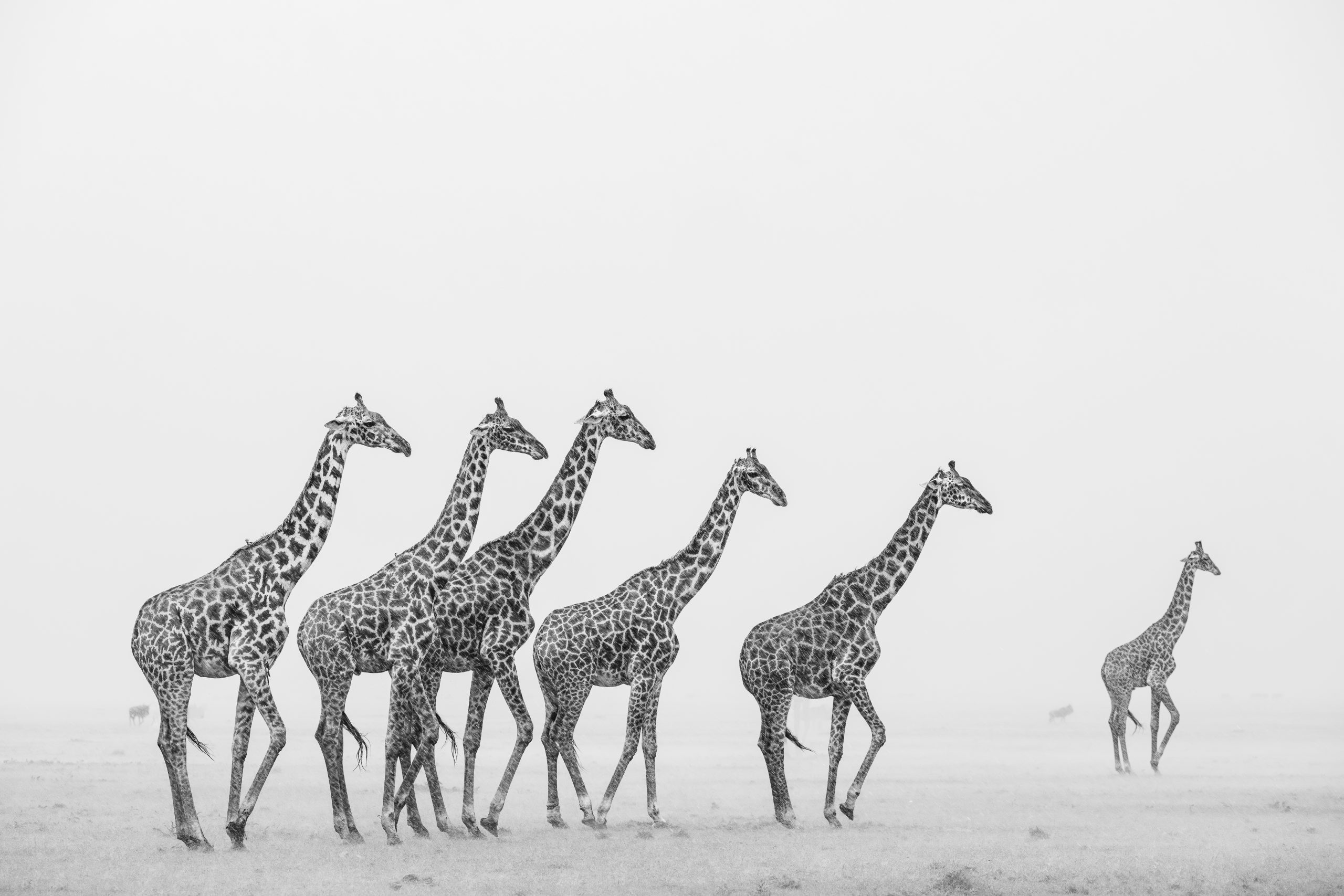
“The rain was starting to intensify when the giraffes began to gather, instinctively turning their backs to the wind and forming this remarkable line. As the storm grew stronger, the world transformed into a whiteout filled with haze and an absence of colour. The air vibrated with the sound of rain. They stood like this for nearly an hour, barely moving except for the occasional bend of a knee. If you look closely, you can see the rain streaking diagonally across their fur – each droplet catching the faint light as it fell. I framed the image wide to let the symmetry and silence of the moment fill the space. Later, I refined the tones in black and white to preserve that feeling of the world falling away, leaving only the storm and the will to endure.”
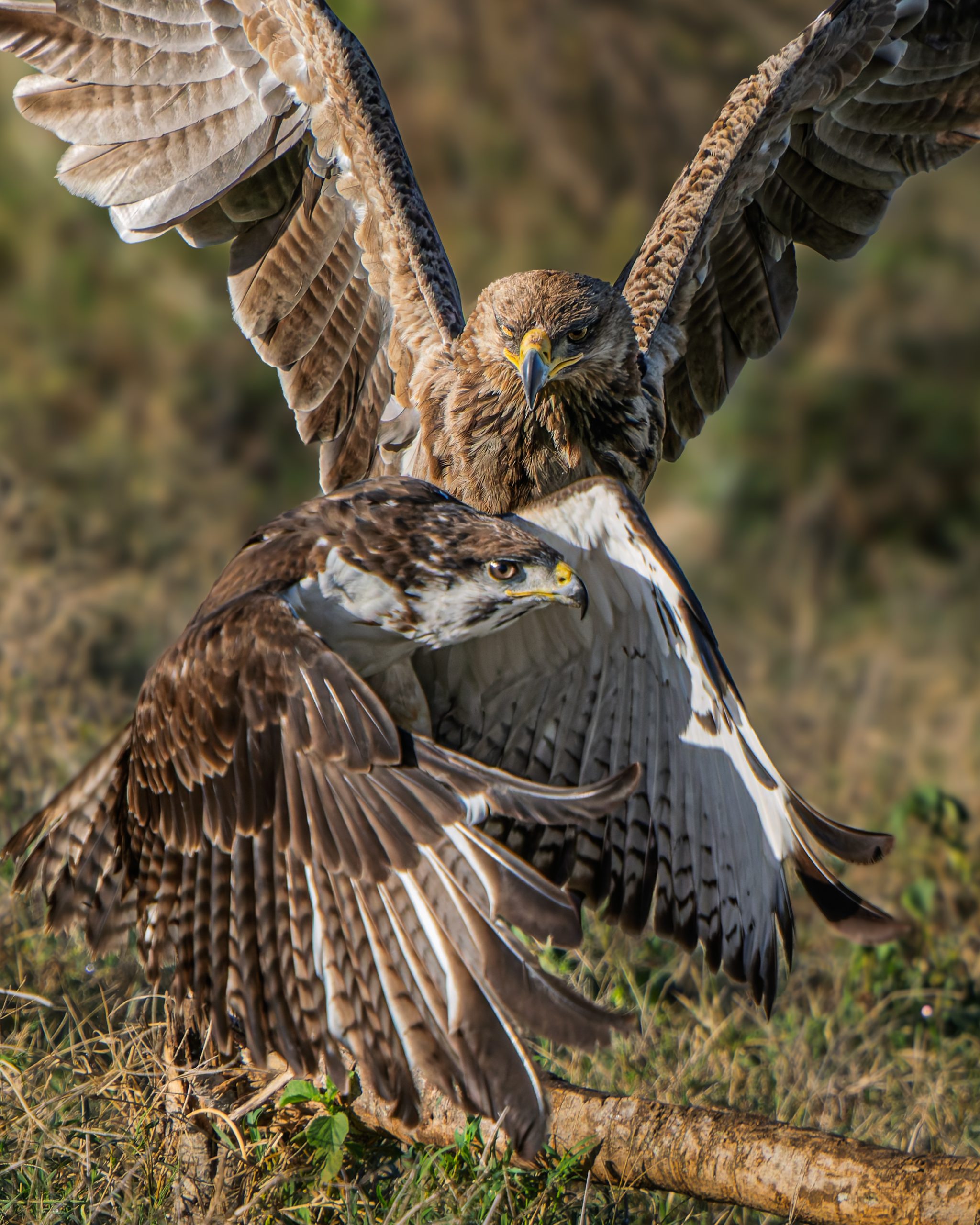
“The tawny eagle, perched and ready to enjoy his kill while an auger buzzard keeps a watchful eye from a tree not far away. The tawny drops the kill. It was all happening fast: the auger buzzard flies over in an attempt to steal the kill, the tawny swoops down from its perch, a squabble develops while the kill is nowhere in sight. My immediate thought was to take a horizontal shot allowing capture of full wingspans but decided a tighter shot in on the faces of the eagles would be better in order to capture emotion.”
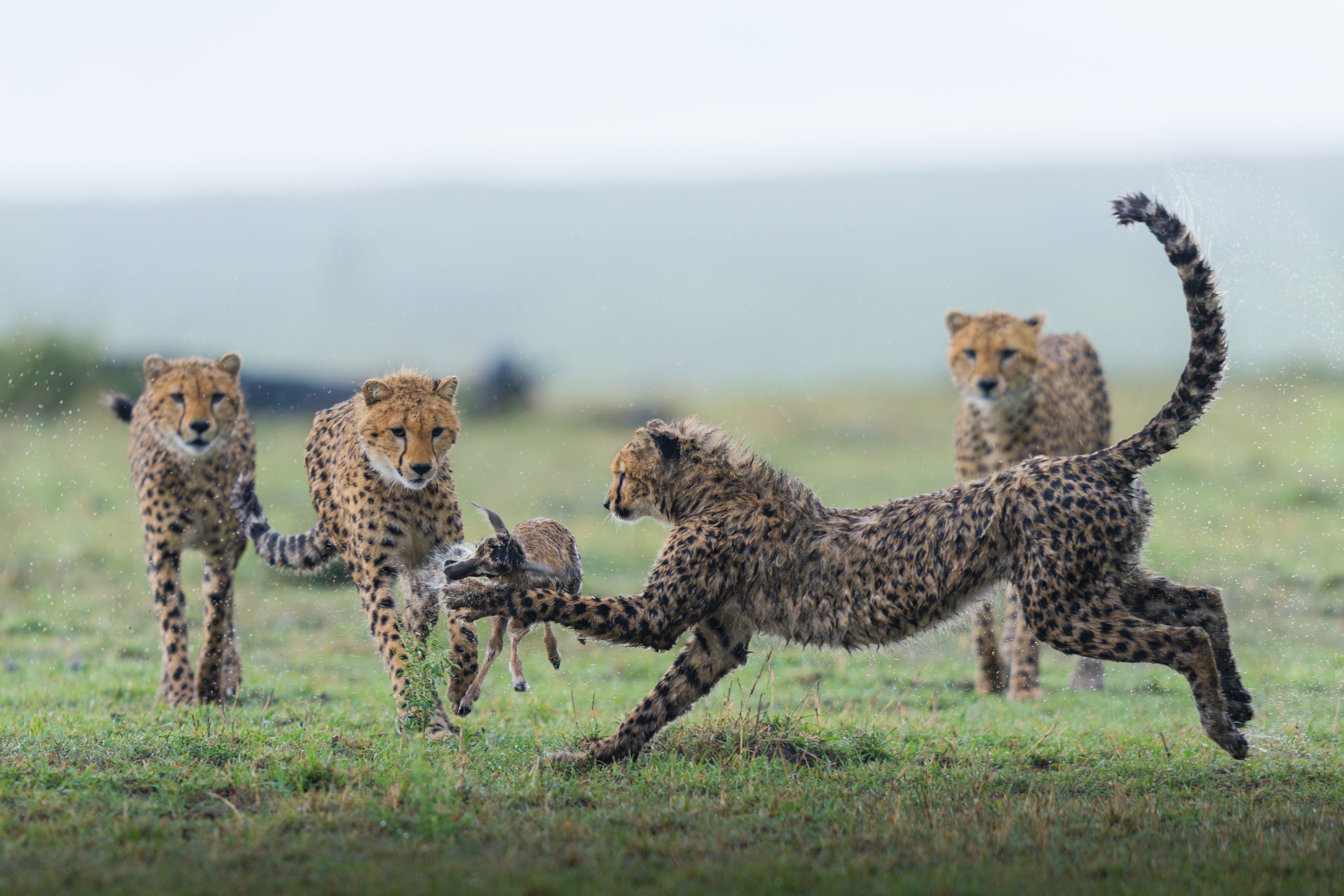
“We spent the entire day with this family of cheetahs then waited out what was possibly the strongest storm I’ve ever experienced in the Maasai Mara. We waited right in front of the mother with her cubs (already juveniles) huddled together and then photographed them interacting as they dried off. When the rain stopped, this small Thomson’s gazelle appeared alone – barely 100 metres from the group. Spotted by big cats, it became the perfect target. The mother let her cubs do the work and the inexperienced ones tried to hunt the gazelle until a direct hit brought it down. It was a very quick moment. I remember my equipment was soaked from the rain that had just ended and all I could think about was getting the focus right – possibly one of the biggest challenges in this type of photography. I’d like the photo to convey the fast pace of the wild, the cycle of life in nature and how difficult it is for animals to survive each day.”