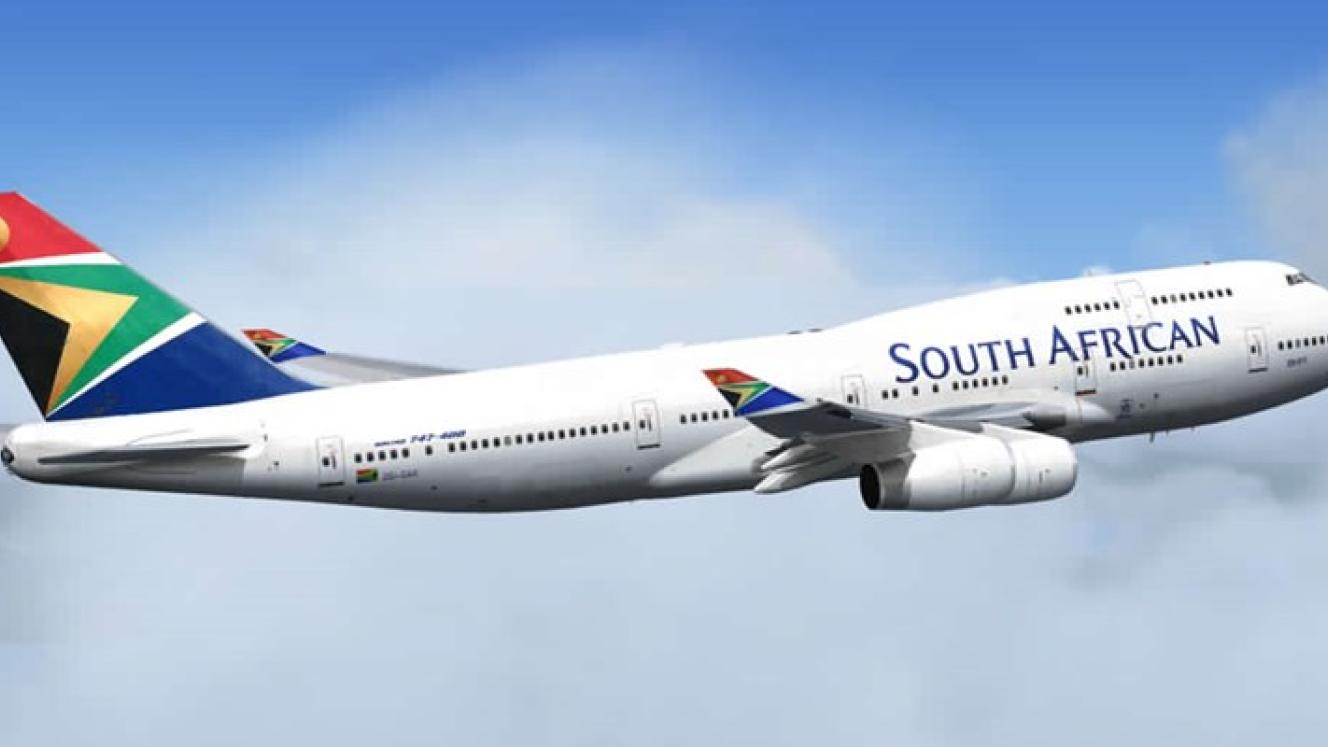
An Inter-Ministerial Committee (IMC) is being established to investigate the viability of merging the State’s aviation assets – SA Express, SAA and Mango Airlines.
Speaking on the back of his first meeting with the new SAA board yesterday (November 7), Finance Minister Malusi Gigaba told media he had asked the new board of the embattled national carrier to investigate the establishment of a corporate structure for all state aviation assets. Once complete and approved by the National Treasury as the airline’s shareholder, President Jacob Zuma will constitute an IMC to examine how the various aviation structures in government will work together to optimise their resources.
“The IMC has not yet been constituted as only the President of the Republic can constitute such a committee, however we have made the request because a number of ministers are needed to fulfil the task of optimising the State’s resources,” Gigaba said.
The Ministers of Public Enterprises, Transport, Finance and Home Affairs were all named by Gigaba as necessary inclusions to the IMC.
How would the merger work?
The issue was that each state airline had different boards, executives and assets that played various roles but were not optimised, said Gigaba.
Part of the turnaround strategy was route optimisation and making sure the right aircraft were on the appropriate routes – even if the customer was not being transported on SAA metal, new SAA ceo, Vuyani Jarana, explained at the briefing. “So it may look like we have reduced frequencies but in fact it is our metal that we have withdrawn and franchise partners are flying our customers to their destinations, using our partners’ infrastructure.”
SA Express, for instance, was a regional carrier that could be considered should SAA decide to establish regional hubs in East and West Africa, added Gigaba. “So if we wanted to deploy assets with capabilities for regional travel, SA Express could provide that. Then you have Mango, which can compete in the domestic space or on shorter regional routes. We need to set out all of these assets and plan how we can best utilise them,” Gigaba said.
Government will also identify which State assets need to be disposed of, then announce them at a later stage. “I have asked SAA to look at immediate assets that can be disposed of in order to fix the airline’s balance sheet, and I await feedback in that regard,” Gigaba added.
Equity partner to be brought in
Once the merger has been completed, TAM understands that a private equity partner would then be brought in to provide capital for the airline.
At the briefing, Gigaba confirmed that SAA was looking at getting a strategic equity partner because it would ultimately need not only private-sector capital to strengthen the airline but also expertise to move SAA back to sustainability.
While proposals have already been submitted, no proposals are being considered at present and no partner has been identified yet. “Once we start the process formally we will announce that ‘now we are starting the process of seeking a strategic equity partner for SAA’, and the structures that are going to manage that process will also be announced,” the Minister said.
“Finding an equity partner is not a process you start ‘willy-nilly’,” said new SAA chairperson, JB Magwaza.
“We need to understand what kind of partner we need and what else we need from them besides money, and the board will have to apply its mind along with the airline’s executive committee long before we take it to the Minister and say, ‘this is our thinking in this regard’,” Magwaza said.
Clarification on R10bn appropriation
The remaining R4,8bn of the R10bn bailout allocated to SAA will be transferred to the airline in instalments.
Gigaba explained that Treasury would give SAA R1bn at the end of every month, with the final payment to be made at the end of March, 2018.
Furthermore, the airline’s annual general meeting, originally slated for October 28, has been postponed due to the airline’s failure to finalise its financial statements. “The issues affecting the airline have been seen to and the financial statements have been sent to the Auditor-General, who will provide final opinion by December 7,” Gigaba announced.
The AGM would be held by January 28, he added.