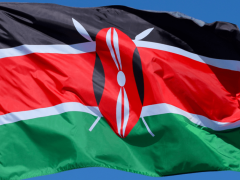
Africa is forecast to be one of the most influential regions in shaping the global economy over the next few decades. However, key challenges include an absence of mid-market tourism products across the continent. This was discussed at the Skift Megatrends 2026 event on top of Table Mountain in Cape Town on January 27.
Skift Founder and CEO Rafat Ali referenced a recent New York Times report stating that, within the next 25 years, one in four young people globally will be African – and Africans are projected to make up one in three people worldwide.
“25 years is not that far away. How many of you remember where you were in the millennium when the clock ticked over from 1999? It’s not that long ago. So, in 25 years, the African demographic will be the dominant culture of the world,” said Ali.
A closer look at the numbers
Adding to this, Skift Senior Research Analyst Robin Gilbert-Jones highlighted shifts already underway. He said Africa has the youngest population of any region globally, with around 60% of Africans under the age of 25, alongside a middle class comprising an estimated 350 million people and growing faster than in any other region.
“Real GDP growth in Africa shows a greater resilience than a lot of these slowing mature markets. So, as growth slows elsewhere, Africa is one of the only regions where GDP momentum is strengthening into the decade. And, of course, inbound tourism in Africa is growing at a rapid rate,” he added.
The ‘missing middle’ problem
Despite these encouraging indicators, panellists at the event warned that Africa’s tourism growth risks being constrained by structural gaps – particularly the absence of a mid-market tourism product across much of the continent.
Air France-KLM Southern Africa Country Manager Wilson Tauro described Africa’s accommodation offering as highly polarised with development skewed towards either ultra-luxury properties or low-quality budget options.
“What’s missing is the mid-segment,” Tauro said, noting that, while countries such as South Africa are relatively well positioned, much of the rest of the continent lacks affordable, quality accommodation that sits between high-end lodges and basic offerings. This gap, he argued, prices out a large portion of potential travellers, including intra-African tourists, and limits volume growth.
From an investment perspective, Goldman Sachs South Africa MD Wafeeq Pandey agrees, describing the mid-market as “absolutely underpenetrated”.
Connectivity, visas and execution
The missing middle is exacerbated by persistent challenges around air connectivity, visa regimes and enabling government policy.
“Access is one of the biggest challenges. In some parts of Africa, people have to take four flights just to get to a destination and that immediately raises questions about viability – for travellers and for investors,” he said.
“We want the top international dollars but we also need to focus on intra-African travel. Countries like Nigeria have 200 million people – that is a sizeable market – but we need to make it easy for people to move. Visa systems across Africa are still blocking the growth we expect to see,” Tauro added.
“One visa takes you to more than 30 countries in Europe. We don’t have that in Africa. If we want to unlock growth, there needs to be more dialogue between governments to understand what works and how we apply it across markets.”
Skift’s full Megatrends 2026 report, which explores these dynamics in greater detail, is available at skift.com/megatrends.