South Africa has designated Agulhas Plain as its 32nd Wetland of International Importance, adding it to the Ramsar List as Site 2587.
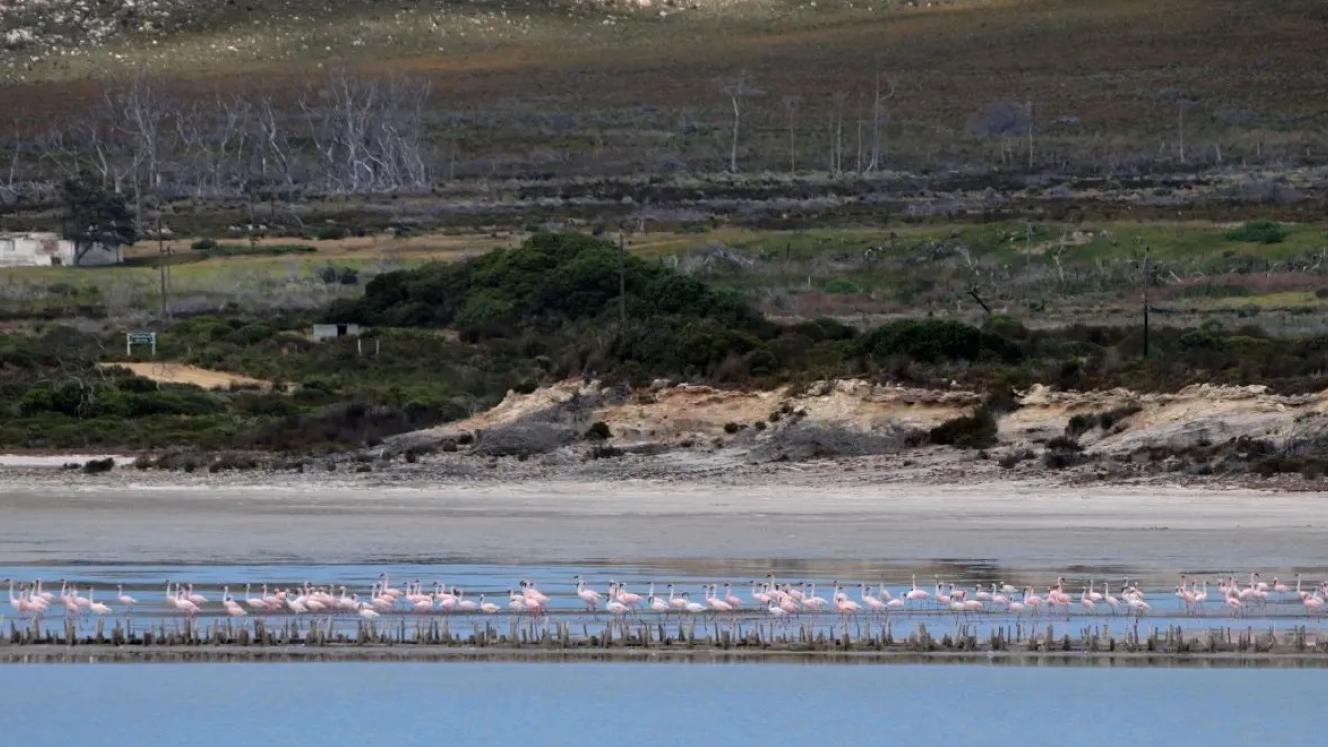
The Ramsar site covers an ecologically significant coastal plain at the southernmost tip of the African continent – on an ancient wave-cut platform where the Atlantic and Indian Oceans converge. The low-lying area includes sections below sea level and features dunes, limestone hills and cliffs.
The landscape supports a wide range of wetland types including Soetendalsvlei, South Africa’s second-largest freshwater lake, as well as floodplains, salt pans, marshes, river systems and estuarine environments.
Agulhas Plain is within the fynbos biome of the Cape Floral Region protected areas – a UNESCO World Heritage Site recognised for plant diversity and endemism. The site supports several species (approximately 960 plants, 144 birds, 68 mammals, 33 amphibians and eight fish), many endemic, dependent on wetland ecosystems.
Threatened animal species recorded at the site include the critically endangered Rose’s mountain toadlet and cape flats frog as well as the endangered maccoa duck. Threatened plants include the limestone pagoda and the bigflower capegorse.
While the site remains in generally good ecological condition, it faces pressure from agricultural activities, invasive alien species, road infrastructure and potential renewable energy developments. A site-specific management plan is being implemented to address these pressures and support the site’s long-term conservation and wise use.