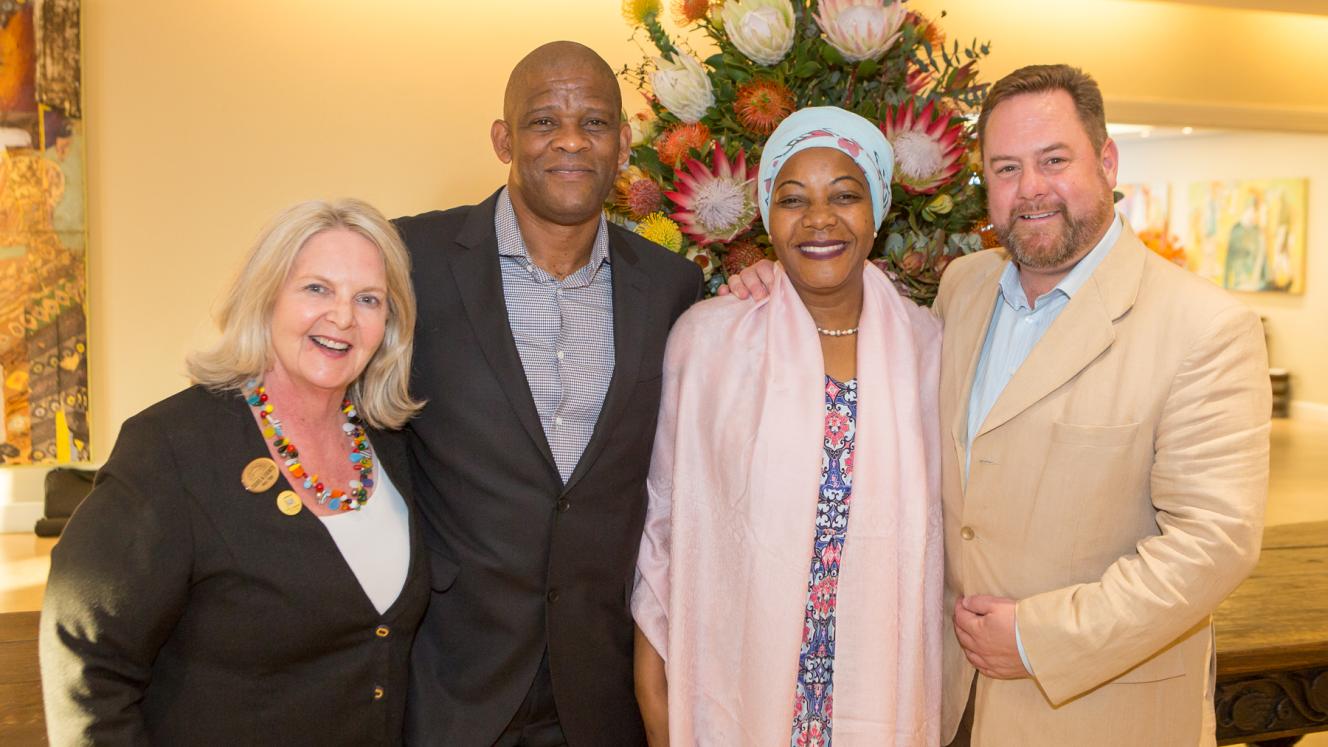
The Business of Wine & Food Tourism Conference saw operators from the Cape’s wine, food and hospitality industries gather in Stellenbosch to gain insights from local and international specialists, and engage in informative discussions about growing revenue and tourism in the Cape Winelands.
Now in its second year, the conference is convened by seasoned travel and tourism specialist, Margi Biggs, who believes travel and tourism could potentially contribute significantly more than it does currently to South Africa’s GDP.
Tim Harris, CEO of Wesgro, the Western Cape’s trade and investment promotion agency, foresees continued growth potential in tourism for the region.
“The Cape Winelands offer a high-quality slow product in a world where time is seen as increasingly rare and valuable,” said Harris.
Rico Basson, Executive Director of Vinpro, a non-profit organisation that represents about 3 500 South African wine producers and cellars, said collaboration was paramount to unlocking value and stimulating growth in the industry.
He said key targets for the industry towards 2025 were building a greater presence in strategic markets, specifically the US and Africa; growing Cape wine tourism to increase visitor numbers by 25%; and increasing Cape wine tourism’s annual direct contribution to South Africa’s GDP from R6 billion (€377m) to R16 billion (€1bn).
Dr Robin Back, a US-based academic who conducted wine tourism research in both South Africa and the US, shared the findings of his recent research study.
“The results indicate that winery tourism does in fact have a positive long-term effect on brand loyalty and purchasing behaviour, but that the strongest effect of positive winery visitation appears to be on brand loyalty, which is shown not to diminish over time.” He also mentioned the significant role of frequent and continuous communication with those who have visited, to further strengthen the bond between the brand and the consumer. “Wine tourism should be incorporated into overall winery marketing plans.”
Waterford Estate managing partner, Kevin Arnold said personalised experiences helped wineries form real connections with their guests.
“At Waterford, we’ve found that we sell more wine and build greater loyalty when offering guests not only a tasting, but an experience such as a vineyard safari where they get to taste our wines outside, in the vineyards. Wine brings them through the door, experience brings them back,” he said.