Kenya has formally launched the Tsavo West Rhino Sanctuary, a 3 200 square kilometre protected area that authorities describe as the world’s largest rhino sanctuary. This is an expansion from the former 92 square kilometre Ngulia enclosure and is now home to about 200 black rhino.
The project is expected to generate thousands of jobs while restoring Tsavo’s role as a global stronghold for rhino conservation.
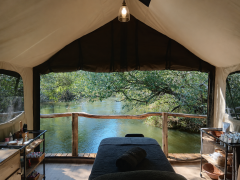
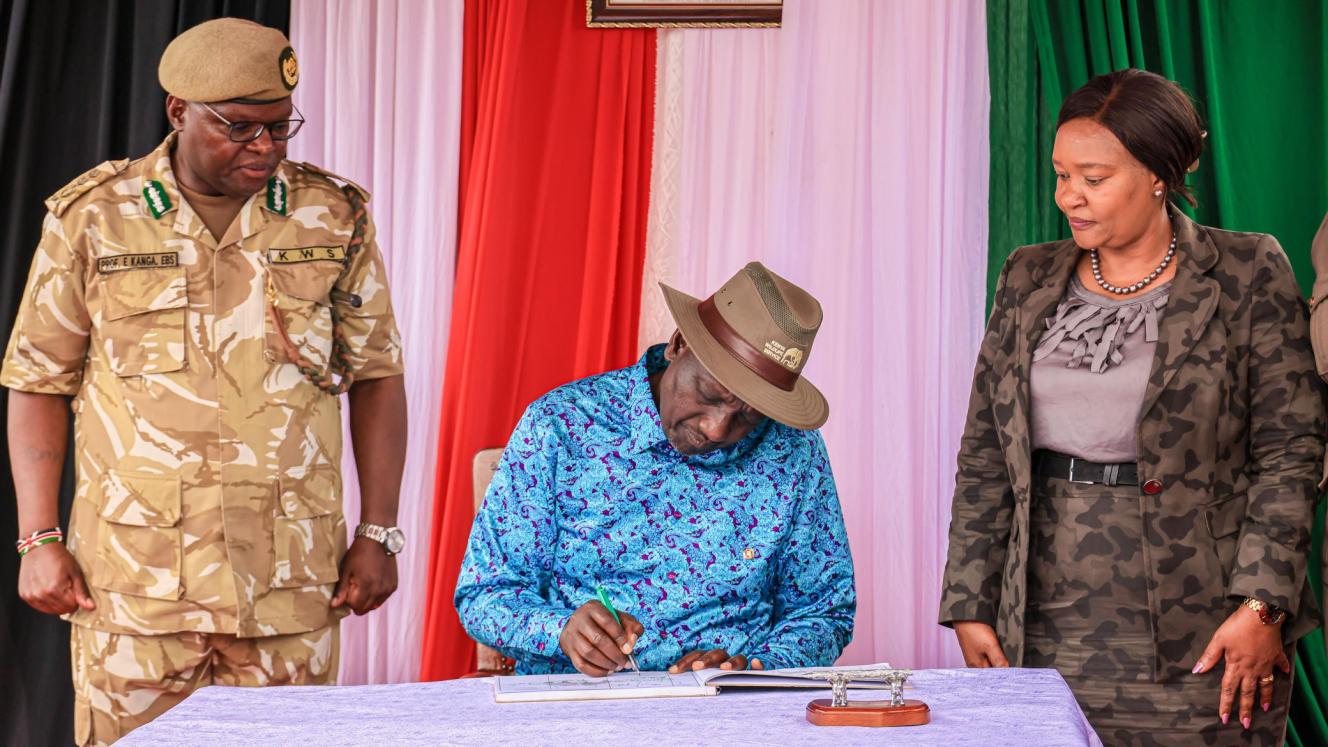
Speaking during the launch, Kenyan President William Ruto said the sanctuary marks a turning point for wildlife tourism in the country. He announced the construction of five high-end hotels inside the sanctuary as part of a new strategy for high-end travellers willing to pay premium rates similar to those charged in the Maasai Mara.
“I have been briefed by the Kenya Wildlife Service that there will be five new hotels built within this park,” President Ruto said. “These will be high-end establishments that will mandate visitors to pay between US$500 and US$1 000 per day. All tourists will now pay top dollar so that revenue can reach the local community.”
Ruto said the government will not allow budget hotels within the sanctuary, arguing that Kenya must “treat conservation as economic investment – not a cost to taxpayers.”
Revenue generated from hotel fees and carbon credits, he said, will be reinvested in wildlife protection, community development and climate-resilient infrastructure across the Tsavo landscape.
Rhino conservation
The sanctuary’s expansion comes at a crucial time. For years, more than 80% of Kenya’s black rhino lived in overcrowded sanctuaries, limiting breeding, causing territorial conflict and threatening the long-term stability of the species. The former Ngulia Sanctuary had already exceeded its ecological carrying capacity, reducing calf survival and increasing stress among breeding adults.
The new sanctuary brings together 150 black rhinos from Ngulia and 50 from the Tsavo West Intensive Protection Zone, forming a genetically strong “founder population”.
Kenya, now home to roughly 1 000 black rhinos is hopeful that the expanded space will accelerate breeding and raise annual population growth from the current 5% to at least 8%.
Kenya’s Cabinet Secretary for Tourism and Wildlife Rebecca Miano, noted that the park once held more than 8 000 black rhinos before poaching in the 1970s and ’80s reduced the population to less than 20 by 1989.
“This expansion corrects past mistakes and helps us secure the future of Kenya’s black rhinos,” she said.
The government projects that the sanctuary will become one of Kenya’s most valuable wildlife tourism assets. As visitor numbers increase, the hospitality and conservation sectors are expected to benefit from new business opportunities for tour guides, lodge operators, artisans, transport services and community enterprises.
“By 2030, this project will create over 18 000 jobs and generate more than KSh5.8 billion (US$44 million) in tourism and conservancy revenue,” she added.
The Kenya Wildlife Service is now tasked with ensuring that new facilities meet global luxury standards, aligning Tsavo with high-end parks such as the Serengeti and Okavango Delta. The shift to premium tourism, officials say, is designed to increase earnings without increasing visitor pressure on fragile habitats.
The sanctuary’s transition was facilitated over years of ecological planning, tracking, AI-supported surveillance and upgraded ranger bases, added Kenya Wildlife Service Director General Erustus Kanga. “Success will be measured in rhino population recovery and improved livelihoods,” he said.
The government has already deployed drones, AI cameras, digital radio networks and dedicated aircraft to protect the rhinos. New water projects, dams, wildlife corridors and community roads are also being developed.