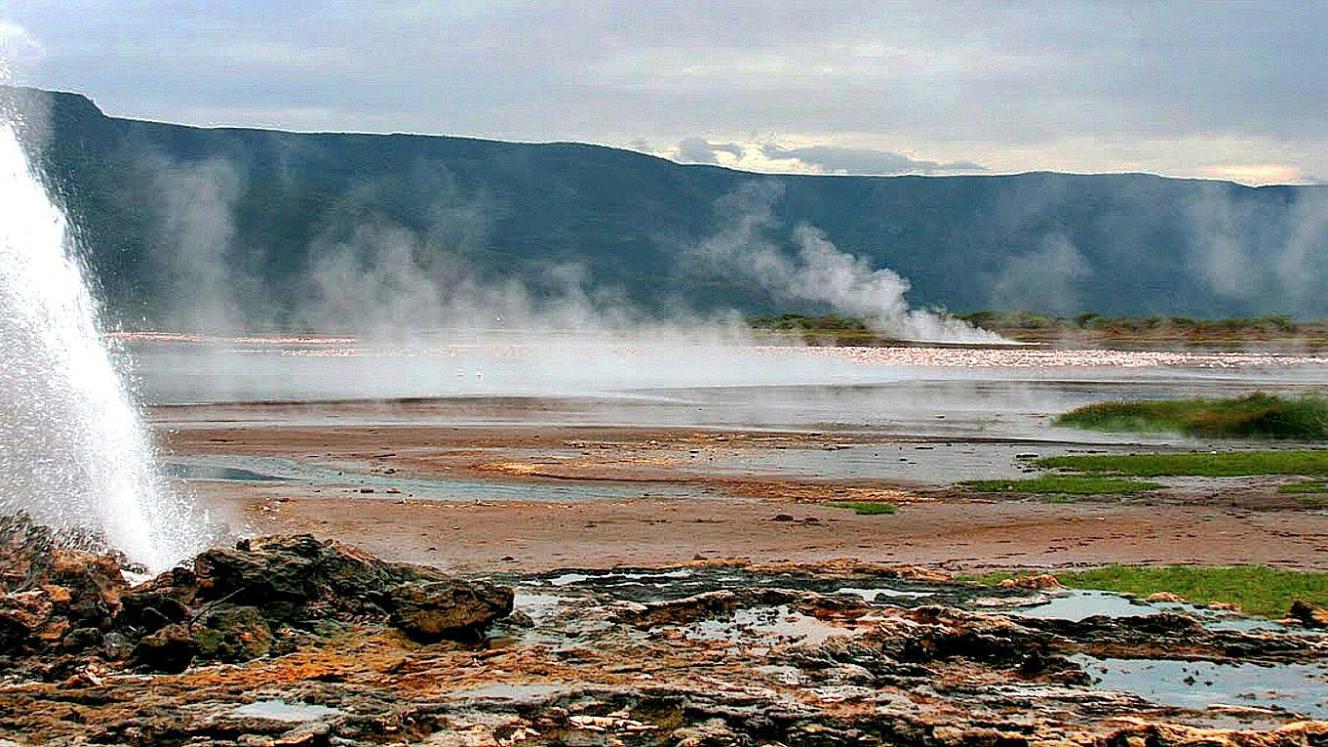
The north shoreline of Lake Bogoria, one of Kenya’s key tourism attractions, has receded three kilometres. It is famous for its geysers and the local tourism industry has raised concerns about the dwindling water supply.
As the lake has no natural outlet, experts suspect that the water loss is the result of human activity.
Lake Bogoria National Reserve Warden, James Kimaru, said: “Wanton cutting down of trees for the production of charcoal is one of the key reasons the lake is receding.”
He added that the current drought was also having an impact. “We have lined up a series of meetings with the community, under the umbrella Water Resource Users Association, to sensitise locals to the need for environmental and water conservation.”
As a Ramsar wetland, the lake has international significance and forms one of a series of lakes in the Great Rift Valley to which flamingos migrate. Other water bodies that are on the verge of drying up due to human activities are lakes Kamnarok, Baringo, Endao and Molo.
According to former Baringo County Council Clerk, Peter Keitany, the world-famous Lake Kamnarok Game Reserve in Kerio Valley was once termed as the largest ecosystem in Africa after Lake Chad, with a population of more than 10 000 crocodiles, 400 elephants, 13 species of other mammals and a variety of rare bird species. However, due to deforestation the lake is “on the verge of drying up, dealing a blow to the local tourism sector”.
However, Baringo County Director for Tourism, Evans Kipturgo, cautioned the industry against overreacting. "Most saline lakes in the region have seen their water levels drop at the moment (due to the drought) but normalcy will be restored at the onset of the rainy season.”