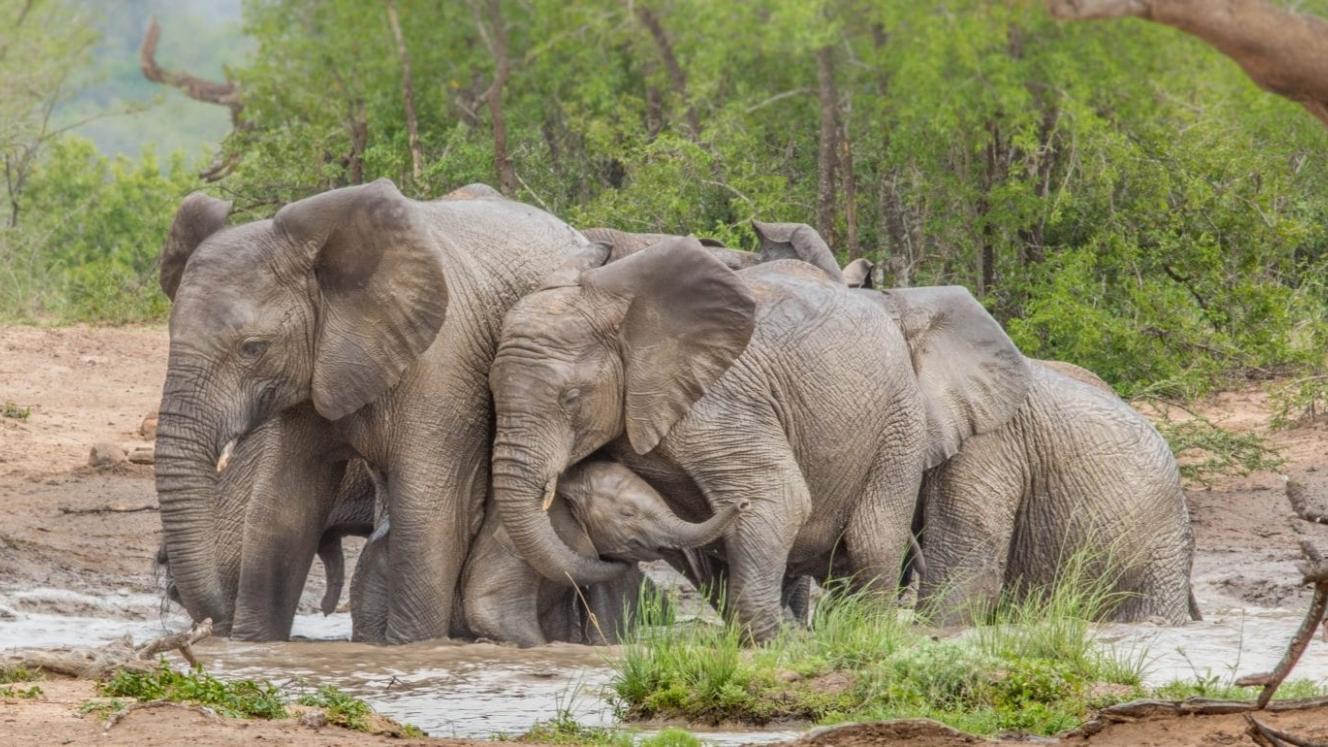
More than 1 000 elephants could be removed from protected areas in KwaZulu-Natal as authorities move to address what they describe as mounting ecological pressure.
According to an Ezemvelo KZN Wildlife report, 1 050 elephants are earmarked for removal from its reserves with 940 expected to be relocated and the remainder potentially killed through “controlled hunting or culling where relocation is not feasible,” reports News24.
The largest number of removals is planned for Hluhluwe-iMfolozi Park (650 elephants) followed by Ithala Game Reserve (170) and Tembe Elephant Park (120). Smaller numbers could be killed in uMkhuze Game Reserve (50) and the western shores of iSimangaliso Wetland Park (60).
Musa Mntambo, Manager: Communication Services at Ezemvelo KZN Wildlife, told Tourism Update that the decision is based on the need to balance the ecosystem.
“If numbers grow too high, elephants face food shortages during droughts, leading to suffering. Managing numbers early reduces this risk, protects other species and limits human-elephant conflict, ensuring the long-term health of wildlife and protected areas.”
Mntambo said, ideally, the removals will take place during the 2026/2027 financial year.
“The availability of suitable new habitats is limited, which makes the process slower and more complex. The actual timeframe will depend on the availability of partner reserves that can safely and sustainably receive these animals. Where immediate placement is not possible, the process may be extended to ensure that all actions are carried out responsibly, ethically and in line with conservation best practices.
“At present, there are no confirmed reserves within practical translocation distance that are ready to receive elephants although we continue to explore possible opportunities, including in Mozambique, and remain open to new partnerships,” Mntambo said.
He highlighted Ezemvelo’s priority to always move elephants to other suitable areas.
“However, where this is not possible due to limited space elsewhere, other options such as culling may need to be considered as part of responsible population management. The aim is to prevent severe ecological damage and avoid situations where elephants suffer starvation during droughts.
He stressed that, in terms of tourism, these decisions are not taken lightly.
“While there may be concern about the impact on South Africa and KwaZulu-Natal’s image as a tourist destination, it is important to understand that well-managed ecosystems are the foundation of sustainable tourism. Allowing overpopulation to lead to habitat destruction or animal suffering would ultimately be more damaging.”
Ezemvelo maintains that population management is not a once-off intervention but part of an ongoing strategy. Measures such as contraception, expanding transfrontier conservation areas and partnerships with neighbouring landowners are being pursued to reduce long-term pressure.
However, some operators within affected parks have raised strong objections.
Leigh-Ann Morrison, Director of Makakatana Bay Lodge, one of the privately owned lodges within iSimangaliso Wetland Park, said elephants are not a problem for the lodge and they are a highlight for guests on safari drives.
She also expressed firm opposition to the idea of elephant hunting, warning that the impact on the guest experience would be “devastating” and “heartbreaking”.
“The iSimangaliso Wetland Park doesn’t have issues with elephants and we believe they do not need to be relocated. We believe there are not enough elephant in the park’s western and eastern shores,” said Morrison.