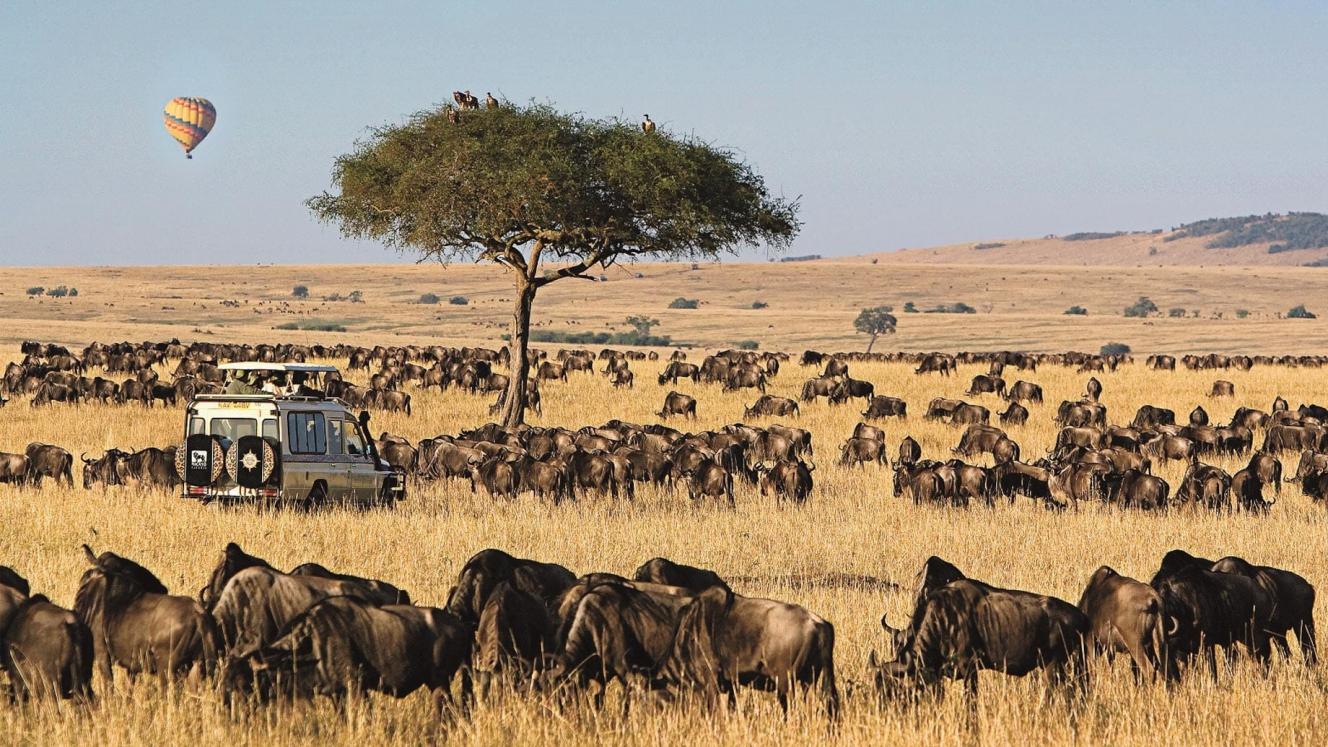
With a few months to go until the start of the peak migration season in the Maasai Mara, concerns have emerged about the impact of the ongoing Middle East conflict on travel to the region.
While Kenya’s tourism stakeholders agree that the destination remains safe and largely unaffected, the ripple effects of the conflict, particularly on global aviation and fuel prices, are beginning to reshape how travellers reach East Africa.
According to Rosco Wendover, CEO of Angama, it is important to distinguish between geopolitical ripple effects and operational realities in Kenya.
“What we need to do is separate the broader strategic impacts like fuel price increases and disruption of Middle East aviation hubs from what is actually happening at lodge level,” he said. “East Africa, Kenya and, specifically, the Mara remain safe. There is no disruption to air navigation across Africa and, from our perspective, business is looking healthy.”
However, Wendover acknowledged that aviation routing has become more complex as airlines adjust to risks associated with the conflict.
“The spillover is really about routing,” he explained. “Airlines are having to rethink how they move passengers through the Middle East and, while they are doing their best to reroute guests through safer hubs, it makes the journey more complicated.”
Despite this, he noted that the current impact remains minimal with operators and airlines absorbing the burden of rerouting travellers.
“We are seeing negligible disruption at the moment,” he said. “Tour operators and airlines are doing the legwork to ensure guests still reach their destinations.”
According to Joseph Kithitu, the conflict has had an indirect but noticeable effect on travel patterns, particularly for travellers who rely on Gulf transit hubs such as Dubai, Doha and Abu Dhabi.
“Travellers from Asia and parts of the Middle East are experiencing longer routings, higher airfares and occasional cancellations,” he said. “But what we are seeing is postponements rather than cancellations.”
Core markets for the Mara, Europe and North America remain largely unaffected, helping to stabilise bookings for the peak migration season, he added.
“Safari travel is typically booked well in advance and is experience-driven,” Kithitu noted. “Demand tends to rebound quickly once routing stabilises.”
Opportunities amid challenges
Even as challenges emerge, some operators are seeing unexpected opportunities.
Bainito Musumba from Private Safaris described the situation as a mixed outcome, noting that disruptions in the Middle East have, in some cases, redirected travellers toward East Africa.
“Kenya and the Mara are increasingly seen as safe, stable destinations,” he said. “That creates a safe-haven effect, especially when travellers are reconsidering plans to visit regions closer to the conflict.”
The crisis is accelerating shifts already underway in the industry, including a move towards longer stays and higher-value travel, Musumba added.
“With rising airfares, travellers are opting for longer, more immersive experiences rather than multiple short trips,” he said. “This benefits premium safari offerings like private conservancies and bespoke itineraries.”
The disruption is also strengthening Nairobi’s position as a regional aviation hub as airlines and travellers look for alternative routes outside the Middle East.
While current disruptions appear manageable, stakeholders warn that the longer-term impact could be more significant, particularly if fuel prices continue to rise.
Tour operators say increased fuel costs could affect everything from international flights to domestic safari logistics, potentially increasing the overall cost of travel.
Wendover noted that, while the immediate impact is limited, a prolonged conflict could create deeper challenges.
“If the crisis extends into next year, the impact will be more pronounced,” he said.
In the meantime, the industry is focusing on flexibility and adaptation.
Lodge operators are working with guests on a case-by-case basis, adjusting bookings where necessary to accommodate travel disruptions.
“We are trying to be flexible,” Wendover said. “If guests are disrupted on their way to us, we look at how we can move bookings and still deliver the experience they came for.”