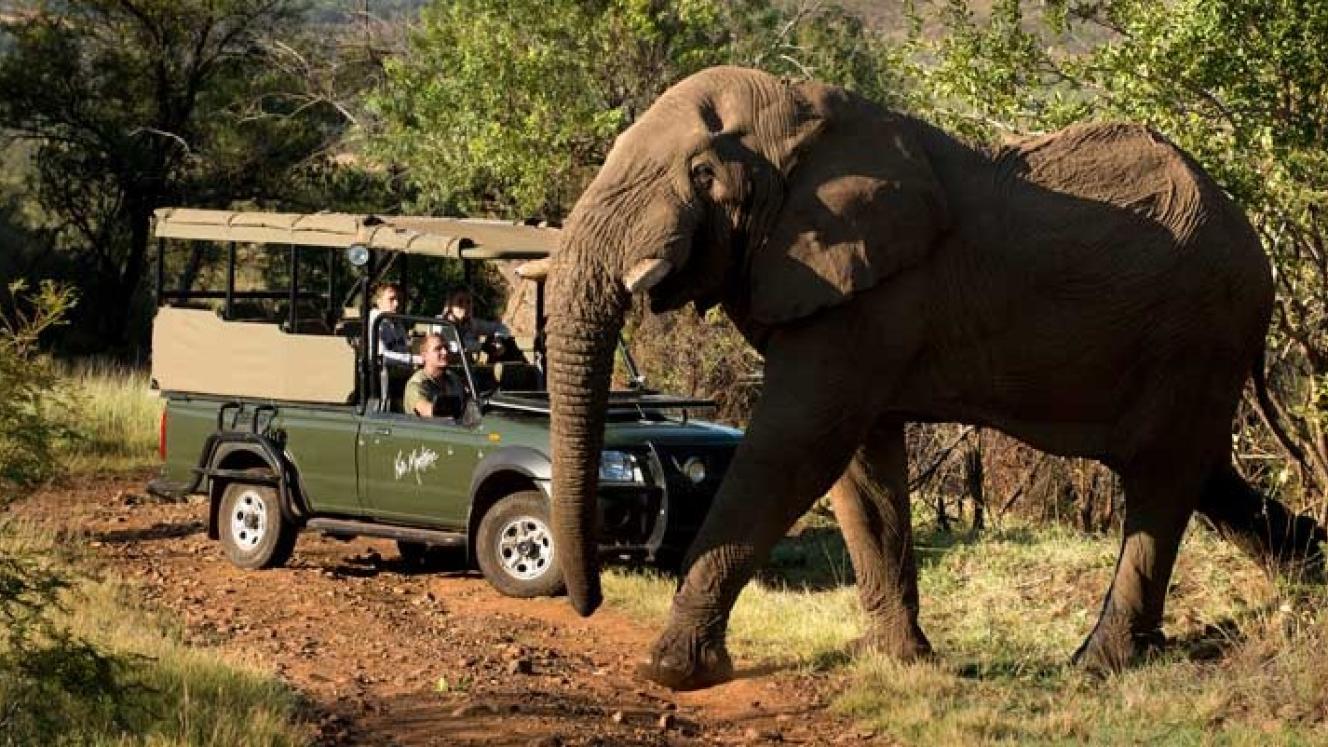
The North West Parks and Tourism Board (NWPTB) is beginning to address long-standing concerns about Pilanesberg National Park’s deteriorating road network following controversial entrance fee increases introduced in December last year.
Road conditions have been one of the biggest criticisms levelled at the park since the higher tariffs were introduced with many in the travel trade arguing that visitors expected visible improvements in return for paying more.
NWPTB Acting CEO Jonathan Denga told Tourism Update that more than 80km of roads have already been graded and compacted as part of a province-wide maintenance programme. Work at Pilanesberg is expected to be completed by the end of August.
He said the immediate priority has been to halt further deterioration before embarking on longer-term infrastructure improvements.
However, Onne Vegter, MD of Wild Wings Safaris, said poor infrastructure continues to affect the park’s competitiveness.
“Some of the public infrastructure and tourist roads are in very poor shape but the park doesn’t seem to have the resources to maintain the infrastructure, fix potholes or resurface the road network.”
Vegter said this is influencing recommendations to international visitors.
“At the moment, we support the private safari lodges but we are hesitant to recommend Pilanesberg as a self-drive destination to international guests.”
Tariffs still under scrutiny
Denga defended the higher entrance fees, saying they intend to generate revenue for conservation and infrastructure while benefiting local communities.
“That product must work for the owners of the land, for the owners of the park and it must work for conservation. Currently everything is neglected; there’s no money coming in; the state does not have money to fix the infrastructure and the community owners get zero benefit while the concessionaires are reaping the rewards.”
Focus should be on the rand value rather than the percentage increase, Denga argued.
“Look at the numbers. Don’t look at the percentage. We’ve done benchmarking. If you look at Kruger National Park, we’re just about R80 (US$4.78) or R120 (US$7.17) above it and we know why. We have a very good product in Pilanesberg that nobody else has this close to Johannesburg.”
According to Denga, international visitor numbers have remained stable despite the increases.
“When we did the strategy, I thought we’d see at least a 15% to 20% decline in the first two or three years. Surprisingly, in the international market, we have not had a drop. The local market has dropped by about 22% but it’s picking up again.”
Hara Jackson, Sales Director for Legacy Hotels & Resorts, which operates lodges within the park, said the initial reaction to the higher tariffs has been mixed with many visitors wanting to see tangible improvements before accepting the increases. Visitors generally support higher fees when they see ongoing reinvestment in the destination, she added.
Vegter is more critical of the pricing.
“Foreign nationals now pay R748 (US$44.72) per person and R168 (US$10.04) for the vehicle per day. This means it now costs a foreign tourist couple R1 664 (approximately US$100) per day to visit Pilanesberg. This is more expensive than South Africa’s flagship Kruger National Park.”
Vegter believes visitors would accept higher prices if justified by the experience.
“If the visitor experience matched the high fee, guests would generally be willing to pay. But, in my opinion, pricing Pilanesberg above Kruger National Park will not help it secure more visitor interest.”
Denga acknowledged that the changes created challenges for the trade but urged operators to give the strategy time to work.
“We’re saying to the industry: Bear with us, adjust and readjust yourselves. We know it might have come abruptly but we needed to stop the rot in the park urgently and we’re able to do that now.”
Vegter agreed the park retains significant potential but said long-term success depends on sustained investment and good governance.
“Pilanesberg is a beautiful national park with strong potential as a malaria-free safari destination. It is easily accessible and combines well with Sun City. If revenue was used wisely, the road network was well maintained, potholes were fixed promptly after each rainy season and tourist infrastructure was kept in immaculate condition, Pilanesberg would thrive and be very popular with locals and foreign tourists alike.”