Following an article on August 16 regarding the potential re-erecting of fences within the Greater Kruger National Park, the Timbavati Private Nature Reserve (TPNR) contacted Tourism Update with information further to what was published.
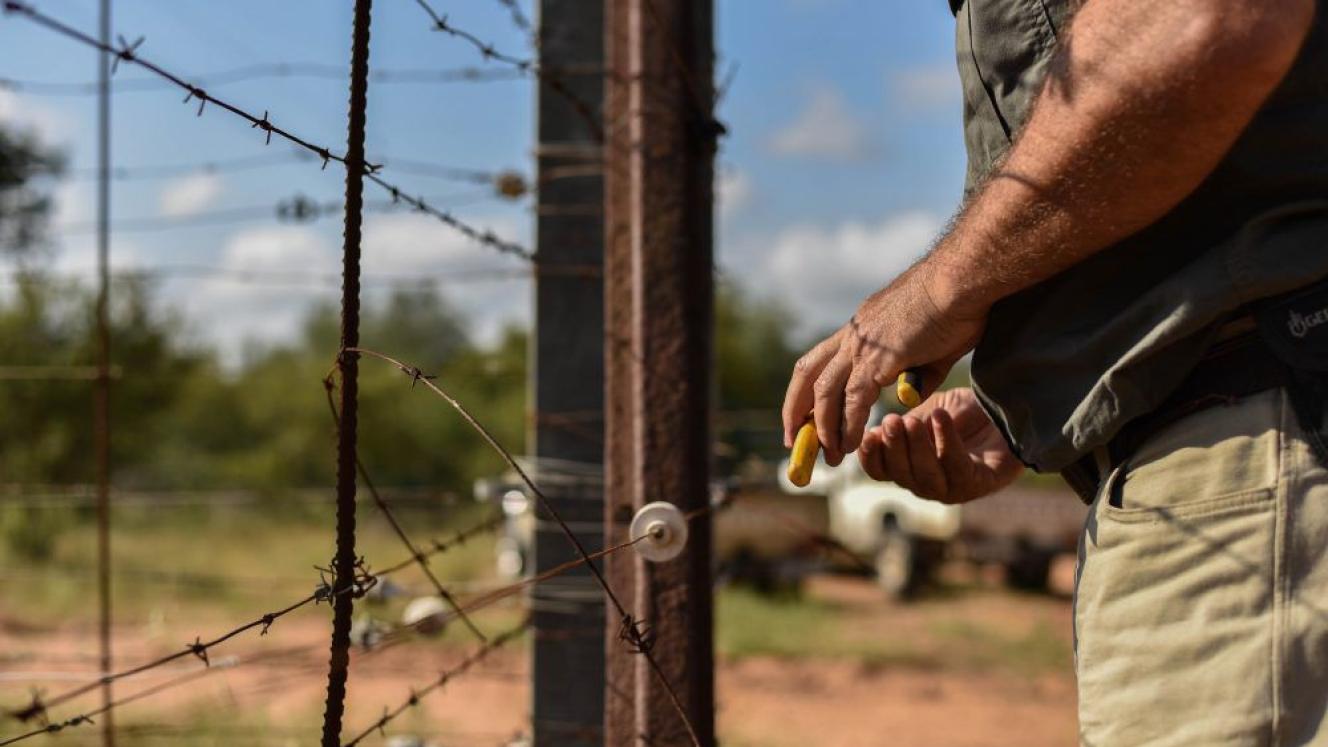
Talk of the re-erection of the fences, says TPNR, would have been centred around certain partners either being unwilling or unable to comply with these regularisation and constitutional requirements. “Thus the threat of fencing and, therefore, fragmenting the Greater Kruger once again, is a threat that applies to all the private nature reserves that are open to the Kruger National Park, and not only those who practise hunting. The non-hunting reserves that form a part of the Greater Kruger have been fully included in all discussions related to the new co-operative agreements, and their own need to comply with all aspects of these agreements, or be fenced out, have been addressed with the same firmness. If this issue had been about hunting alone, the non-hunting reserves would have been automatically excluded from any such discussions. The TPNR management and Exco have been pro-active participants in these discussions. We are confident that under the strength of our constitution, and under the strength of our compliance with regulations, the Timbavati is one of the private nature reserves that is most likely to meet all of the requirements of the new co-operative agreement with KNP.”
The TPNR offered further clarification on the points raised concerning the elephant tusk weights; submission of the ages of 11 previously hunted elephants; and the hunting of two lions without informing the relevant authorities at KNP.
A full investigation was conducted into the two elephants shot in TPNR with tusks exceeding the maximum tusk weight allowed, in December 2017. The investigation confirmed that the tusk weights were indeed over the weight applied for the off-takes request, and the information disclosed to the authorities. TPNR says a disciplinary hearing was held with the TPNR representative who was responsible for those hunts, and the outfitter involved was given a lifetime ban from hunting within the TPNR. “The necessary corrective and punitive actions that were implemented by TPNR Exco and management were communicated with SANParks and the relevant authorities on February 12.” The TPNR has resolved that, to prevent such situations from happening in the future, all staff involved in hunting events which transgress hunting protocols will be subject to financial punitive action, following disciplinary proceedings.
Regarding the alleged failure to submit the ages of 11 previously hunted elephants, as required by the Hunting Protocol, apparently due to rodents eating the tags attached to the jaw bones, TPNR says all age data was submitted in the post off-takes meeting on May 25. “The TPNR responded immediately to the problem with corrective and remedial action. The tags referred to were not completely destroyed, and the 11 jaw bones were then aged by experts as required, and matched to the animals hunted. Furthermore, all of the animals in question were found to have complied fully with the hunting protocols. TPNR has now implemented a new tagging system that prevents possible corrosion and animal damage by using more robust materials on its tags,” says TPNR.
A statement was made in the article about two lions being hunted on the reserve without notifying Kruger National Park rangers, as is required and is standard practice. The TPNR has clarified that there is documentary proof of the required notifications in the form of emails sent to the relevant officials. “The email trail shows that the TPNR representative sent a notification to both the Mpumalanga Tourism and Parks Agency State Veterinarian, and KNP representative, on July 28, 2017. This email was thus sent 11 days before the hunt started, and is in line with how all notifications are sent by TPNR to the relevant authorities.”
The TPNR further says that the tension between the Kruger National Park and its neighbouring private nature reserves is ‘imagined’. “For the last two years the KNP has facilitated numerous public participation forums to update and define the agreements that will regulate the relationship between the KNP and its partners in the Greater Kruger National Park. This process ensures that all partners in the Greater Kruger are regularised (properly declared and managed in the interest of conservation), and have the necessary capacity to ensure that conservation norms and standards are effectively applied by reserve managers and individual members.”
The TPNR concludes that the organisation continues to co-operate with its KNP counterparts on practical matters such as rhino security, ecological management and local community investment. “In the last year alone, the TPNR injected over R2m (€120 640) into local communities through the Timbavati Foundation, an initiative borne entirely out of the membership of the Timbavati Reserve. Through the Timbavati Foundation, the TPNR supports many ongoing projects, including environmental education projects, borehole and rainwater catchment projects, community garden projects and the support of many students in tertiary studies. The TPNR recognises that in addition to the vital role that we play in the security and ecological integrity of the western boundary of the KNP, our role in the growth and development of the communities that we form part of, is an equally vital part of the Greater Kruger vision.”