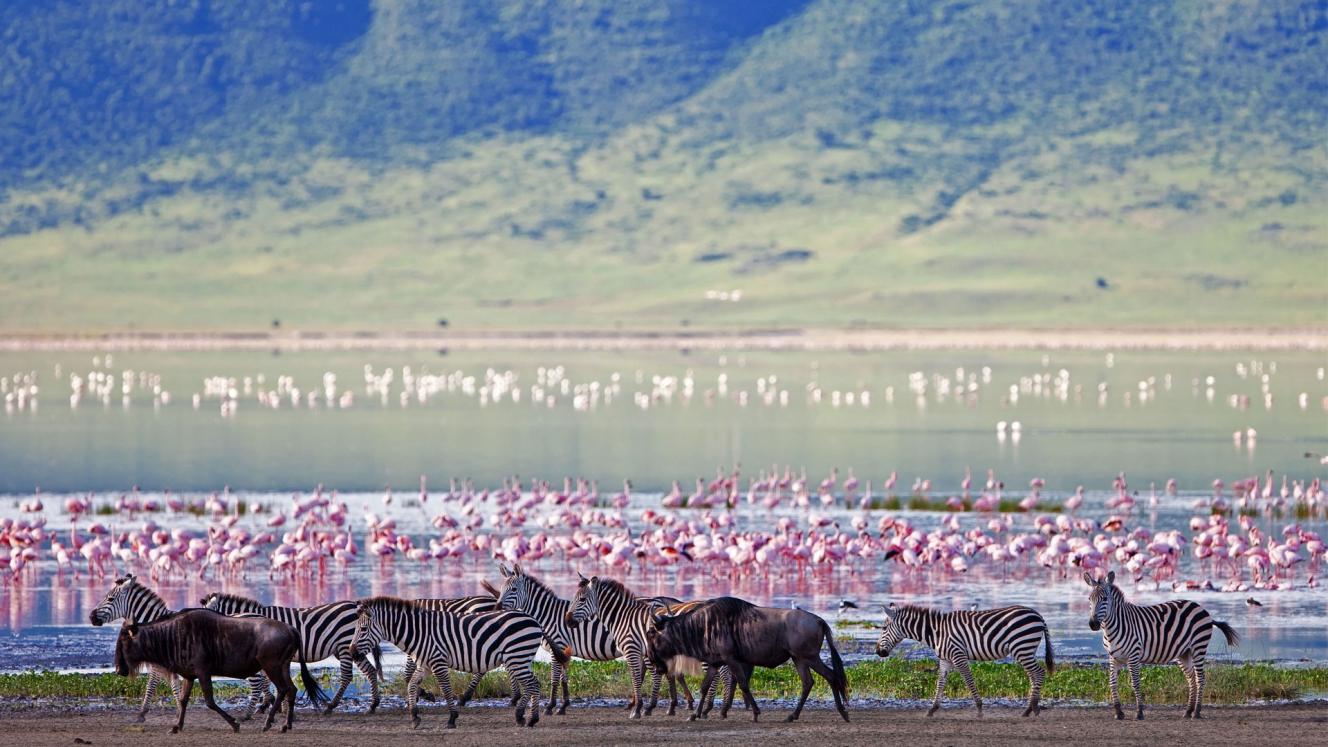
Two Tanzanian government commissions have recommended continuing the government’s voluntary relocation programme of Maasai pastoralists from the Ngorongoro Conservation Area while also proposing broader reforms in the management of the conservation area and the programme.
The recommendations have reignited debate about conservation, tourism and community rights. The commissions cite growing pressure on land and natural resources. Conservation advocacy group Serengeti Watch says there is increasing environmental pressure within the conservation area.
Human Rights Watch estimates 82 000 Maasai could be relocated by 2027 if current plans proceed.
“The proposed relocation marks a dramatic shift from the principles upon which the Ngorongoro Conservation Area was established in 1959. Unlike conventional national parks, the Ngorongoro Conservation Area was created as a multiple land use area, recognising the Maasai not as intruders but as an integral part of the ecosystem. Their traditional pastoral lifestyle was considered compatible with wildlife conservation, making Ngorongoro a globally recognised model of shared stewardship,” Human Rights Watch says.
However, that model has been under increasing pressure over decades. Ngorongoro has also become one of Africa’s busiest wildlife tourism destinations with more than half a million visitors entering the crater in 2023 alone.
To accommodate growing demand, accommodation infrastructure has expanded. From a single lodge established in 1939, the conservation area now hosts 11 permanent lodges and approximately 49 tented camps with plans to increase bed capacity from 1 555 to more than 2 590.
At the same time, the Maasai population within the conservation area has grown from approximately 8 000 people in 1959 to nearly 100 000 today. Competition for grazing land and natural resources has increased.
For sustainability advocate Judy Kepher-Gona, Founder of Sustainable Travel & Tourism Africa, conservation decisions cannot succeed without meaningful community engagement.
“Tourism happens in places that communities call home,” she says. “The communities are the co-creators of these experiences. The resources they have protected and coexisted with throughout their lives are what tourism markets as attractions.”
She argues that governments must first ask what tourism means for local communities before focusing solely on visitor numbers or tourism revenue.
Kepher-Gona also points to the structure of Africa’s safari tourism market. “The history of safari tourism was largely designed around foreign markets,” she says. “Many luxury experiences remain inaccessible to local people despite existing within their own landscapes.”
Chris Flynn, Executive Chairman and Founder of the World Tourism Association for Culture and Heritage, believes destinations need to manage visitor carrying capacity while ensuring tourism benefits are shared more broadly.
“Only by improving the lives and livelihoods of local communities will we achieve true sustainability,” he says.
Flynn also stresses the importance of carrying capacity: the maximum number of visitors a destination can accommodate before environmental and social impacts become unacceptable. “Know what you can take before you break,” he says, describing the principle as essential for the future of tourism.