Cape Town’s tourism pressure is being driven more by concentrated investment and uneven spatial development than overtourism, according to industry leaders speaking at the recent Africa Tourism Investment Conference alongside WTM Africa in Cape Town last week.
Enver Duminy, CEO of Cape Town Tourism, said the concept of overtourism is often misapplied in the African context. “I get a little bit irritated by the word ‘overtourism’. It’s a problem for the Europeans, let me be honest,” he said.
Instead, Duminy said the issue in Cape Town is one of concentration within parts of the destination rather than excessive visitor numbers overall. “We don’t have an overtourism issue. We have a concentration issue but that can be resolved through destination management.”
Cape Town receives about 2,4 million overnight visitors annually, he said, generating roughly R24 billion in economic impact.
“If all 2,4 million had to come all at the same time, we would have a problem. But that equates to about 30 000 people a day, which is 0,6% of the total population.”
Geographic spread
Duminy said investment is not the problem but where it is directed is critically important.
“There’s never too much investment. But it’s about making sure the investment goes into the right places for the right reasons.”
He warned that continued concentration of tourism activity in specific areas risks increasing pressure on communities and eroding the authenticity that makes destinations attractive in the first place.
He cited the Bo-Kaap, one of Cape Town’s oldest residential neighbourhoods and a major visitor attraction, known for its brightly coloured houses and Cape Malay cultural heritage, as an example. The area has become one of the city’s most photographed tourism sites, drawing growing daily visitor numbers into what remains a living community.
That concentration, Duminy said, is creating tension between tourism activity and residential life.
“As things progress, people get displaced,” he said. Some residents benefit from tourism through restaurants, accommodation and visitor services while others are choosing to leave as property pressure and visitor traffic have increased.
“But the big concern for me is that the authenticity and the originality of why it was created is being lost,” said Duminy
Measuring citizen sentiment
Cape Town Tourism is beginning to prioritise tracking how residents experience tourism in their city, he pointed out.
“We need to start measuring citizen sentiment of tourism,” Duminy said.
“It’s great to look at the numbers and the growth. Politically, people like to say: ‘Look at our growth, our volume, our airport numbers.’ But, if we’re not asking our citizens how they see tourism, whether it’s good or bad, you’re going to get strategies and campaigns that are not going to work.”
Lessons learnt
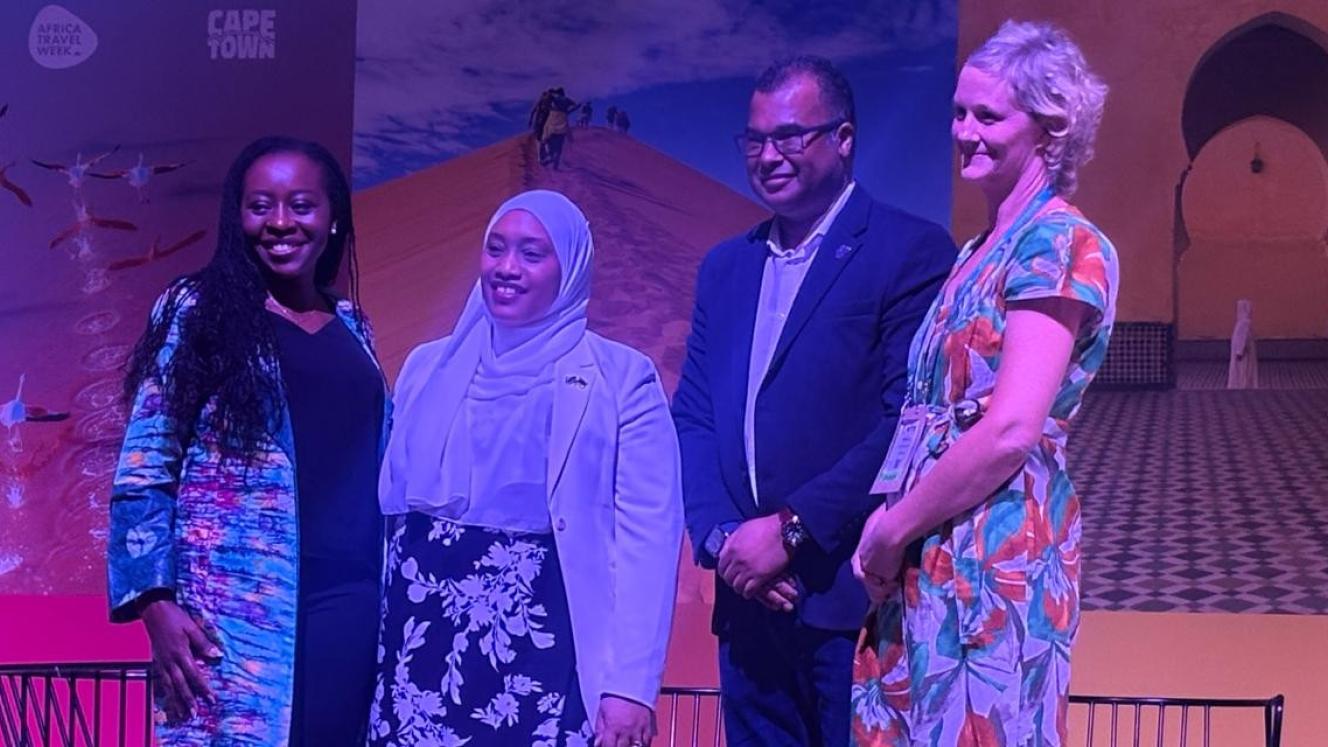
Hafsa Hassan Mbamba, Tourism Delivery Manager at the Zanzibar Presidential Delivery Bureau, said Zanzibar’s experience shows what appeared to be overtourism was often the result of spatial concentration rather than excessive arrivals.
“From the outside, it looks like we have perhaps overtourism but it’s only concentrated in specific areas,” she said.
Zanzibar focused on shifting from arrival numbers to value creation and destination planning as it entered a more mature tourism growth phase.
“It’s not just about tourist arrival numbers but about the value that they bring to the destination,” said Mbamba.
Connecting destinations
Shelley Cox, Programme Coordinator at We Are Victoria Falls, said stronger links between destinations could help redirect visitor flows into underutilised areas.
Moving away from trying to process more foot traffic and instead keeping people in a destination for longer would strengthen resilience across tourism regions, she said.
Initiatives such as Africa’s Eden are already helping position hubs like Cape Town and Victoria Falls as gateways to lesser-known destinations across Southern Africa.
“We really do not like the use of overtourism, particularly from a Southern Africa perspective, because we have so many underutilised areas,” said Cox.
Tourism investment in emerging destinations is already supporting conservation outcomes and community development in remote regions, she added.
“Presence in some of the more remote areas can actually mean protection. And I think, if investment is done carefully from the beginning, it can become a huge driving force for powerful change.”