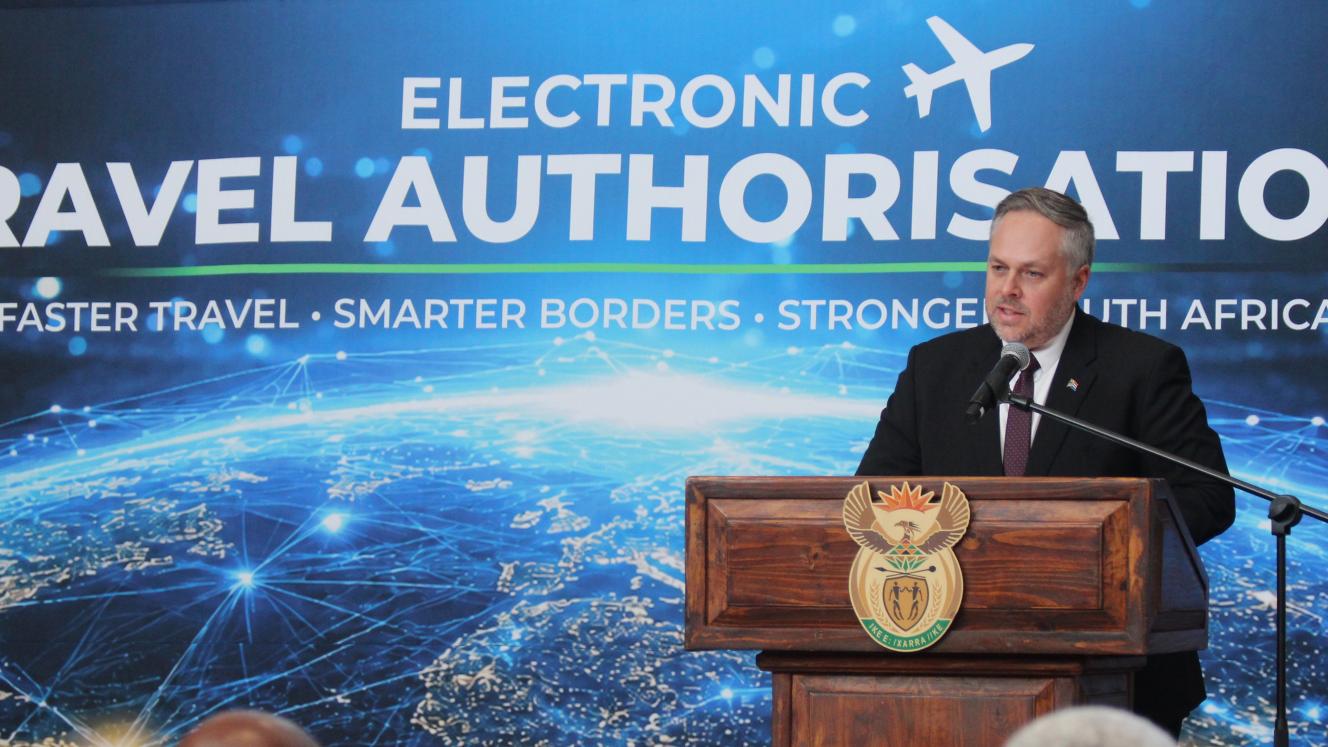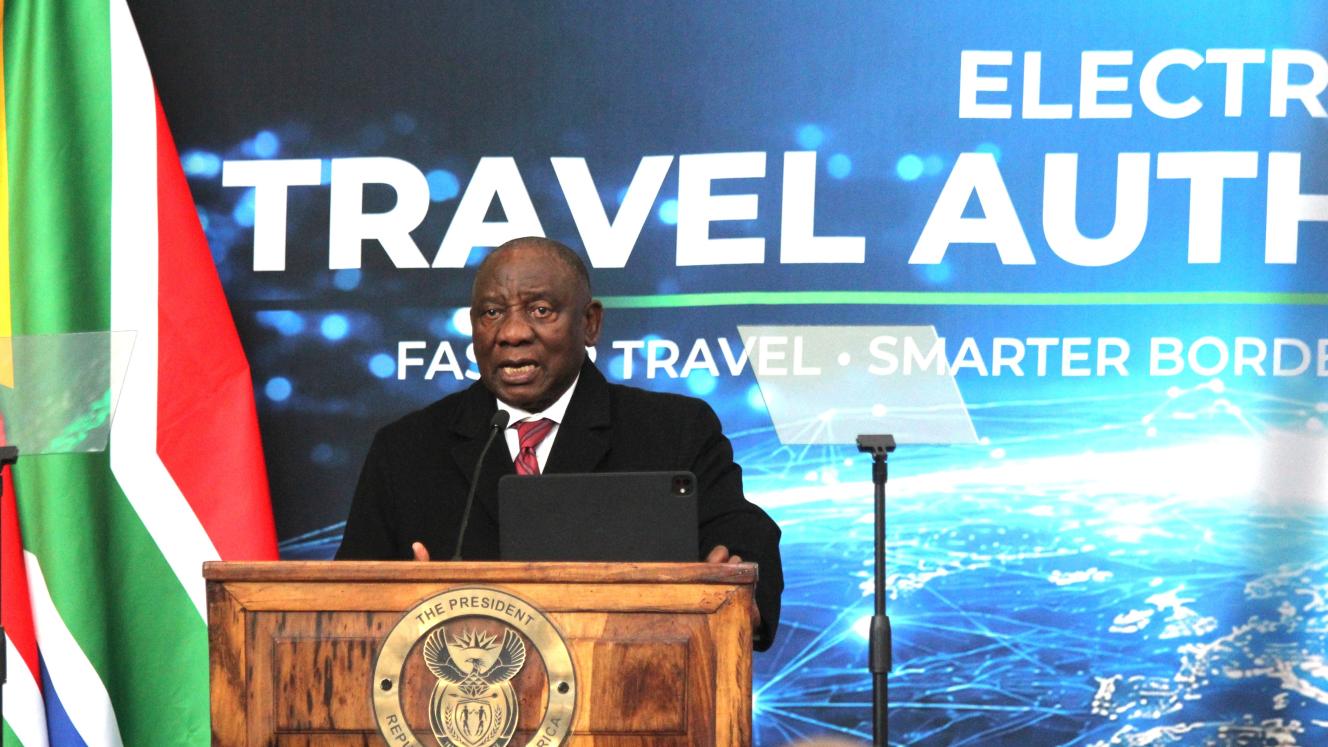
President Cyril Ramaphosa officially launched South Africa’s Electronic Travel Authorisation (ETA) system at OR Tambo International Airport on August 12. The launch marks the second phase of a rollout that began last September during the G20 Summit when the ETA system was initially introduced to four source markets: China, India, Indonesia and Mexico. The system has now been expanded to additional countries with plans to extend digital processing to work, study and group visas.
Border Management Authority Commissioner Michael Masiapato demonstrated the ETA process to Ramaphosa, Tourism Minister Patricia de Lille and Home Affairs Minister Leon Schreiber. Ramaphosa then delivered a keynote address.
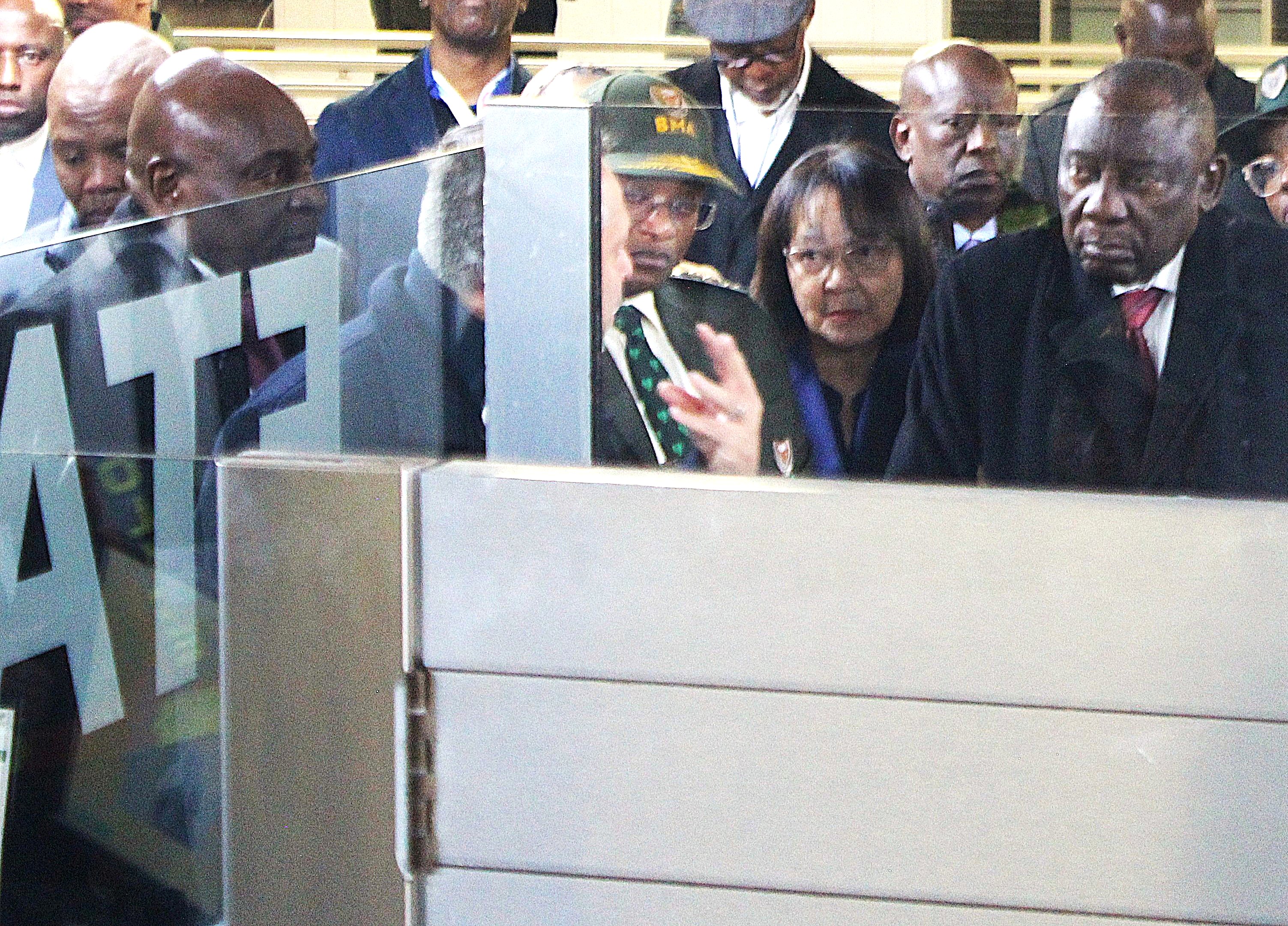
Ramaphosa highlighted the speed, ease and predictability of the ETA system.
“The ETA system will make travel to South Africa a lot easier. I tested this with one of the travellers just now who saw how quickly it was processed. It literally took less than one minute.
“Every unnecessary delay, every cumbersome administrative process and every avoidable process encourage people to look somewhere else. People become very impatient. They always want ease of doing things. They want simplicity and they want modernity.”
Ramaphosa pointed to China as an example of how the ETA could remove barriers to travel, noting that some Chinese travellers previously had to travel to Beijing or Shanghai to apply for visas and could wait weeks or months for approval. The new system, he said, represents a significant improvement to the previous process.
He noted that the first impression a visitor forms of a country is often not at a hotel, a conference centre or a game reserve. It begins at the border. It begins with whether that country projects confidence, efficiency, security and hospitality. South Africa can compete with other countries through the ease with which people can visit, invest, travel, study and do business.
Ramaphosa said the ETA system will not only encourage tourists to come to South Africa but also support trade, investment and knowledge exchange. In turn, more tourism leads to more jobs.
“Every reform we undertake must answer one question: Will it help create work? The ETA system answers that with a resounding Yes. More visitors mean more hotel bookings. More restaurants are then filled. More tour operators start their own businesses and they are also able to employ others. It also means more flying. It also means more conferences, more exports, more investments and more opportunities for South Africans to earn an income.”
Ramaphosa said the ETA is part of a wider programme of structural reforms aimed at removing barriers to growth, investment and job creation. He described the system as part of the Home Affairs move towards a fully digital department with plans to eventually extend digital processing to other immigration services.
Making immigration more efficient does not mean weakening border controls, he pointed out. The technology will strengthen identity management, improve risk assessment and allow authorities to know more about travellers before they arrive, Ramaphosa explained.
The ETA combines biometric verification, machine learning and the upgraded Electronic Movement Control System (eMCS 2.0) linking the system to government’s wider efforts to strengthen border management and combat illegal immigration, he added.
“The ETA system protects South Africa’s borders while opening its doors.”