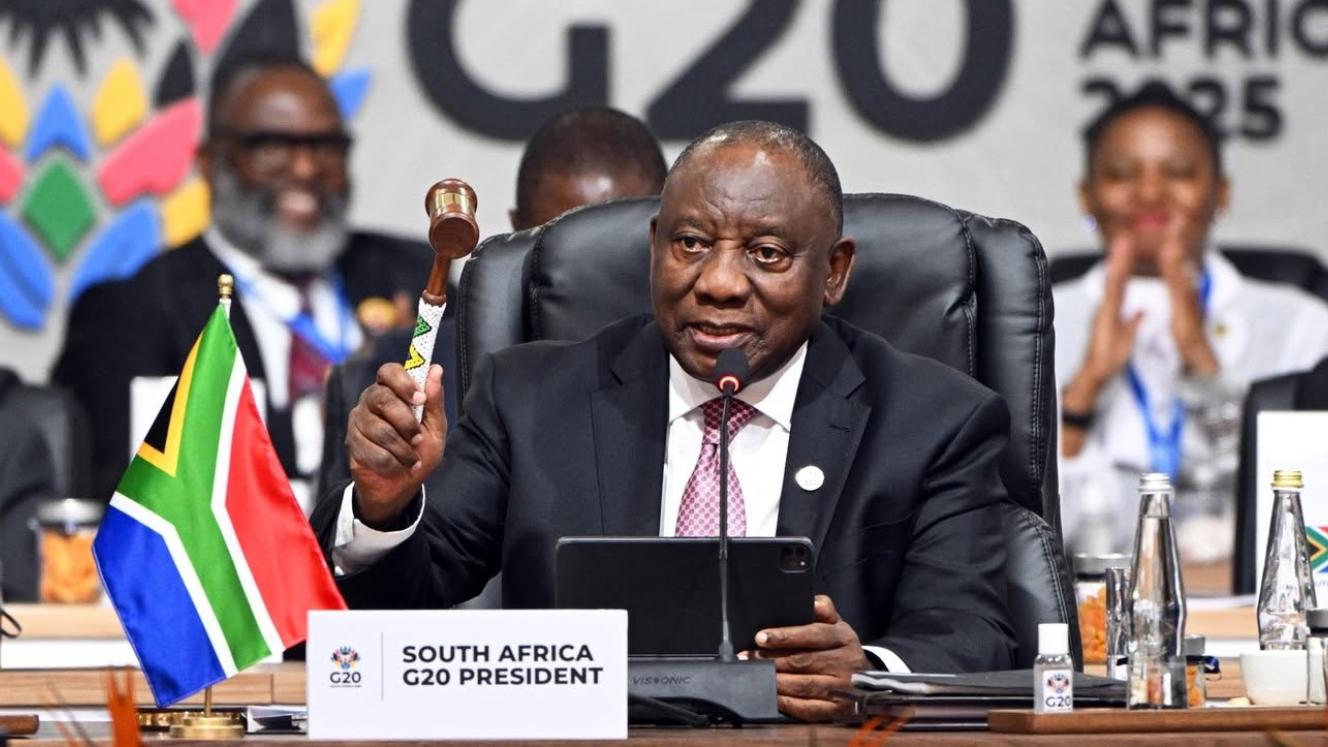
While President Cyril Ramaphosa has described the US stance on South Africa as “regrettable”, US travel into South Africa remains largely unaffected.
Addressing the nation on November 30 in the wake of the G20 Leaders’ Summit, Ramaphosa said non-participation by the US in the summit, grounded on “baseless and false accusations” was unfortunate.
“This is blatant misinformation about our country. We are aware that the stance taken by the US administration has been influenced by a sustained campaign of disinformation by groups and individuals within our country, in the US and elsewhere,” said Ramaphosa.
In a social media post, US President Donald Trump said South Africa will not be receiving an invitation to the 2026 G20 Leaders’ Summit in Miami.
Ramaphosa described the misperceptions of South Africa as highly detrimental to the country.
“These people who are spreading disinformation are endangering and undermining South Africa’s national interests, destroying South African jobs and weakening our country’s relations with one of our most important partners.”
Rhino Africa CEO David Ryan pointed out, however, that US travellers are undeterred by the strained political relationship.
“One thing we’ve observed consistently is that Americans travel for pleasure, connection and experience – not politics. Their relationship with South Africa tends to be emotional and personal rather than ideological and, over the past 20 years, the US has remained one of our most loyal long-haul markets. At Rhino Africa, it’s also our fastest-growing,” said Ryan.
The US was South Africa’s largest overseas source market between January and October this year, recording year-on-year growth rate of 7.5% to reach 331 378 arrivals, according to Statistics South Africa.
“If political rhetoric had a meaningful influence on behaviour, we would expect to see it in enquiry volumes, conversion or, most tellingly, in our repeat and referral ratios. In reality, we see the opposite: the US is our strongest repeat market globally. That, in many ways, tells its own story,” Ryan said, pointing out that the performance of Delta and United Airlines flights into Cape Town are a strong indicator of demand.
“Both continue to run on extremely strong passenger loads. Airlines simply don’t maintain long-haul routes like these unless the underlying demand is there.”
Importance of the US traveller
Ryan highlighted the critical importance of the US market in terms of average spend, booking windows and enquiry-to-booking ratios.
“It delivers the highest average basket size of any of our source markets, continues to show the strongest year-on-year growth and, unlike the UK, which remains sluggish, especially at the upper end, the US traveller is still spending with confidence and prioritising travel to Africa.”
According to SA Tourism, average US traveller spend per trip was R32 900 (US$1 926) in 2024 with the market contributing a total of R11.5 billion (US$673 million) in 2024 – the highest of any overseas country.
Ryan emphasised the need for the tourism industry to continue countering misinformation.
“In my experience, the best antidote to political noise is a combination of truth, data and lived experience. The truth is that travellers feel safe, inspired and deeply moved by their time here. The data shows sustained arrivals, high occupancies and solid forward demand. And lived experience is what ultimately drives repeat and referral.”
“So, yes, we should keep telling the real story. Not reactively but in the spirit of stewardship. Tourism is one of the few sectors that can uplift communities and conserve wild spaces at scale. Protecting that requires clarity, confidence and evidence-based communication,” Ryan concluded.