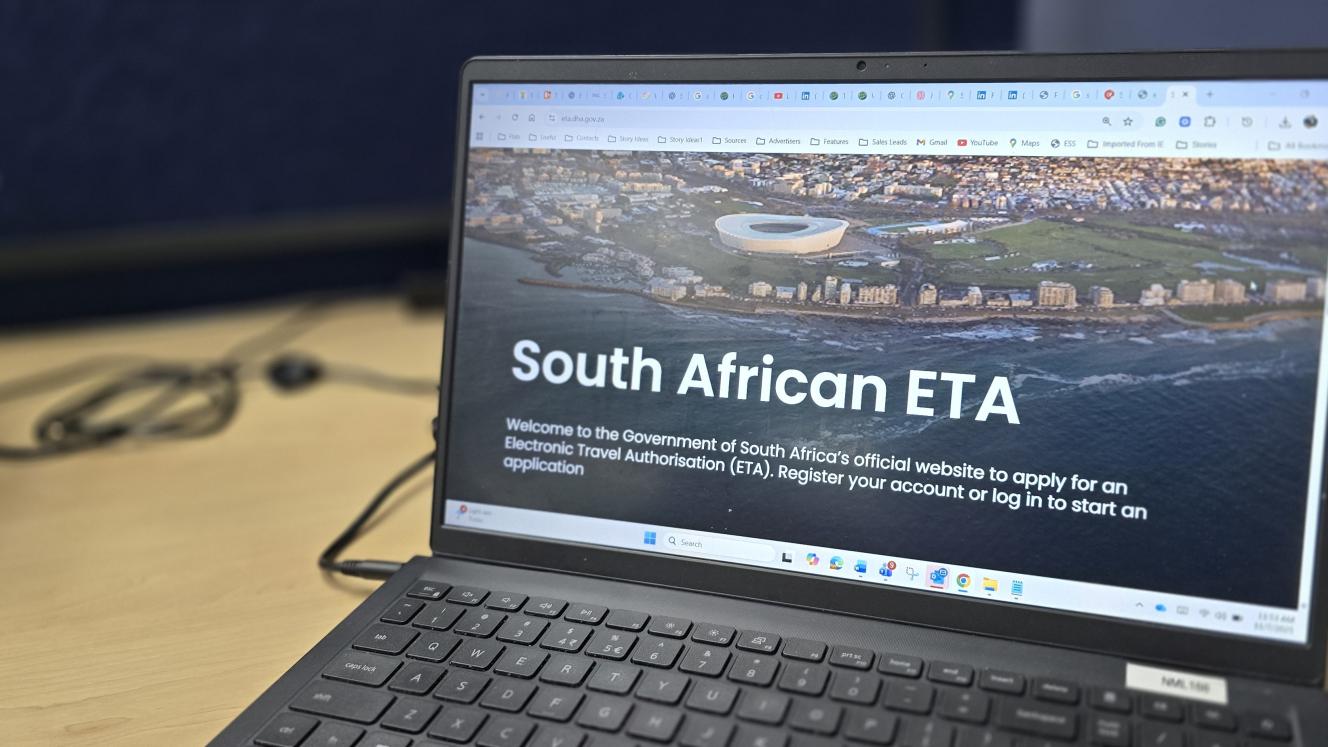
The tourism industry has raised concerns about the reliability of South Africa’s Electronic Travel Authorisation (ETA) system, citing a recent disruption at OR Tambo International Airport that reportedly delayed the processing of dozens of inbound travellers with approved electronic visas.
According to an inbound tour operator, last week, around 50 passengers were not processed on arrival after immigration officials indicated that the ETA verification system was down. The delays affected travellers arriving early in the morning and resulted in some passengers missing onward connections.
The operator said lack of communication during the disruption created additional pressure for agents managing onward arrangements.
“The biggest challenge is that there was no indication of how long the delay would last or what the issue actually was. That makes it very difficult for us to manage client expectations when they have connecting flights,” the operator said.
Inconsistency a concern
The incident, among others, prompted renewed concerns from visa facilitation specialists about the operational consistency of South Africa’s digital visa platform, which government has positioned as a key tool to reduce entry barriers and support tourism growth.
Candice Magen, Founder and Director of Abroadscope and Visas Abroad, said disruptions at ports of entry are not unexpected given the infrastructure required to support a digital immigration system.
“It’s inconsistent. And, in immigration, inconsistent is the same as unreliable,” she said.
“A system is only as good as the infrastructure behind it. The moment you build something like this without world-class tech support, redundancy and uptime, you’re asking for failure. This is not just a ‘glitch’. This is the reality of rolling out a government-run tech system without the backbone to support it. If you’re not operating at the level of a true tech company – secure servers, constant monitoring and rapid response to downtime – then what are we actually building? Because, right now, it’s not efficiency. It’s disruption.”
Magen said the purpose of digitisation is to streamline travel but system outages are instead creating uncertainty for travellers and agents.
“The entire point of digitisation is to make travel easier. Instead, we’re seeing passengers stuck at ports of entry because the system simply stops working. That’s not progress.”
The industry also experienced cases where applicants are unable to submit ETA applications at all because the platform went offline during the process, she added.
“No ETA, no e-visa, no alternative. Just a dead stop.”
Biometric passports
The disruption also raised questions about the compatibility of non-biometric passports with South Africa’s ETA system.
According to Magen, there is currently no consistently applied position on how such passports are handled within the digital visa environment.
“You cannot run a digital immigration system that relies on biometric verification and then leave grey areas around non-biometric passports,” she said.
“Right now, travellers with non-biometric passports are exposed to uncertainty and that’s not acceptable in a system that’s supposed to streamline entry.”
System expansion under scrutiny
The e-visa platform is part of government’s broader digital border modernisation strategy and is intended to improve traveller processing while supporting tourism growth from key international markets.
However, Magen warned that system reliability at the point of entry remains critical to building confidence in the platform.
“Success on paper means nothing if the system fails at the point of entry,” she said.
“A system that only works some of the time is not a solution.”
Tourism Update approached the Border Management Authority and the Department of Home Affairs for comment on the reported disruption and the compatibility of non-biometric passports with the ETA system but had not received a response by the time of publishing.