Wildlife crime is the fourth most lucrative organised crime globally and one of the most expensive security challenges facing Southern Africa.
As today (Friday, September 22), is World Rhino Day, Tourism Update is highlighting Botswana’s fight against poaching.
The number of poaching incidents has tripled in Southern Africa since 2010, endangering lives, threatening communities and undermining the local economy.
A Memorandum of Understanding between Botswana’s Department of Wildlife and National Parks and the African Wildlife Foundation (AWF) on co-operation in the development and deployment of canine teams in Botswana was signed in Gaborone recently.
Denis Galava, AWF Director Media Relations and Advocacy said the project was in its initial stage.
“Our aim is to curb illegal movements of wildlife product like ivory, rhino horn and pangolin scales, among others,” said Galava.
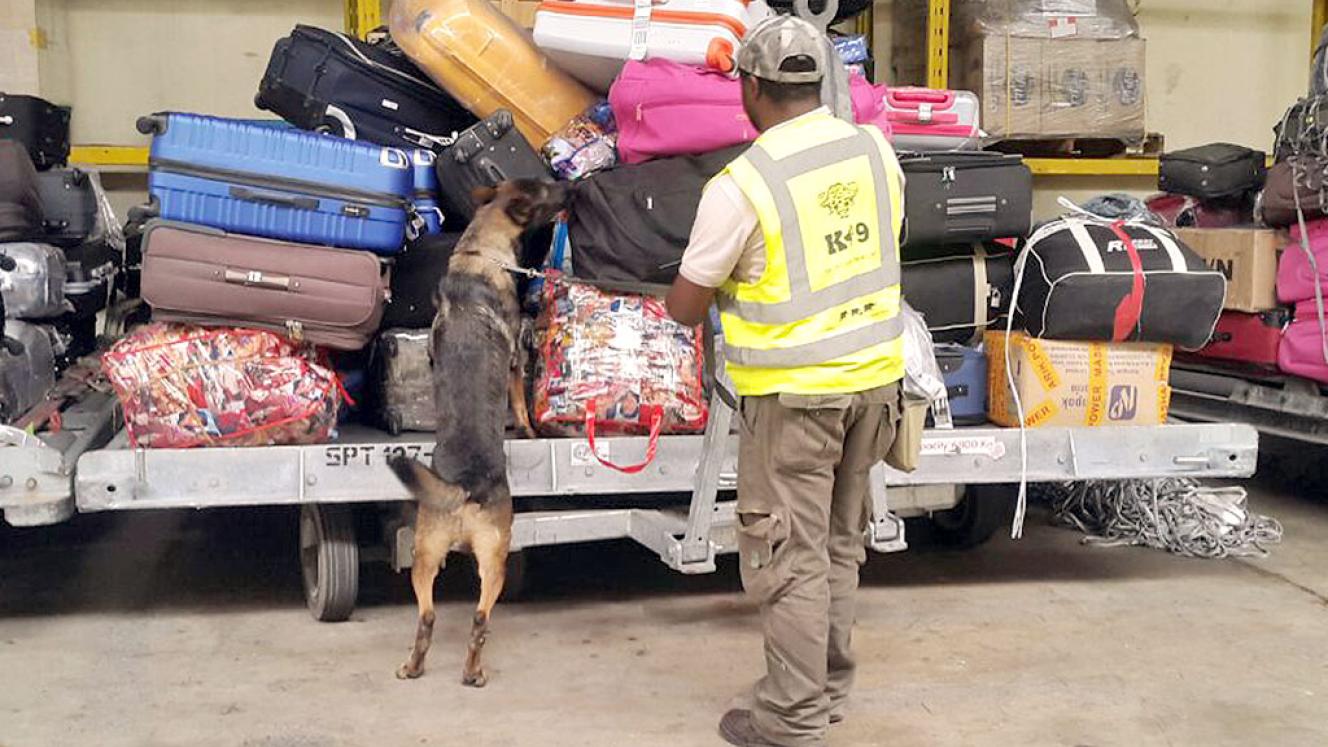
AWF, through its Canines for Conservation Programme, trains and deploys dogs to detect illegal wildlife products hidden in cargo or luggage.
The dogs will be located at sites to be determined by the Botswana Wildlife Authority. The three-year programme will be funded by AWF and is expected to start soon.
Across Africa, conservationists have begun developing innovative approaches to help curb wildlife poaching. The canine unit has already proved to be an enormous success
These highly trained dogs can detect even the smallest amounts of wildlife contraband, like ivory or rhino horn dust, and they boast a 90 percent accuracy rate.