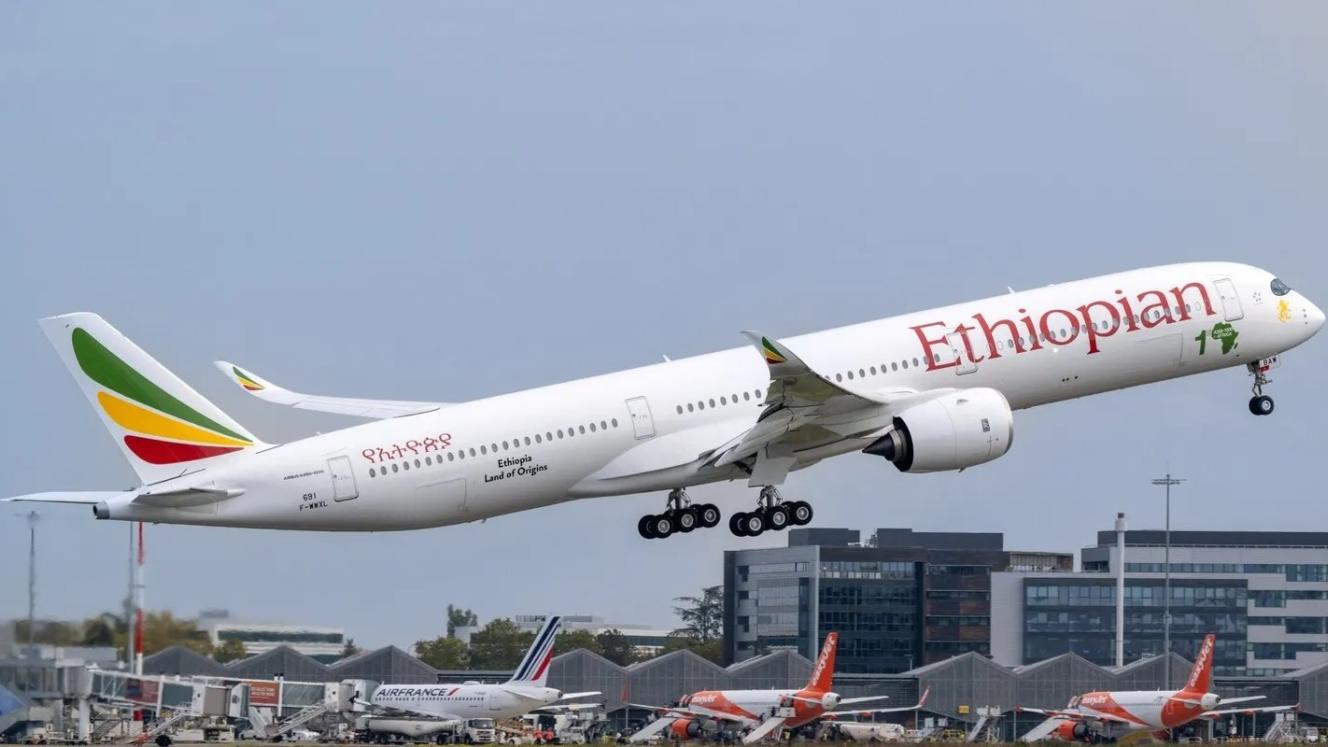
As Ethiopian Airlines marks 80 years of operations in 2026, the Addis Ababa-based carrier stands not only as Africa’s largest airline by fleet, destinations and revenue but also as one of the few state-owned airlines on the continent widely regarded as a commercial success.
Its rise is particularly striking against the backdrop of repeated failures, restructurings and collapses among other African national airlines.
While Ethiopian Airlines is wholly owned by the Ethiopian government, executives and analysts say one of its greatest advantages is the government’s deliberate decision not to interfere in day-to-day management.
“One of the reasons many African airlines are not fortunate enough to succeed is lack of autonomy,” Ethiopian Airlines Group CEO Mesfin Tasew said in a recent interview with the Africa Here and Now podcast. “Even though we are owned by the government, we have full autonomy to lead and make decisions on the airline like which routes to fly, who to appoint and how to operate.”
Aaron Munetsi, CEO of the Airlines Association of Southern Africa, believes government interference remains the biggest reason African national carriers underperform.
“The biggest contributor to the dismal performance of African national carriers is continued interference by governments,” Munetsi said. “Governments appoint executives, dictate fleet decisions, influence routes and impose excessive reporting structures. Invariably, these political appointees lack airline management expertise.”
By contrast, he says Ethiopian Airlines benefits from “a distant but professional relationship” with its government.
“The only government support Ethiopian Airlines gets is assistance in bilateral agreements that enable it to fly to destinations of its choice,” Munetsi added. “Operationally, the government does not interfere.
Leadership decisions
Another defining factor in Ethiopian Airlines’ model is its internal leadership pipeline. Unlike many African carriers that recruit politically connected executives from outside the aviation sector, Ethiopian grooms its leaders from within.
“All our CEOs started at the bottom level,” Tasew said.
That internal succession model creates leaders deeply familiar with the airline’s systems, culture and long-term objectives. It also reinforces institutional continuity – something often missing in airlines where leadership changes with political cycles.
“Every employee knows what the airline’s direction is,” Tasew said. “They are continuously trained and feel they are part of the organisation.”
Munetsi believes this culture of professional development is central to the airline’s edge.
“The recipe for Ethiopian Airlines’ success is simple: professional and experienced executives, continuous training of the workforce and discipline in executing strategy.”
Strategic direction
While many state-owned enterprises in Africa operate with short-term goals, Ethiopian Airlines has spent the past two decades guided by ambitious long-term strategic plans.
Its first major transformation blueprint, Vision 2010, launched in 2005 with the goal of doubling airline revenue in five years.
Rather than stopping after achieving its earlier targets, Ethiopian Airlines adopted a 15-year strategic roadmap through 2025 and again surpassed its goals. Building on that momentum, the carrier has since launched its most ambitious blueprint yet, Vision 2040, which outlines a bold expansion agenda aimed at cementing its dominance in African aviation. Under the strategy, the airline plans to grow its fleet from about 150 aircraft to 350, expand its network from 145 destinations to 243 and increase annual passenger traffic to 60 million.
To support this expansion, the airline broke ground in January 2026 on the US$12.5 billion Bishoftu International Airport mega-project expected to have capacity for 110 million passengers annually when completed.
“Many African airlines don’t have robust strategies. Where they do, leadership lacks the capacity to execute them effectively,” Tasew said.
Ethiopian Airlines’ geographic position has also worked in its favour.
Located near the centre of the continent, Addis Ababa has become one of Africa’s most strategic transit hubs, allowing the airline to connect passengers efficiently between Africa, Europe, Asia and the Americas.
That hub model has enabled Ethiopian Airlines to build a vast connecting network unmatched by most African carriers.
“Not every country can become a hub,” Munetsi said. “Governments need to understand that building a successful aviation hub requires infrastructure, liberal visa regimes and a broader aviation strategy – not just owning a national airline.”
He argues that many African governments are too focused on protecting struggling national carriers rather than building competitive regional aviation ecosystems.
Another often overlooked pillar of Ethiopian’s success is its investment in technical infrastructure.
The airline operates one of Africa’s most advanced maintenance, repair and overhaul (MRO) facilities, allowing it to service aircraft in-house and maintain strong operational reliability.
“Efficient MRO capacity ensures dispatch reliability,” Munetsi said. “That reliability is a competitive advantage.”
Analysts believe the Ethiopian model can be replicated elsewhere but only if governments are willing to relinquish control.
“Yes, this model can be replicated across Africa,” Munetsi said. “But governments must let go of interference and allow airline executives to perform their mandated responsibilities.”