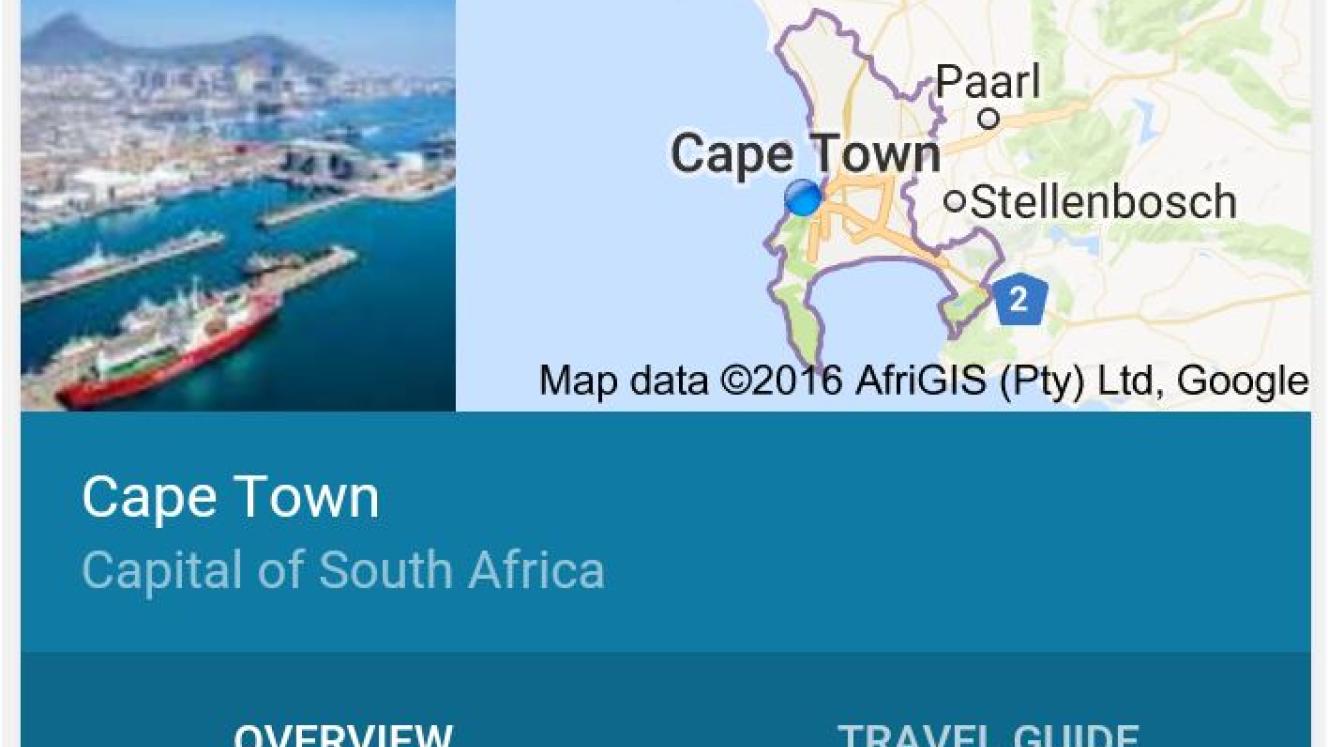
Destinations on Google, a platform that helps users discover and plan their holidays by offering travel tips and itineraries, has rolled out in South Africa. Google first announced the platform in March this year.
The platform is available exclusively on mobile, with Google citing a 50% increase in travel-related questions on mobile phones in 2015.
When searching destinations such as Cape Town, Johannesburg and Durban, Google now brings up an overview of the destination, while clicking on the “travel guide” tab pulls up itinerary options. Cape Town itinerary options include “Waterfront and Robben Island”, Table Mountain Area Highlights”, “Top Sights on the Cape Peninsula” “Historical Cape Town”. These itineraries are put together using an algorithm based on online searches.
Within the platform, users can also click the "plan a trip" tab to see pricing for hotels and flights, which Google pulls from Google Flights and Hotel search. Users can also click through to book flights and hotels, making bookings on either on a property’s website or through online travel agencies including Booking.com and Hotels.com.
Arthur Goldstuck, World Wide Worx MD, says Google has numerous initiatives to monetise search and this is one of them. However, he suggests that Google is unlikely to enter the booking and payments specie, but will likely make its revenue from this product by selling advertising to OTAs.
Alfredo Seidemann, Chief Marketing Officer at Rhino Africa, who recently spotted that the platform has been rolled out to locations in South Africa, says the development is interesting for tour operators because Google is essentially offering destination knowledge at scale. Seidemann says that Rhino Africa welcomes the innovation, which he argues will help inspire more people to travel to Africa.
Goldstuck also points out that the platform may impact how people search package deals, but that it will not necessarily impact people that are purchasing travel from the traditional channel. He adds that tour operators shouldn’t try to compete with the platform, which offers generic itineraries for a mass audience, but instead specialise in customised and niche offerings.
Suzanne Benadie, Sales and Marketing Director at Your Africa also suggests that bookings will continue to come through the traditional channel. “Yes, various apps or online booking channels will continue to ‘disrupt’ traditional distribution, but with the right mix of our technology and knowledge, we are seeing tech savvy markets doing research online, and the majority of their bookings still come through a travel agent or tour operator,” she says.
At the same time, says Seidemann, the new platform will force tour operators to stay innovative to keep up with the rapid changes of the internet industry, he says. Benadie also highlights the need to constantly adapt. “As inbound DMCs, we have to constantly find ways of adapting to the ever changing landscapes where we conduct business,” she says.
However, nether Goldstuck, Seidemann nor Banadie view Google Destinations as a serious competitor to tour operators, or inbound DMCs.
Benadie points out that while Your Africa continues to see substantial growth in many of its source markets through innovation, the operator believes that the human to human component of its business is as important as its online innovations, such as its business to business agents portal.
Seidemann does not believe Google’s platform threatens tour operators just yet. He points out that the complexities of travel in Africa make the tour operator role in packaging the destination irreplaceable. This is probably why the platform is available for Cape Town, but not for Kruger or other safari destinations in Africa.
Authenticity and destination knowledge will always have its place in the planning of itineraries to Southern Africa, says Benadie. “Matching the correct hotels or lodges with clients’ requirements and tastes can never be done by online searches,” she says. Benadie adds that the success of the Tourvest inbound brands is proof that traditional channels remain strong and relevant.