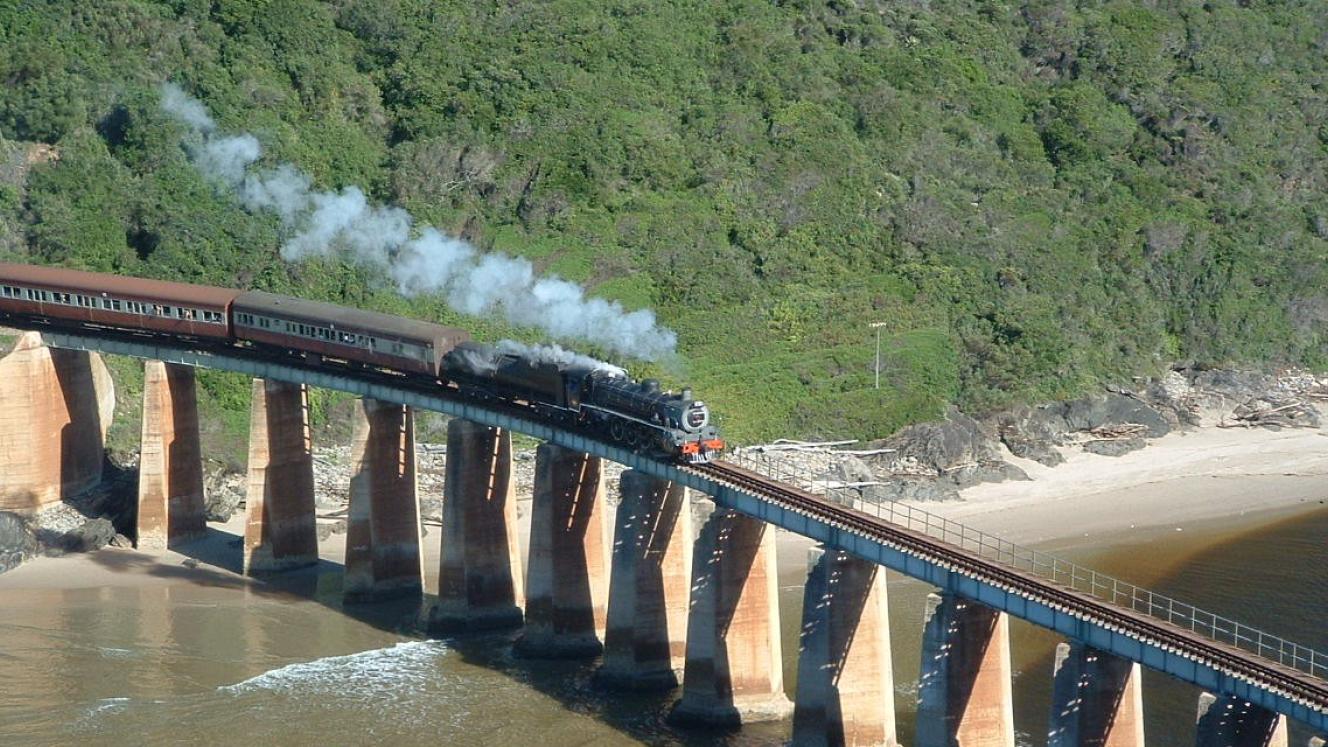
Rail tourism is gaining renewed momentum in South Africa with the Western Cape positioning heritage rail as a central pillar of its niche tourism strategy – a segment the province says is key to stimulating economic growth, regional dispersal and job creation.
According to a media release from Western Cape Minister of Agriculture, Economic Development and Tourism Ivan Meyer, the province is prioritising special interest segments that attract high-value travellers and drive spending into rural and small town economies. Rail tourism, Meyer said, is emerging as one of the most promising.
During a recent visit to a rail tourism initiative between Hartenbos and Albertinia, Meyer highlighted how train-based travel blends heritage appeal with nature-based adventure. The experience, delivered in partnership with Atlantic Rail, Bon Game Reserve and the Mossel Bay and Hessequa municipalities, includes a scenic rail journey, a stopover for game drives and a hovercraft trip.
“Travelling by train from Hartenbos to Albertinia, with a stopover at Bon Game Reserve, offers visitors a truly distinctive experience. It’s about combining heritage with adventure and ensuring that tourism benefits communities along the route,” said Meyer. Niche offerings such as rail tourism support the province’s Growth for Jobs strategy by stimulating small businesses and encouraging off-peak travel, he added.
The province notes that heritage rail already plays a significant role in the Western Cape’s tourism mix with successful operations such as the Ceres Rail Company, the Franschhoek Wine Tram and the Robertson Wine Train. Long-distance luxury routes, including Rovos Rail and The Blue Train, continue to operate between Cape Town and Pretoria, and Transnet’s 25-year concession to revive the Outeniqua Choo Tjoe is another indicator of growing confidence in rail-based tourism.
This resurgence aligns with global trends. International research referenced by the Western Cape government shows that special interest travel is expected to grow from US$5.1 billion in 2025 to US$17.4 billion by 2035, driven by travellers who typically spend 69% more than casual tourists and show strong loyalty and repeat visitation.
Apple Express revival
Beyond the Western Cape, other parts of South Africa are also moving to restore heritage rail assets. According to Daily Maverick, the Nelson Mandela Bay metro has approved, in principle, a proposal to revive the Apple Express: the narrow-gauge heritage train that once linked Gqeberha with the Langkloof. The project, to be developed through a public-private partnership with Southern Cross Africa, aims to integrate the service into cruise ship itineraries, with capacity to transport 50-200 passengers per journey.
Southern Cross Africa CEO Anton Barkhuizen told the publication that the revived Apple Express could become “one of the most unique showcase projects within the Cape provinces” with strong appeal for the international tourism market.