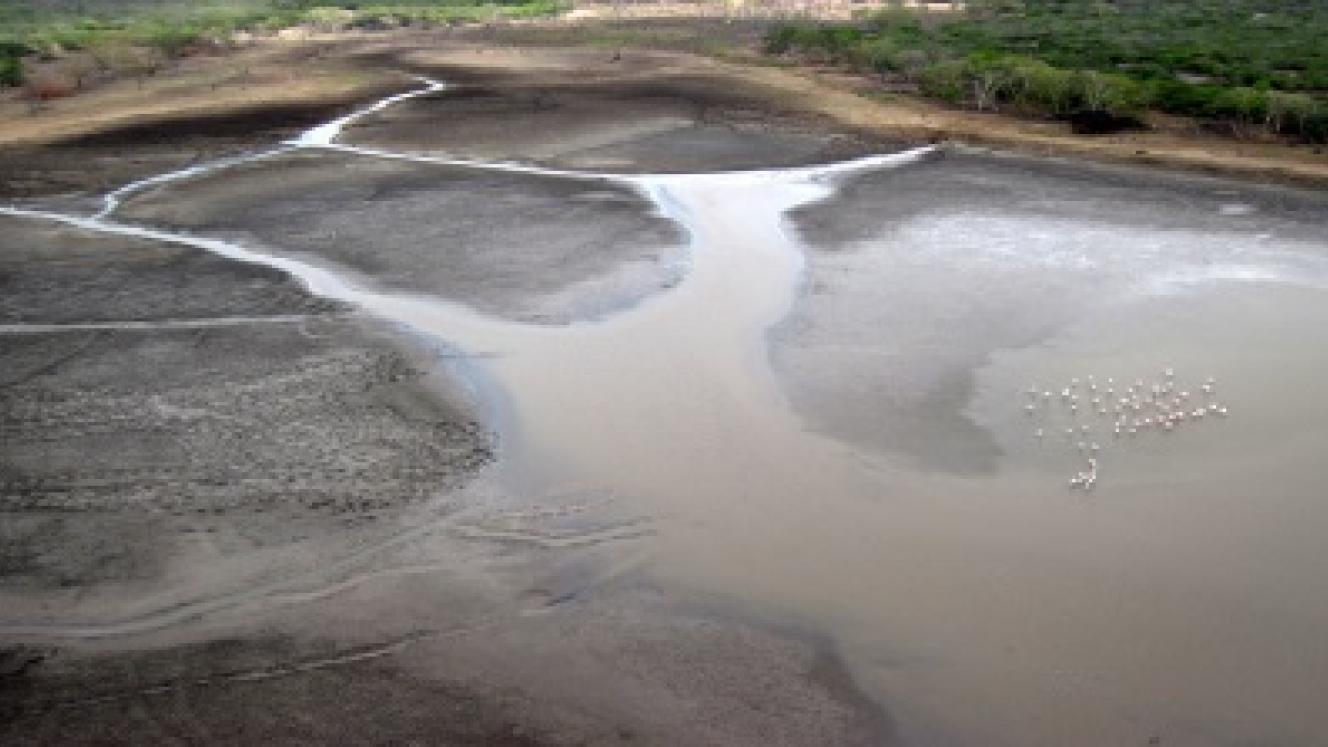
While iSimangaliso is experiencing the lowest recorded rainfall in 65 years, iSimangaliso and Ezemvelo KwaZulu Natal Wildlife Park Managers have been able to implement a number of interventions, such as refining carrying capacities and improving water systems.
The park has endured worse droughts in the past, especially from 2002 to 2009, but through better science and understanding from over 100 years of conservation management and global warming, the park has refined carrying capacities (game numbers). The worst drought in living memory was the one from 1956 to 1970.

The carrying capacities in uMkhuze today are set lower than they were in previous droughts and this is one of the reasons that grazing still exists in the greater part of uMkhuze.
“Drought is as a harsh reality in iSimangaliso – which includes uMkhuze – as it is in the rest of the country,” says Andrew Zaloumis, CEO of the iSimangaliso Wetland Park. “We accept that in larger parks like Kruger and iSimangaliso, drought plays an important and vital role in regulating species, weeding out weaker animals and reducing fuel loads for fire.”
The park has also established a network of new and improved auxiliary water systems. In uMkhuze this includes refurbishment of existing boreholes and sinking of new ones to provide water for animals as well as staff and visitors at the accommodation facilities. A constant supply of water is pumped to waterholes, such as kuMasinga and kuMahlala hides and further boreholes will be opened if necessary.
While some wild animals are bearing the brunt of the brutal conditions, giraffe, elephant and kudu are able to reach higher branches and are, therefore, more resilient. In the case of priority rare and endangered species such as rhino, iSimangaliso, together with Ezemvelo, will step in to assist by rescuing those stuck in mud or relocating animals to better grazing areas. In the 2002 to 2009 drought, the park translocated 23 rhino over the course of a few days from uMkhuze to the Eastern Shores.
“Yes, nature is harsh but also incredibly resilient,” said Zaloumis. “Conservation must consider the bigger picture, using the lessons of the past together with the knowledge and science of the present.”
Recent rain in late November had brought some relief to uMkhuze, however far more was needed to result in nutritious vegetation during the summer growing phase, said Zaloumis.