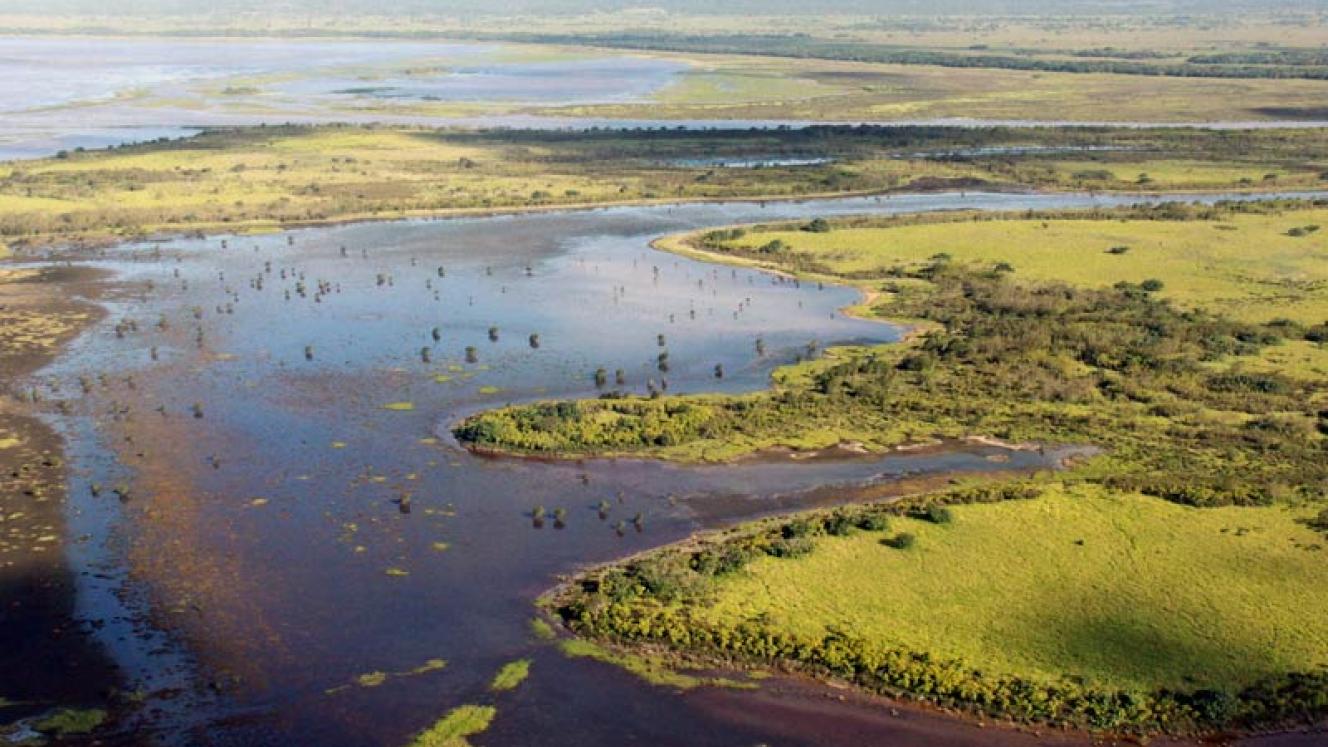
iSimangaliso Wetland Park Authority has announced that work to remove a portion of the artificially created island of sand made by dredger spoil at Lake St Lucia in KwaZulu Natal will begin this year. This follows the completion of a Global Environment Facility (GEF) study to find long-term solutions to improve the hydrological and ecological functioning of the Lake St Lucia system.
In July 2012 iSimangaliso implemented its strategy to let the uMfolozi River rejoin the Lake St Lucia system in a bid to restore the functioning of the estuarine system. Since 1952 the uMfolozi River has been kept separate from the Lake St Lucia system, reducing freshwater inflow to the system and interfering with natural functioning of the mouth. Based on new scientific findings, the rejoining of the uMfolozi River with its flow of fresh water into the lake is an important first step towards the restoration of estuarine function.
iSimangaliso’s GEF-funded study shows that the sand and spoil placed in the estuary mouth area by dredgers over a 50-year period continue to impede the flow of the uMfolozi River into the Lake St Lucia system, reinforcing their separation. A geotechnical survey completed in November 2014 has provided information on the size, moisture content and roughness of the soil and other material in the pile of dredger spoil in order to finalise the method to be used for the removal of the sand pile.
iSimangaliso CEO, Andrew Zaloumis, said: "iSimangaliso, with Ezemvelo KZN Wildlife, is striving to recreate the wholeness of nature and to strengthen Lake St Lucia’s resilience.
“Lake St Lucia was effectively drying up and the system degrading. New science confirmed the importance of allowing the system to function as naturally as possible by allowing the uMfolozi River’s fresh water to rejoin the Lake St Lucia estuary.
“Since the uMfolozi River rejoined Lake St Lucia in 2012, there have been compelling indications of ecosystem recovery, despite receiving lower winter and spring rainfall. Lake and salinity levels are well within the range tolerated by estuarine plants and animals.”