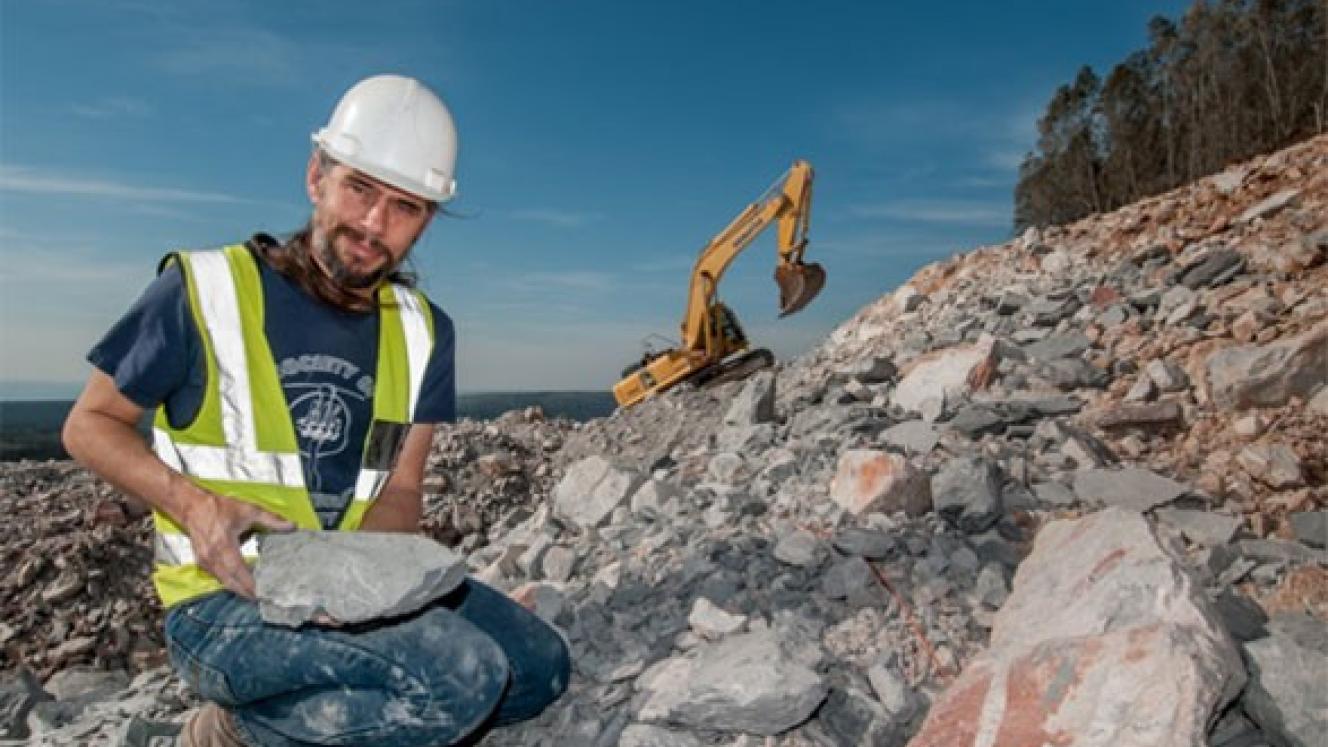
A zone containing 360-million-year-old invertebrate and plant fossils has been discovered outside Grahamstown, in the Eastern Cape, along the N2 during rock blasting for a new portion of the national road.
“The rock blasting opened a fossiliferous shale treasure trove of an ancient river mouth eco-system,” the South African National Roads Agency SOC Ltd (Sanral) announced this week.
“A number of new invertebrates as well as excellently preserved plant fossils of the Devonian era have been excavated and discovered in rock debris of the Witpoort Formation along the N2 between Grahamstown and Fish River,” announced Mpati Makoa, Sanral environmental manager.
“Many species have not yet been documented by palaeontologists,” said Dr. Robert Gess of the Albany Museum in Grahamstown, a palaeontology heritage consultant to Sanral.
Sanral is planning a rest and observation area for road users adjacent to the new palaeontological heritage site, according to Steven Robertson, Sanral Project Manager on the N2 Grahamstown to Fish River.
“We are converting the road design to accommodate a rest area that can be used as a picnic area, and we will be including information boards and displays on the significance of the fossils, their age and how they fit into the evolutionary history of Earth,” he noted.
Below is a short documentary of the fossil discovery outside Grahamstown.