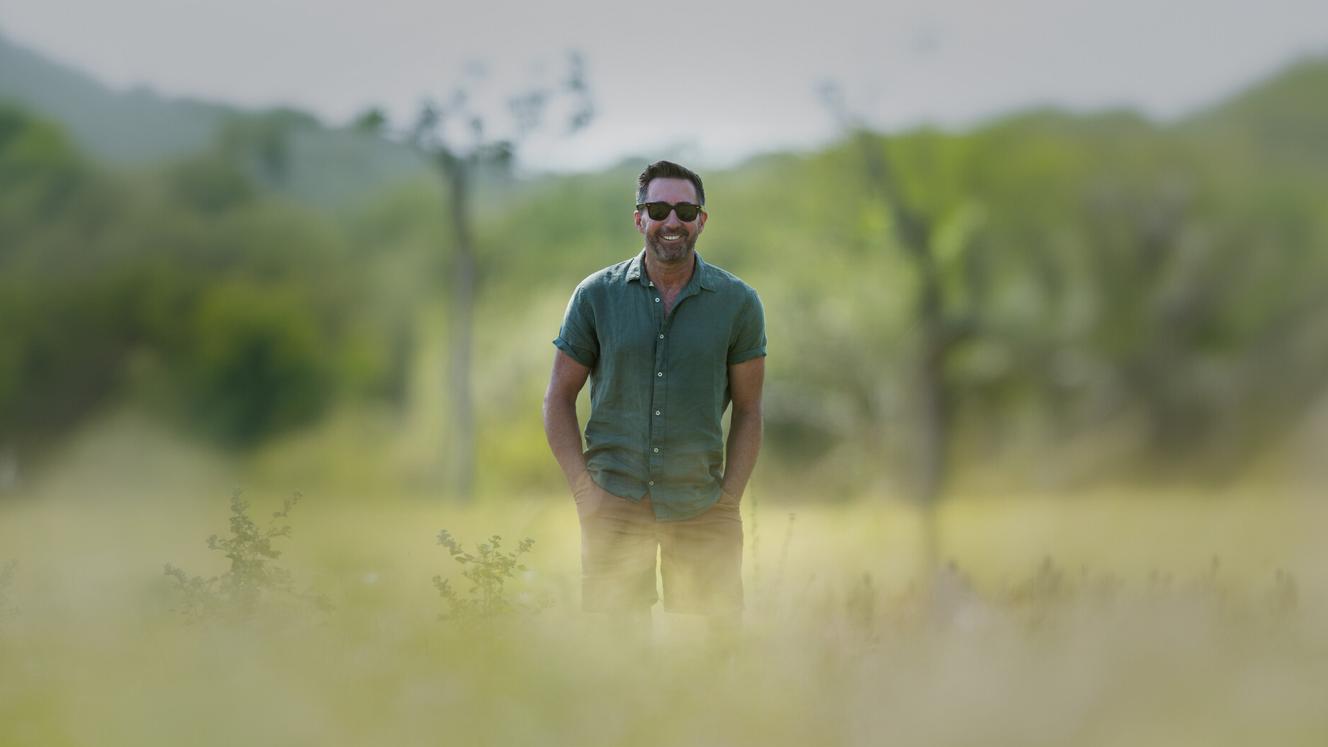
Tourism businesses need to prepare for a change in how knowledge is captured and applied as artificial intelligence (AI) alters the economics of the industry, according to Rhino Africa Founder and CEO David Ryan.
Speaking on AI and the future of tourism business at the SATSA Conference 2026 in the Cape Sun, Ryan said the significance of AI lies not simply in what the technology can do but in its potential to make something that has traditionally been scarce in tourism abundant: knowledge.
Ryan said his interest in AI initially came from a defensive position. “I didn’t want Rhino Africa to become the next Kodak,” he said.
His experience of the internet revolution provided an important reference point. The internet has not transformed tourism simply because it is clever technology, Ryan said, but because it has changed the economics of the industry. “When the economics of our industry begin to change, everything else follows. And that lesson has never left me.”
This led him to a question: “Are the economics of our industry about to change again – and what happens next?”
Abundant knowledge
Ryan said he and his team have tested hundreds of AI models while trying to understand the implications of the technology. “The question isn’t what can AI do but what is it making abundant?”
Throughout history, major technological shifts have taken something previously scarce and made it abundant – changing the economics around it, he said.
“At first I thought it was information but Google has already done that. Eventually it hit me that it is going to make something far more valuable for our industry abundant: knowledge.”
While previous technological revolutions changed how people access knowledge, Ryan said this did not fundamentally change where that knowledge resides. “In our industry, knowledge has always lived in extraordinary people.”
That, he argued, has also been one of the biggest constraints in the growth of tourism in Africa. Detailed destination knowledge, product expertise, logistical understanding and years of experience have traditionally been held by individual consultants, guides, operators and other specialists, making that expertise difficult to scale.
“Because it’s always lived inside people, we’ve never been able to scale it. Until now. For the first time, AI will allow us to capture, organise and apply human knowledge at scale. Human knowledge no longer has to live inside humans.”
Ryan said this realisation has changed the way he views AI.
“I realised I wasn’t looking at another chatbot or smart piece of software. I was looking at a new way of scaling human knowledge.”
It also raises a more fundamental question about what tourism companies actually do, he added.
“The economics of fulfilment are about to change forever. It forces us to ask a more interesting question: What business are we all actually in?”
Whether a company is a lodge, DMC, tour operator or other tourism business, Ryan argued that much of its operation is ultimately built around managing and applying knowledge.
“Every reservation system, every CRM, every itinerary, every consultant – we’re not just tourism businesses, we’re knowledge businesses.”
Because knowledge has traditionally been scarce, managing it has become a central function of tourism businesses.
“It’s why every agent needs a DMC. It’s also why every consultant, guide and employee we have is worth their weight in gold.”
But, if AI turns knowledge into infrastructure, Ryan said businesses will need to reconsider the structures they have built around that scarcity.
“What happens when knowledge is no longer scarce? When knowledge becomes infrastructure? What business do I build when knowledge is no longer scarce?”
Putting the theory to the test
Those questions prompted Ryan to reconsider Rhino Africa’s own business model and the knowledge ecosystem it had accumulated over more than two decades.
“We had built an extraordinary knowledge ecosystem but I couldn’t simply bolt AI onto a system where knowledge was scarce. It would never answer tomorrow’s question.”
Instead, Rhino Africa set out to test what a tourism business could look like if knowledge became infrastructure. The result was an experiment called MagicSafari.
Over the past year, Rhino Africa has captured, structured and connected 22 years of knowledge into a single AI-native knowledge ecosystem. The first application built on top of it is an AI-native safari planning tool.
Ryan stressed that its purpose is not to replace consultants but to change the cost of applying knowledge.
Tasks such as identifying suitable products, finding availability and managing logistics can consume hours of a consultant’s time. MagicSafari instead produces a shortlist based on the consultant’s requirements with the platform handling much of the planning and administrative work.
“Minutes instead of days,” Ryan said.
But the planner, he added, is just the first demonstration of a much broader idea. “The AI planner is simply the first proof that the infrastructure works.”
Tourism businesses have spent years building the knowledge ecosystems that made them successful, which is precisely why those structures can be difficult to question.
“If you were starting your business today, knowing everything you know, would you build it the same way?
“The biggest challenge facing African tourism is not AI. It’s whether we are willing to rebuild the ecosystems that made us successful in the first place,” said Ryan.