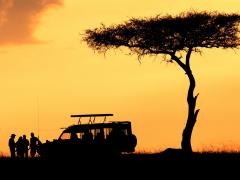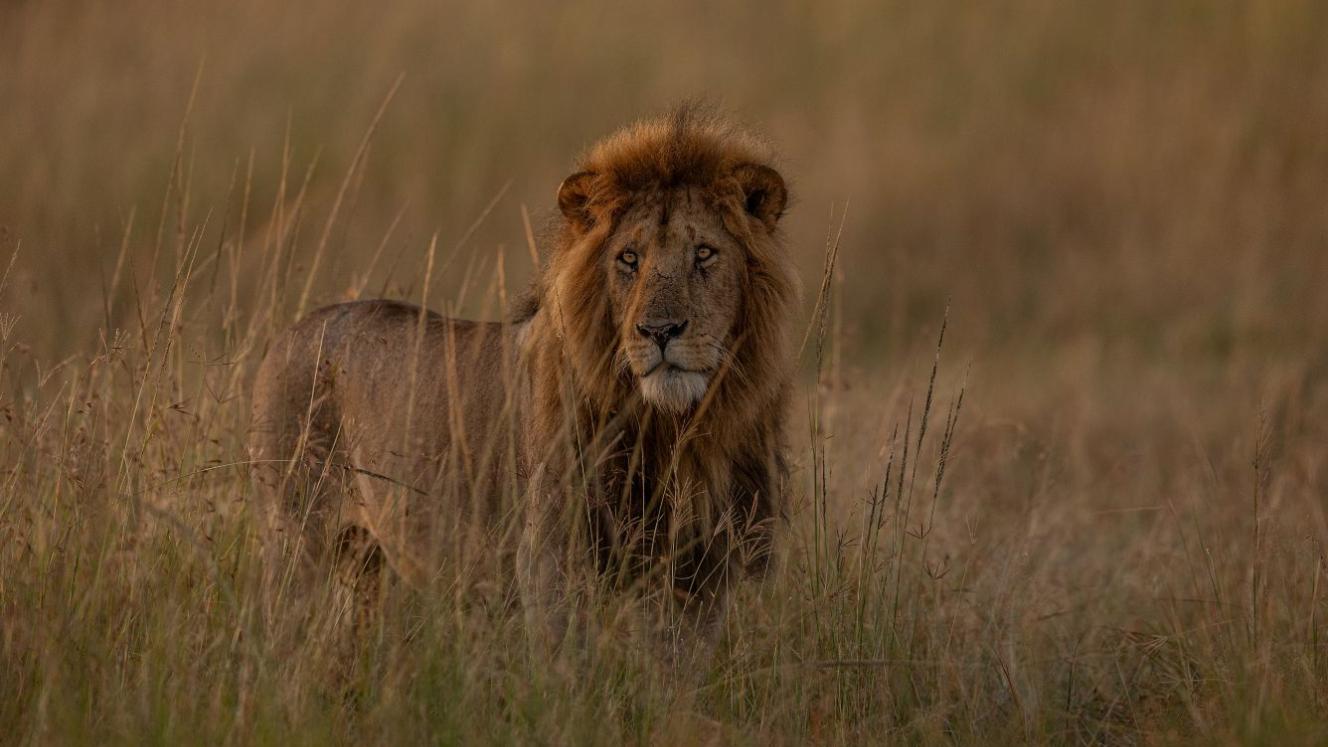
Tourist camps in the Maasai Mara may limit how many lions certain areas can support, according to a new study published in Conservation Science and Practice. The research found, although tourism remains central to conservation funding, the presence and concentration of camps can reduce local lion densities – even in areas with abundant prey.
The study examined the Maasai Mara National Reserve and eight surrounding conservancies covering 2 363 square kilometres. Researchers mapped tourist camps by size and year of establishment, using camp size as a proxy for overall impact, and combined this with eight dry season lion surveys conducted between 2014 and 2022. Lions were identified by their unique whisker spot patterns to enable accurate estimates of population density over time.
“Our results indicate that lions avoid areas with tourist camps regardless of prey availability,” said Niels Mogensen, Senior Programme Scientist at the Mara Predator Conservation Programme. “Even where prey is abundant, the presence of human infrastructure reduces how safe lions perceive the area to be, leading to lower local densities.”
The study highlights the cumulative impact of camps rather than the footprint of individual lodges. Between 2016 and 2022, 24 new camps were established in the Mara. In the years following their construction, lion densities in these areas declined significantly. Temporary rebounds in 2020, when tourism slowed sharply due to COVID-19, confirms that human activity drives these shifts and not habitat quality.
Researchers accounted for ecological factors such as vegetation type, proximity to rivers and prey availability to separate camp effects from natural constraints. Mogensen explained: “By focusing on maximum lion densities rather than mean population responses, we could isolate the spatial constraint imposed by camps independent of broader climatic variation.”
Climate change variables were not explicitly included as the study aimed to assess the upper limits of lion density rather than average population trends.
The findings were consistent across the Mara National Reserve, the Mara Triangle and seven surrounding conservancies. Lion densities were systematically lower in areas with high camp density regardless of the specific management unit.
Impact assessments
“This suggests tourism planning must explicitly consider cumulative spatial impacts on lions – not just individual camp footprints,” Mogensen said.
The study also identified thresholds for minimising impacts. “Impacts were weaker at lower camp densities, particularly when total camp length was less than approximately 700 metres within a 0.25 square kilometre area,” he added.
“Smaller camps, greater spacing and careful limits on clustering can reduce constraints on lion density while allowing tourism revenue to continue supporting conservation.”
While the study did not measure behavioural changes near camps, according to Mogensen, the observed population shifts indicate lions perceive camps as persistent sources of risk.
“Tourism supports conservation until it alters how animals perceive safety across the landscape. Beyond that threshold, even well-intentioned and low-impact tourism becomes an ecological pressure – not because it kills lions directly but because it subtly displaces them from the areas they need most,” Mogensen said.