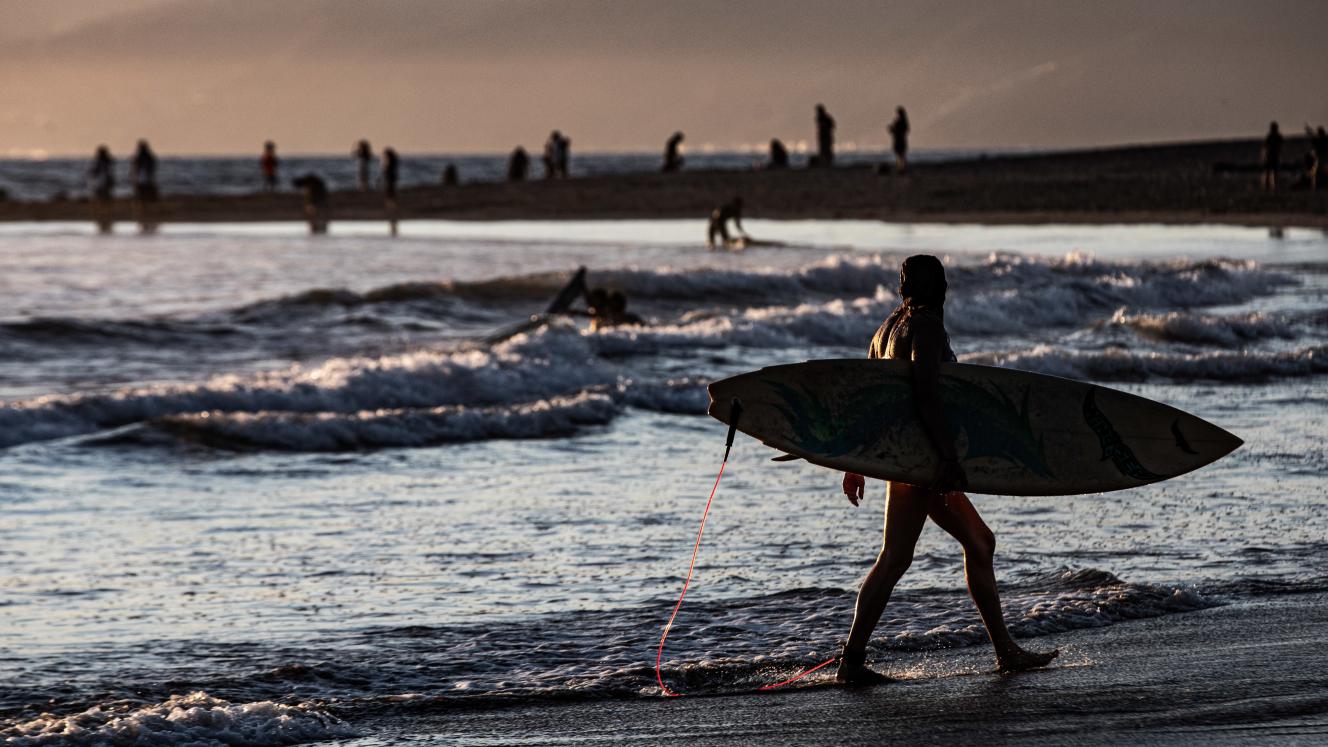
Jeffreys Bay is facing a tourism and economic setback after the World Surf League (WSL) removed its South African stop from the 2026 Championship Tour. The international event has traditionally driven winter demand for the coastal town.
The decision, announced earlier this year, dropped Jeffreys Bay in favour of Raglan in New Zealand with the WSL citing financial viability as the key reason.
The decision sparked political debate in South Africa with some critics blaming Gayton Mckenzie, Minister of Sport, Arts and Culture, for failing to support the event.
However, the Department of Sport, Arts and Culture rejected the claims, saying the privately owned and promoted event has historically operated without direct financial support from the department.
According to the department, organisers never submitted a formal funding application in line with regulations governing international sporting events.
“As no request for national government funding, guarantees or associated services was formally submitted for consideration, no funding decision was taken at national level,” the department said.
Tourism impact
For a town of around 30 000 residents, according to Maresa Meyer, Owner and Manager of Super Tubes Guesthouse, the event has been a major driver of occupancy. She said the event has always been “very important” for Jeffreys Bay and confirmed that all contest participants have cancelled their stays.
“It is going to have a huge impact on tourism through loss of income,” she told Tourism Update.
Deon Freemantle, Chairperson of Jeffreys Bay Tourism, said the WSL stopover has functioned as a critical mid-year economic injection with fully booked guesthouses, extended stays and strong spillover demand across restaurants, surf schools and retail outlets.
“The WSL brings international surfers and their entourage to Jeffreys Bay for three to four weeks. All our guesthouses around the Super Tubes area benefit tremendously from this event as they are fully booked during this period. Our restaurants and businesses receive a major financial injection as the whole town benefits from these international visitors,” he said.
Guesthouses have now opened their booking profiles to accommodate regular international and domestic travellers to take up the slack, Freemantle added. “It is up to all of us to make sure that we can limit the negative economic impact by offering alternatives.”
Despite the setback, Freemantle said the destination’s surf appeal remains strong internationally.
“We certainly would not lose the support or the appeal of the international surf supporters. We continue to receive our regular surf travellers from destinations such as Brazil, Europe, Australia and the Americas. Everyone in the worldwide surf community still aspires to surf our well-known surf breaks in Jeffreys Bay and to experience our warm hospitality and wonderful weather.”
However, Freemantle acknowledged the need for diversification and replacement programming during July.
“We need to continuously market ourselves as a safe, family-oriented holiday destination, with some of the best-known waves in the world, that caters to everyone. Then we need to work hard to establish another world-class surfing competition to replace the lost opportunity.
“The WSL has made a huge impact on tourism as well as financially. Its loss will certainly impact us during the July season every year. But the international and domestic market publicity that it created for us as a surfing and holiday destination in the past few years is of incredible value.”