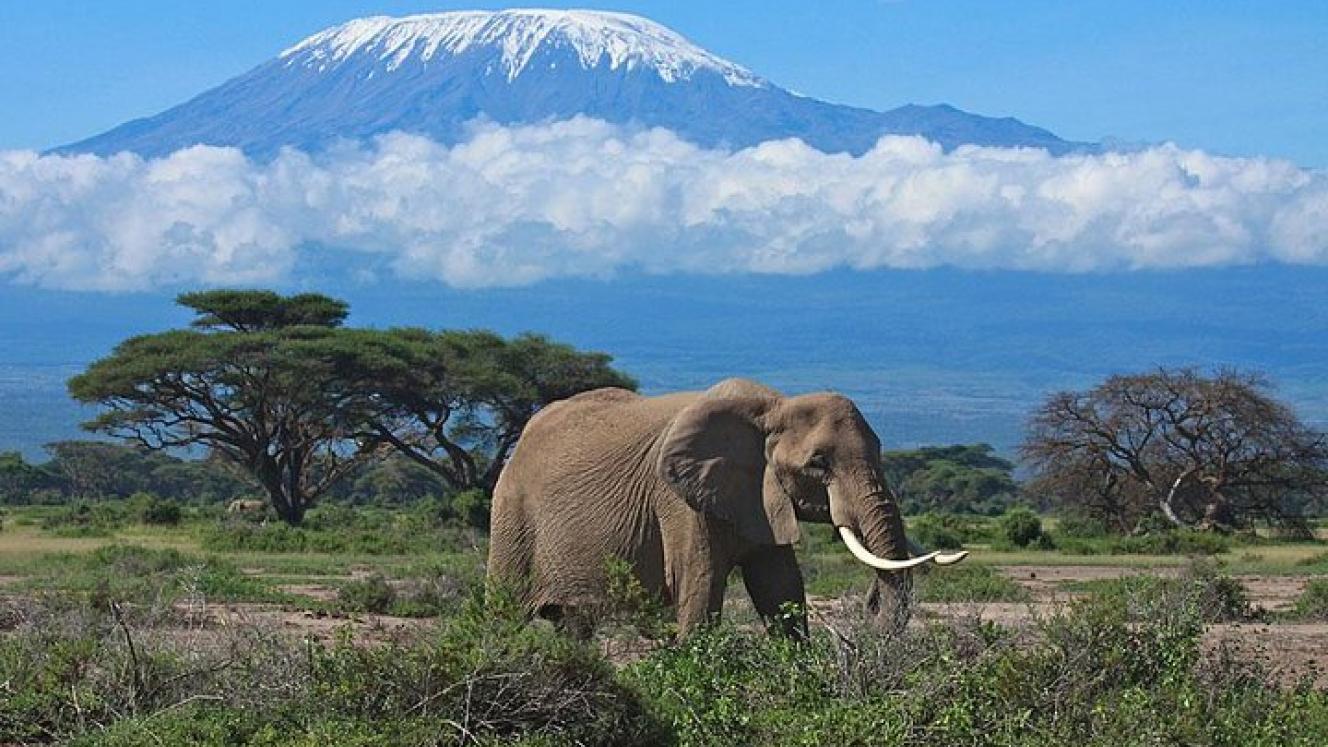
Kenya’s Supreme Court has dismissed a final petition by KiliAvo Fresh Ltd, effectively ending a proposed 180 acre avocado farm in a key wildlife corridor east of Amboseli National Park.
In 2020, the company began clearing land east of the park within the Kimana area – land identified as a vital wildlife corridor and pastoral grazing zone. Conservationists, community leaders and government agencies raised concerns that fencing, irrigation boreholes and intensive farming would block elephant movements, strain groundwater resources and violate agreed land use plans.
Although the project initially received approval, Kenya’s environmental authority later revoked KiliAvo’s licence after local people and conservationists raised questions about its environmental impact assessment. Multiple courts upheld the decision and, in January 2026, the Supreme Court dismissed the company’s final petition.
The decision has been widely welcomed by conservation groups and community leaders as a decisive affirmation of corridor protection and community-led land use planning.
“Today marks another big win in Amboseli’s battle against illegal development,” said Benson Leiyan, CEO of Big Life Foundation, which works across the Amboseli ecosystem. “Securing wildlife corridors ensures that livestock grazing and tourism can continue sustainably. KiliAvo’s repeated court failures show that attempting to undermine land use plans carries serious financial, legal and reputational risks.”
Growing land use pressure
The case highlights increasing pressure on the Amboseli ecosystem. Over the past two decades, large communal group ranches around Amboseli have been subdivided into individually titled plots. While land ownership has created new opportunities for households, uncoordinated development risks turning the landscape into a fragmented mosaic that blocks migration routes for wildlife and livestock alike.
In response, conservation organisations, county government and community institutions have pursued an alternative model centred on legally binding land use plans. Rather than freezing development, the plans designate where farming, settlement, livestock grazing and wildlife movement can occur. Open corridors are reinforced through conservation leases, tourism partnerships and carbon programmes.
Landowners who volunteer to keep land unfenced and unfarmed receive regular lease payments while controlled grazing remains permitted, preserving Maasai pastoral traditions.
Big Life currently holds conservation leases covering more than 48 562 hectares involving over 3 300 landowners with plans to expand protection to 93 077 hectares. Together with other organisations, nearly half of all land zoned for wildlife and livestock in key areas such as Kimana, Eselenkei and Nairrabala is now under conservation leases. In some zones, annual payments to landowners exceed KES100 million (US$775 240).
For local communities, the link between conservation and economic security is increasingly clear. A 2025 survey commissioned by the Amboseli Ecosystem Trust and Amboseli Trust for Elephants found that tourism, conservation and research activities across the wider ecosystem generated at least KES2.36 billion (US$18.3 million) in 2023 – a 74% increase since 2018. Most benefits accrued on community land outside the national park.
The wildlife economy now supports 1 520 full-time jobs (70% held by local Maasai) and pays KES59.2 million (US$459 000) in monthly salaries. It funds 1 723 student scholarships and provides KES54 million (US$418 700) annually in compensation to families affected by wildlife.
Today, wildlife-related tourism generates KES340 million (US$2.6 million) in land leases and bed-night fees, KES328 million (US$2.5 million) for local conservancies, KES396 million in local procurement (US$3 million) and KES627 million (US$4.9 million) in tax payments – more than triple the amount recorded in 2018.
“These are sustainable livelihoods that are well suited to this landscape,” said Samuel Ole Kaanki, Chairman of the Amboseli Land Owners Conservancies Association, which represents more than 800 Maasai landowners. “This week’s Supreme Court ruling confirms that the KiliAvo project has no future here. Large-scale crop farming in wildlife corridors would block movements, restrict grazing, increase human-wildlife conflict and ultimately undermine our way of life and the iconic elephants for which Amboseli is known.”
Leiyan added: “People often think Amboseli is timeless and unchanging. In reality, it’s undergoing enormous adjustments. Protecting corridors is fundamental to the future. With strong land use plans, community involvement and responsible tourism, this landscape can continue to support people and wildlife for generations.”