The 2027 International Cricket Council (ICC) Men’s Cricket World Cup presents an opportunity for South Africa’s tourism industry to draw visitors beyond host cities and into the wider destination but businesses need to start preparing now with careful marketing around the protected event.
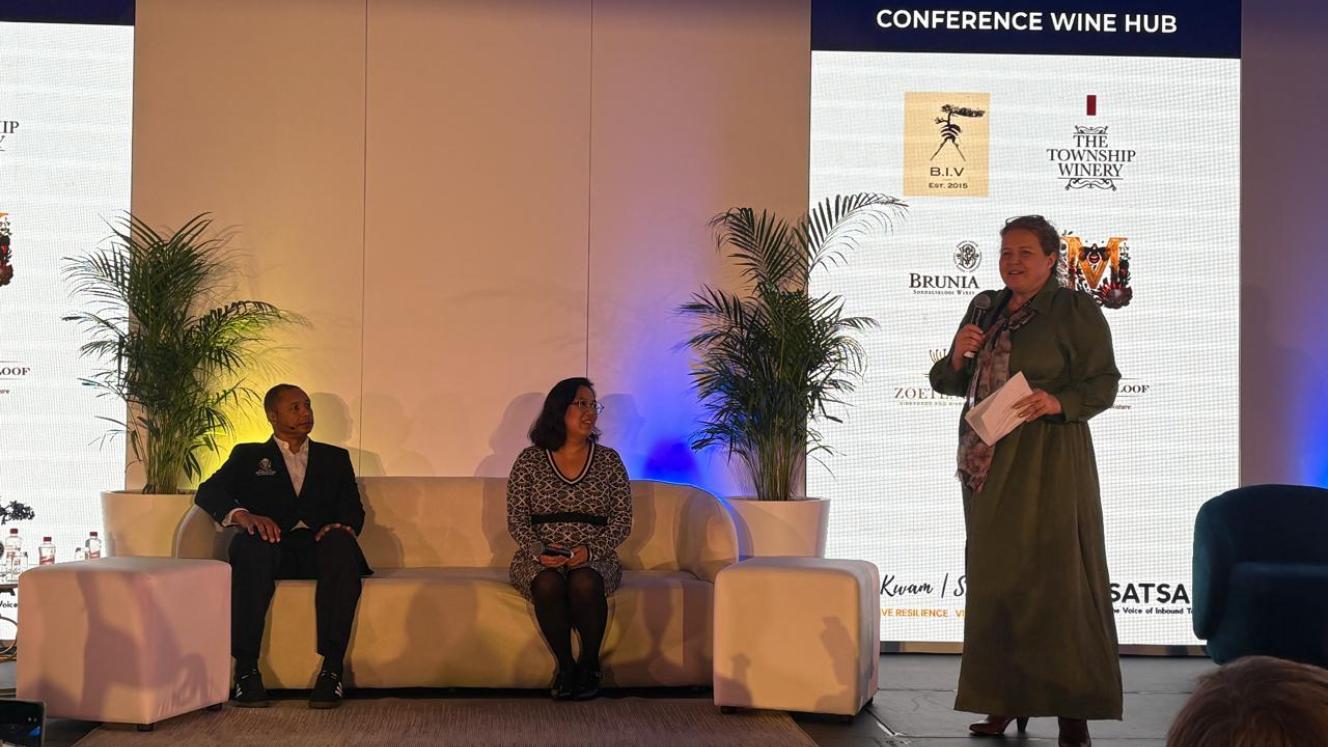
Speaking at the 2027 SATSA Conference, ICC Men’s Cricket World Cup 2027 Local Organising Committee Commercial Manager Gareth Flusk described the tournament as a “catalytic event” for tourism.
The tournament will run from October 2 to November 21, 2027, co-hosted by South Africa, Zimbabwe and Namibia. South Africa will have eight host cities: Johannesburg, Cape Town, Durban, Pretoria, Bloemfontein, East London, Gqeberha and Paarl.
A major announcement is expected on October 1 this year with the allocation of matches to cities from October 2 – giving tourism businesses greater certainty to begin developing products around the tournament.
Look beyond the matches
Flusk said some of the biggest opportunities for tourism will come from travelling supporters’ activities between matches.
India, England and Australia are expected to be particularly important international markets with major fixtures likely to draw travelling fans.
“There is going to be a lot of downtime in between games as well,” he said. “Fans can come with strong currency and the time in between games is almost as important as the schedule of games.”
Bronwen Auret, Chief Quality Assurance Officer at the Tourism Grading Council of South Africa (TGCSA), said the tournament offers an opportunity to disperse visitors beyond the traditional tourism centres.
“Whether we are doing the Garden Route or the Panorama Route, here is our opportunity. We’ve got two months, excluding the preparation time, and we need to keep them well engaged.”
She said the geographic spread of the tournament is “a gift”, particularly for destinations that could benefit from greater tourism exposure.
“We can go to the Free State, not through the Free State,” she said.
More than 340 000 visitors are expected around the World Cup, according to Auret, although over 60% are expected to be domestic.
The event nevertheless creates opportunities throughout the tourism value chain, including smaller operators.
“Small tour operators will be doing transfers between towns – Cape Town and Paarl, for example – for people to get there by road. It is easily accessible, whether you are big or small, to get involved.”
Auret also highlighted India as a major opportunity. “The Cricket World Cup is a great catalyst for resurrecting India travel – it’s up to all of us how we’re going to do that.”
Get World Cup-ready
Auret urged tourism businesses to prepare well ahead of the tournament, including ensuring accommodation establishments are graded.
During the 2010 FIFA World Cup, more than 6 000 establishments were registered with the grading system compared with around 4 500 currently. Just over 3 000 are within 20km of a 2027 Cricket World Cup stadium.
“If you are not graded, get graded,” she said. “The ICC is not interested in people who are not graded because of quality assurance – it’s a basic delivery on our promise.”
She said the industry also needs to begin developing and showcasing tourism products well before visitors arrive.
“When we start hosting at Meetings Africa and Africa’s Travel Indaba, and we want to bring people out so that we can pre-sell, we need you in the room to come with great ideas so we can demonstrate them to hosted media, buyers and trade before we get to the World Cup.”
Businesses interested in participating, can register here.
Stay out of ‘cricket jail’
However, Flusk warned businesses to understand the rules around association with the tournament.
While operators can make factual reference to individual cricket fixtures when promoting accommodation, tours or other products, ICC branding, the tournament logo, trophy and other protected intellectual property cannot be used without authorisation.
“There is no restriction on mentioning the fixture but any of the ICC marks, the trophy, association with the tournament or the logo wouldn’t be allowed,” Flusk said.
“The ICC isn’t as stringent as FIFA but it is still incredibly protective.”
Businesses can, for example, market accommodation around a match without presenting themselves as an official World Cup partner.
The tournament will be a protected event, meaning businesses that cross that line could face action from organisers.
“If, for example, a hotel group wants to appear as if it is associated with it, we can take them to task,” he said.
Despite those restrictions, Flusk said the tournament intends to create opportunities beyond official partners, including accommodation providers and small and medium enterprises (SMEs) in host cities.
“One of the big pieces we want to leave with the cities is legacy,” he said. “A big drive is the economic impact the World Cup will have and we want to encourage the inclusion of SMEs in each of the cities.”