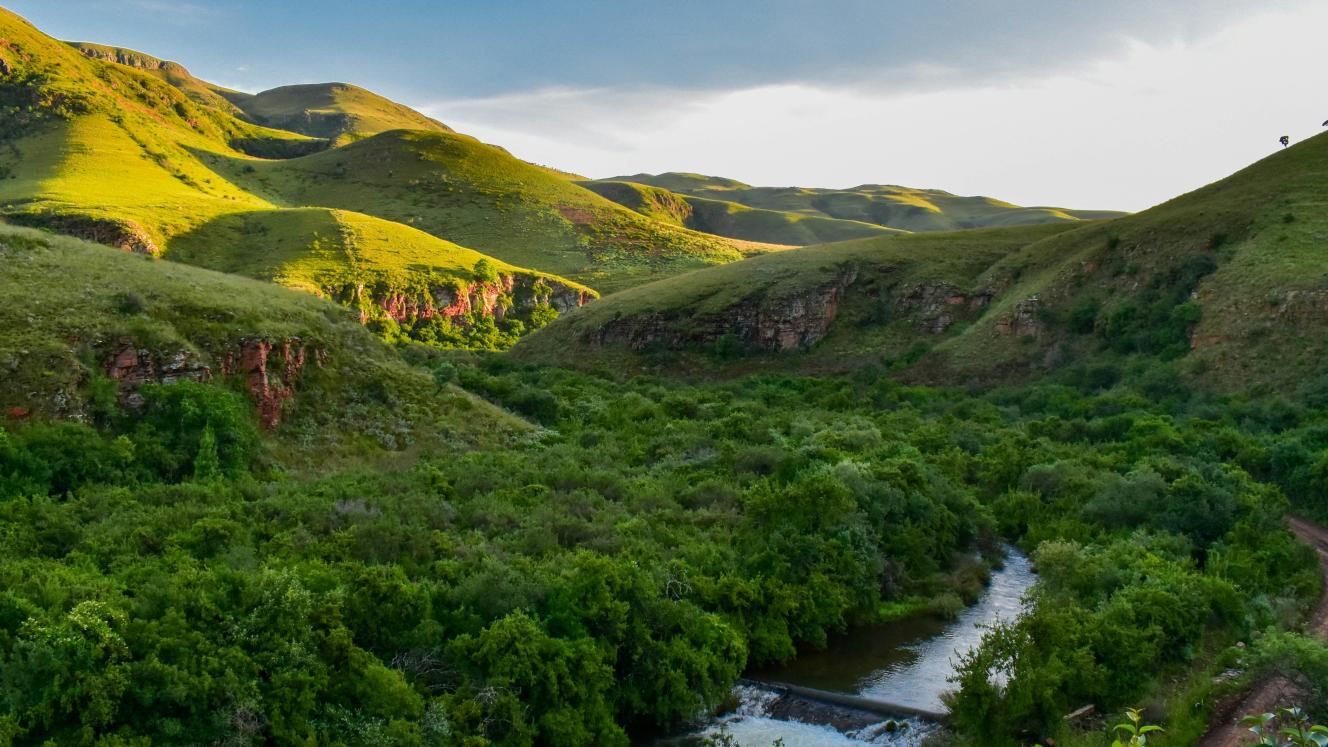
Industry stakeholders are calling for greater private-sector involvement, stronger marketing and faster infrastructure delivery to maximise the tourism potential of Mpumalanga as debate continues about the performance of the province’s tourism agency.
The discussion follows criticism by ActionSA and the Democratic Alliance (DA) raising concerns about project delays, vacancies, revenue shortfalls and tourism infrastructure. However, tourism operators say the focus should be on accelerating investment, improving safety and strengthening partnerships.
Graskop Gorge Lift Company Co-Founder and Director and SATSA National Chairperson Oupa Pilane told Tourism Update that tourism operations should increasingly be commercialised through public-private partnerships.
He said this approach would reduce pressure on the agency’s budget, improve operational efficiency and allow the Mpumalanga Tourism and Parks Agency (MTPA) to focus on tourism marketing and biodiversity conservation.
“MTPA should address the high salary bill through a leaner structure focused on its core mandate, tourism marketing and biodiversity conservation while expanding private-sector partnerships for operational functions,” said Pilane.
“Crime, combined with deteriorating infrastructure, has a more persistent impact on visitor confidence than seasonal factors like rainfall.”
Pilane called for increased police visibility and proactive interventions in tourism corridors.
“As the private sector, we are tirelessly working to protect key tourism routes through the deployment of private security firms. We also have a well-functioning aftercare programme in partnership with the MTPA to support affected visitors.”
He noted that operators remain concerned about delays at some high-profile tourism sites, particularly along the Panorama Route.
“While some projects, like Sterkspruit and Mdala, are advanced, prolonged timelines affect visitor experience and business planning.”
Kruger Lowveld Chamber of Business and Tourism CEO Linda Grimbeek said industry stakeholders are beginning to see progress despite longstanding challenges.
She said many of the projects under scrutiny require lengthy environmental approvals and procurement processes.
“Things aren’t built overnight. There are environmental impact assessments and all sorts of things that have to be done before real work can begin.”
Efforts to involve private investors in tourism facilities are increasing, Grimbeek pointed out.
“I know that there are some tenders out in the Government Gazette requesting investors to come on board, particularly in the aforementioned properties.”
Grimbeek added: “The one thing that the MTPA needs to improve is communication because old facts and statistics are being used against them.”
Complaints about tourism infrastructure have decreased significantly, she said.
“In previous months, I used to get around eight complaints daily. Now we don’t get complaints at all.”
While acknowledging that further improvements are needed, Grimbeek said current facilities are functional and maintained.
“Everything is functional and clean. There are appointed cleaning teams and permanently deployed maintenance staff.”
Marketing
While acknowledging progress in biodiversity programmes and some partnerships, Pilane said operators believe the MTPA needs a more robust marketing approach.
“Attending only two or three tradeshows is insufficient in today’s highly competitive global tourism market.”
Pilane pointed out that the private sector is set to present a Tourism Trade Relations Strategy, through a think tank forum, aimed at expanding market access and dispersing visitors across all key tourism nodes in Mpumalanga.
“We look forward to engaging with the MTPA and government on this proposal,” he said.
Grimbeek also highlighted the revival of the province’s collaborative tourism forum.
“Industry is reaching out to government and vice versa because the tourism industry does not stand on one side and government on the other. Together, we are the tourism industry.”
Grimbeek agrees that marketing requires greater investment.
“We need a lot more money for marketing. The province doesn’t have enough money for marketing.”
Projects nearing completion
The MTPA has defended its progress in infrastructure delivery, saying several projects are nearing completion.
Upgrades at Sterkspruit Nature Reserve are 95% complete and expected to be finalised by the end of June, the agency stated.
At Mdala Nature Reserve, upgrades are reportedly 98% complete with outstanding work limited to accessible toilets and parking facilities.
The MTPA also pointed to ongoing maintenance and improvements of facilities at Blyde River Canyon Nature Reserve and several projects in the pipeline, including a bulk water supply project at Bourke’s Luck Potholes and universal accessibility projects at Pinnacle Rock and the Three Rondavels.
About Mariepskop, the agency said a previous investor procurement process did not yield bids that met the required criteria. Today, stakeholder consultations have largely been completed and investor specifications are expected to be finalised by the end of July, the MTPA stated.
The agency acknowledged that vacancies remain a challenge because of budget constraints but said recruitment processes and organisational restructuring initiatives are underway. Applications for several critical positions close on June 19.
The recruitment process for a new Accounting Officer has been completed and awaits approval by the Provincial Executive Council.
Political criticism
Opposition party ActionSA has criticised the MTPA for delays at the Sterkspruit, Blyde River Canyon and Mdala nature reserves as well as failure to secure an investor for tourism facilities at Mariepskop. The party has also raised concerns about vacancies, noting that 777 of the agency’s 1 365 approved posts remain unfilled.
The DA has questioned the agency’s explanation for its revenue shortfall, arguing that crime, deteriorating infrastructure and governance challenges are affecting tourism demand more significantly than seasonal factors. The party also highlighted safety concerns in tourism hotspots, including areas around Kruger National Park, Numbi Gate and the Panorama Route.
Grimbeek suggested some of the criticism is linked to the political environment ahead of local government elections.
“Government has its own pace but, in all fairness, it is municipal election year. Some of the political parties are picking at very old issues to win approval.”
Looking ahead, Pilane said infrastructure completion, commercialisation, improved safety measures, stronger public-private partnerships and targeted marketing will be critical to unlocking the province’s tourism potential.
Grimbeek said restoring communication and strengthening collaboration between government and industry will also be important.
“For tourism, there should not be a distinction between government and private sector because then it is a blame game instead of a working game.”