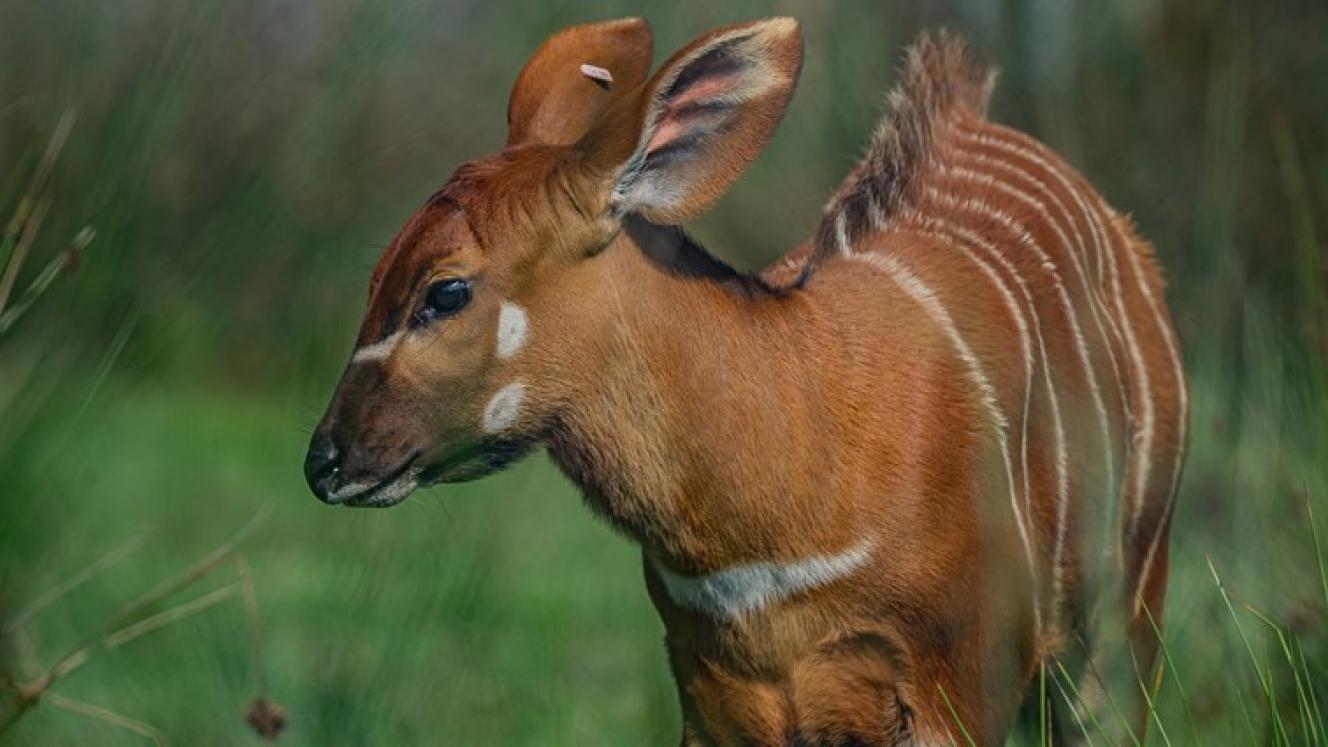
Mount Kenya Wildlife Conservancy (MKWC) is set to receive four male mountain bongos bred as part of a programme coordinated by Chester Zoo in the UK.
Bongos are one of Africa’s most endangered species, said to be found only in the highland forests of Kenya. However, habitat loss and poaching have reduced their numbers in the wild to fewer than 50, making it one of Africa’s rarest animals.
Experts from Chester Zoo, in collaboration with European Association of Zoos and Aquaria and Kenya Wildlife Service, have coordinated over the past 11 years with plans to increase population numbers.
“Collaborations like this are absolutely essential if we are to prevent this magnificent species disappearing altogether. They demonstrate how modern, science-led zoos play an important role in bringing species back from the brink – and the future of the mountain bongo may now be much brighter because of it,” said Nick Davis, Mammals General Manager at Chester Zoo.
The four male bongos are currently undergoing health checks and quarantine at a specialist facility, Safari Park Dvůr Králové, in the Czech Republic before being flown to Kenya and transferred to MKWC. Their addition will bring the number of mountain bongos bred under human care at MKWC to 100, supporting long-term ambitions to reach 750 by 2050.
Robert Aruho, Head of Conservancy at MKWC, said: “The introduction of these genetically valuable males will strengthen our breeding structure, accelerate population growth and play an essential role in building a resilient bongo population capable of supporting rewilding and long-term recovery in Kenya’s forests.”
In addition to pioneering the bongo breeding programme, Chester Zoo and MKWC have also partnered with KWS and Liverpool John Moores University’s Conservation artificial intelligence (AI) team to develop AI-powered cameras that provide close-up, real-time data on the bongo behaviour, movement and health without disturbing their day-to-day activities.