Private game reserves in the Eastern Cape are opposing a proposed wine farm near Makhanda,, warning that that the development could undermine the region's safari tourism appeal and affect conservation and tourism investment.
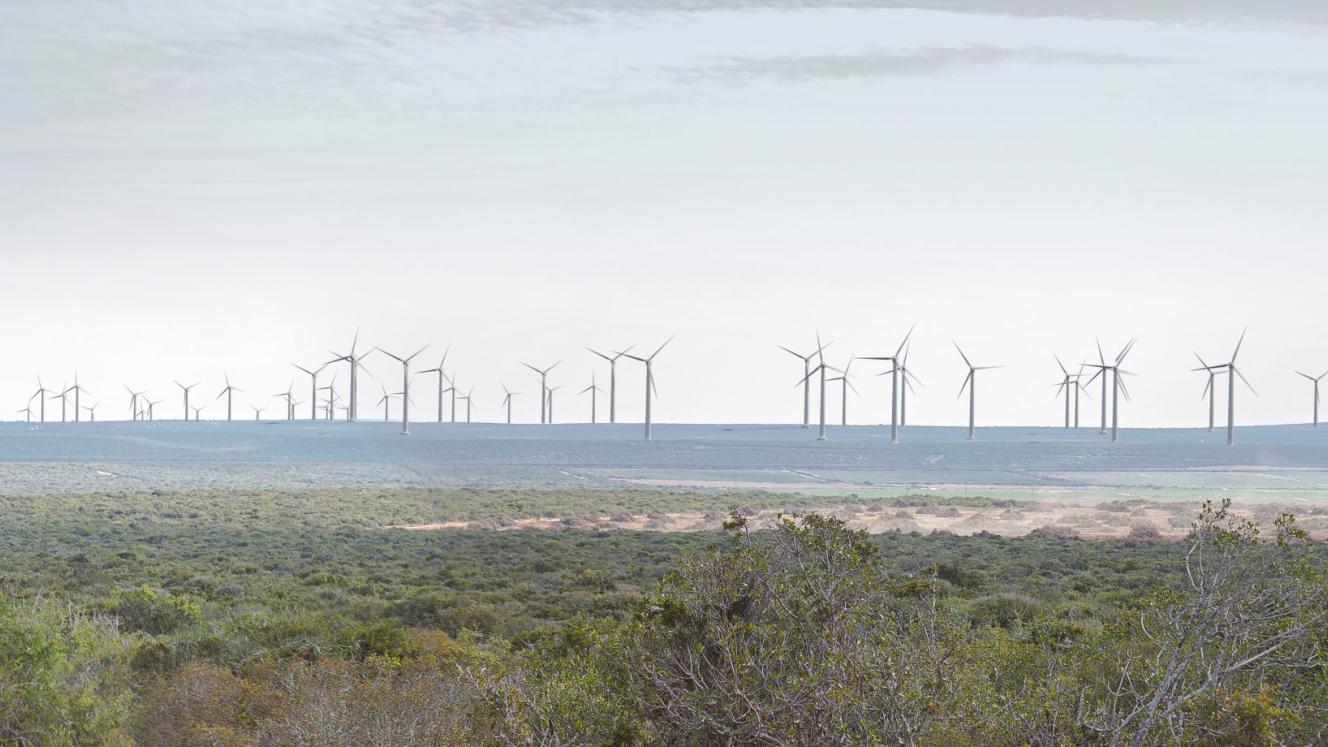
The proposed 296MW Governor’s Kop wind energy facility will cover a 9 386 hectare site around 17km from the town of Makhanda.
Graeme Rushmere, Co-Owner of Kariega Game Reserve, has been opposing the location of wind energy developments in the Eastern Cape for several years in the High Court review filed against the Albany wind farm and in the regional response against the Governor’s Kop facility.
“It’s important to state that we are not opposed to wind energy or renewable energy development. Our concern is where these developments are located and the potentially serious and irreversible consequences of locating industrial-scale wind farms in environmentally sensitive areas and established conservation and tourism landscapes.”
There are currently four wind farm projects within roughly 20km of Makhanda. Two are operational and two in development.
Opposition to wind energy developments has resulted in legal action. Kwandwe Private Game Reserve, Wilderness Foundation Africa and the Indalo Association (a collective of nine private reserves) have filed High Court review applications seeking to set aside the Department of Forestry, Fisheries and the Environment’s approval of the separate Albany wind energy facility further along the development pipeline.
Industries at conflict
Rushmere notes that conflict between renewable energy projects and existing tourism and conservation land uses has become increasingly common in the Eastern Cape.
“In the past few years, we’ve seen developments authorised within or immediately adjacent to highly sensitive landscapes, including within Makhanda and Albany.”
He argues that the implications extend beyond the immediate footprint of a wind farm.
“A wind farm is a major industrial development comprising enormous turbines, access roads, substations, transmission lines and associated infrastructure. When introduced into an otherwise predominantly natural landscape, it fundamentally and permanently changes the character, scenic integrity, tranquillity and wilderness experience of that landscape, potentially over a very extensive surrounding area.”
The concern, he says, is that reducing the number of turbines would not necessarily eliminate the impact on tourism.
“The visitor experience depends not only on the wildlife within a particular reserve but also on the surrounding natural environment, its scenic character, tranquillity and sense of wilderness.”
Rushmere also questions the ability of methods commonly used to assess tourism impacts to adequately account for the cumulative effects of multiple wind farms. Visual impact assessments and socio-economic studies, he argues, may not fully capture the potential consequences for the wider tourism economy.
“The relevant questions include whether changes to the landscape will influence regional reputation, visitor demand, occupancy, pricing, future tourism investment and ultimately employment and the funding of conservation. These are important economic questions, not merely matters of visual preference.”
John O’Brian, Chief Ecologist of the Shamwari Group, says eco-tourism and this level of industrialisation cannot co-exist in a rural environment.
“It has been determined that Governor’s Kop is a highly sensitive area for most of the measured impacts ranging from vegetation to avifauna, animals, visual and noise. In practice, one would assume that this development is not ecologically appropriate.”
According to O’Brian, the wind farm developer anticipates approximately 300 jobs during construction and an estimated 10 permanent positions once operational.
By comparison, Shamwari, Kwandwe, Amakhala and Lalibela game reserves collectively employ around 1 250 people mostly from surrounding rural communities, he points out.
The Department of Forestry, Fisheries and the Environment is reviewing the submitted scoping report and public comments received by the September 28 deadline. The next step will depend on the outcome of that review. If the project proceeds, it will enter a full environmental impact assessment phase lasting several months.