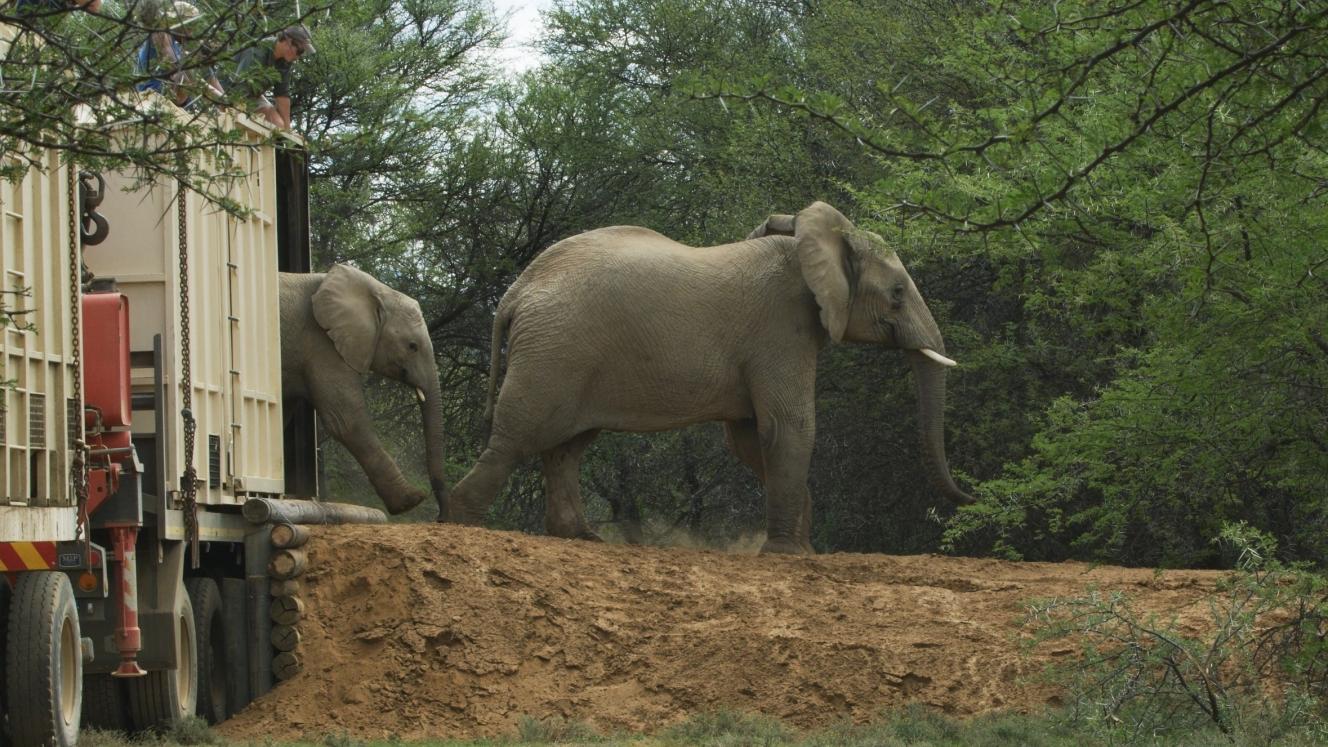
The introduction of a herd of elephant to Samara Private Game Reserve earlier this month has marked a conservation milestone as the animals return to their historic range.
The herd comprises a small family group of six elephants. Once they are settled, they will be joined by a mature bull. In time, another small family group may also be introduced.
Sarah and Mark Tompkins, owners of Samara Private Game Reserve, say when they first established the reserve in 1997, their aim was to restore the area to the wildlife haven it had been before species such as cheetah, rhino, Cape lion, springbok and elephant were eradicated by early farmers and settlers.
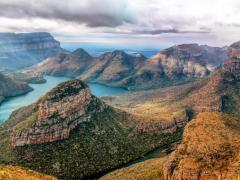
Sarah says: “This is an extremely important area from an ecological point of view. The Maputaland-Pondoland-Albany Thicket, where Samara’s 27 000 hectares of scenic wilderness are located, has been designated as one of the world’s 36 Global Biodiversity Hotspots.”
Samara, the largest private game reserve in the Eastern Cape, comprising four vegetation biomes, recognises its opportunity to act as a catalyst for conservation in the Great Karoo. The Tompkins are working to create a system of corridors and partnerships that will result in the creation of the third-largest protected area in South Africa.
As part of this, the reserve has long held the goal of reintroducing elephants back to the Plains of Camdeboo, made famous by Eve Palmer’s 1966 book of the same name.
“This goal is even more significant given that the population of African elephants is currently in a state of crisis, having declined by an alarming 30% in just 10 years,” says Sarah. “The recent Great Elephant Census, funded by Paul G. Allen, shows that numbers continue to decrease because of poaching for ivory, human-wildlife conflict and habitat loss.
“To safeguard the future of the species there is a need to manage elephants as part of meta-populations – a group of spatially-separated populations between which translocations can take place to ensure genetic diversity and to establish founder populations – in areas where elephants previously occurred but have since been eradicated, such as the Karoo.”
The translocation of Samara’s elephants was undertaken by wildlife capture specialist, Kester Vickery of Conservation Solutions, and was partially funded by the NGO Elephants, Rhinos & People and the Friends of Samara. It was also supported by Wilderness Foundation UK.