Kenya is targeting 50 000 visitors from the Middle East as part of the government’s wider ambition to attract five million international visitors annually by 2027.
The target would more than double the 20 480 visitors Kenya received from the Middle East in the 2025/26 financial year. Israel, Yemen and Iran accounted for 48% of those arrivals while the United Arab Emirates (UAE) contributed 10% and Saudi Arabia 7%.
“Connectivity has opened the door. Our task now is to bring more travellers through it and to bring investors with them. We are targeting 50 000 visitors from the Middle East by leveraging air access, targeted marketing, investment and our diaspora networks,” says Kenya Tourism Board (KTB) Chief Executive June Chepkemei.
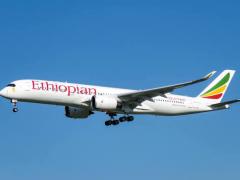
KTB recently partnered with Emirates and Qatar Airways in joint marketing, travel trade engagement and destination campaigns.
KTB is targeting the luxury, wellness, family travel, short breaks and business events segments.
Adapting the product
Industry players say converting improved connectivity into tourism growth will also require products and services tailored to individual Middle Eastern source markets.
Rosco Wendover, CEO of Angama, says: “Kenya has a lot to offer in terms of proximity, highlights in terms of conservation and travel, cuisine, highlands and plains like Amboseli and the northern circuit, the mountains, topography, the people, the thriving coast with Middle East influence.”
He argues that the country must also address the practical issues that can determine whether interest becomes a booking.
“We always need to strengthen the operational infrastructure, which is what KTB should influence through ease of aviation inroads, attracting Emirates to bring more flights and ensuring that ETAs and travel through Nairobi is not a bottleneck and is simple,” says Wendover.
He also sees seasonality as an opportunity, noting that post-Ramadan travel patterns should be better understood when planning campaigns.
HotelOnline Founder Håvar Bauck says: “The Middle East, particularly the Gulf, has substantial spending power. Some of the world’s wealthiest countries are in Kenya’s neighbourhood with deep historical ties to East Africa.”
He points to the Swahili Coast as one of Kenya’s strongest cultural advantages.
“The historic relationship between the Swahili Coast and the Middle East is written into food, architecture, trade and religious life. In Lamu or Mombasa Old Town, visitors can experience that connection firsthand. It is close to home and culturally familiar yet different and exotic.”
Bauck says Kenya must improve direct air access, value for money, infrastructure and perceived and actual safety. He also argues that halal food and respect for religious preferences should be built into the tourism experience rather than treated as an afterthought.
Cultural heritage, he adds, could encourage longer stays with sites such as Gedi, Lamu, Mombasa Old Town and other historic Islamic and Swahili sites offering a way to connect visitors with the shared history between the two regions.
There is also a climate proposition. Bauck says Kenya’s cooler highlands could provide an attractive escape when temperatures in the Gulf become extreme, particularly when combined with a safari.
Diverse itineraries
Barry Clemens, Group Chief Executive of Hospitality EQ, says the Middle East should not be treated as a single market. Travellers from the UAE, Saudi Arabia, Qatar and Kuwait can have different preferences, requiring more targeted products and marketing.
He sees considerable potential in destinations beyond the familiar Maasai Mara, Amboseli and Diani.
Northern Kenya, including the Mathews Range, Marsabit, Chalbi Desert and Lake Turkana, could be developed as premium adventure experiences. Laikipia and the conservancies around Mount Kenya can combine wildlife with private villas, horse riding, camel safaris and conservation experiences while Tsavo, Taita Hills, Chyulu Hills, Meru and the quieter parts of the coast offer alternatives to conventional itineraries.
“Not every Middle Eastern traveller wants to follow the same safari circuit. Some want space, scenery, privacy and the feeling of having discovered somewhere new,” says Clemens.
He believes Kenya needs to design products specifically for the market, including family villas, interconnecting rooms, private dining, prayer arrangements, halal food, Arabic-speaking guides and Arabic language content.
“We cannot simply take a safari programme designed for a European traveller, translate it into Arabic and expect it to work,” says Clemens.