SEO means Search Engine Optimisation.
Fundamentally, this means that a digital presence is developed and organised in such a way that search engines, particularly Google, will optimally recognise what it is about, by creating context and determining relevance.
However, this does not only impact your website, but all your content in the ‘Google Universe’. It makes a difference if you have a Google Business and have it verified. It impacts your ranking if your content in Google Business, Facebook, a blog and your website is not consistent or correct.
If your business is not present on Google - well, your business will not appear to exist
Today, Google has a worldwide market share of 92%. Second place, Microsoft’s Bing, doesn’t come close with just a 2.5% and Yahoo with 2% market share. Only if your source market is the US, then you might want to spend some effort to also feed Bing and Yahoo. Their market share in the US is 7% and 6% respectively.
Keywords are out - at least in the way they were used in the past
In the past, it was all about keywords that helped Google find your content. Google now uses more than 200 algorithms to analyse a Digital Presence and its content.
In fact, Google has become so intelligent, that it now reads a webpage like a human user. Google recognises how fast a page is loaded, how easily one can find things, how extensive the text is, what the context is and what the page is all about.
Content is king - relevant and consistent content
If there is only little content, then Google will classify the page accordingly. If the text is grammatically poor and has other issues of this type, Google will downgrade the page in its search. If the content found on the page does not directly fit into the context, it will be classified as less relevant, showing up lower on Google’s results page.
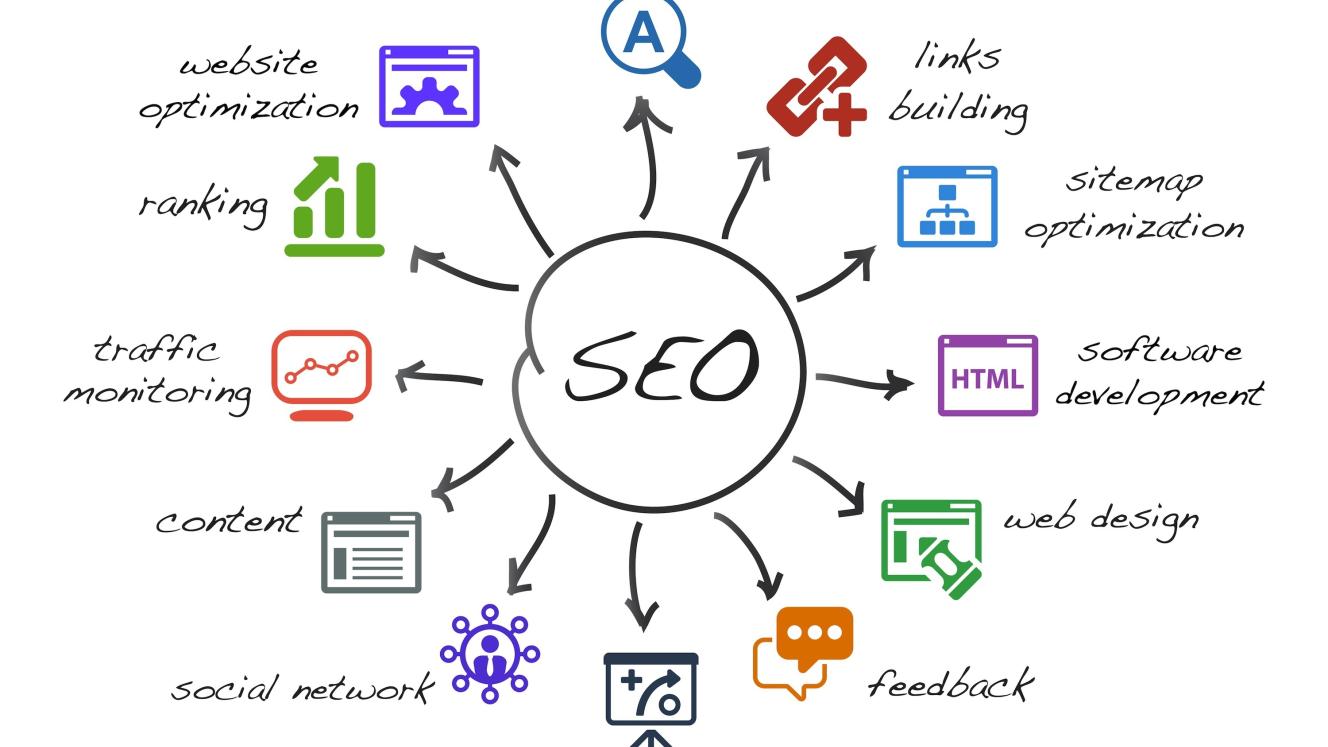
There are a canonical set of important rules for SEO. These can be categorised into ONPAGE optimisation for everything that can be optimised on a WebSite, and OFFPAGE optimisations that can be achieved through linking other pages to your own page as well as the content provided on Google Business, Facebook etc.
To begin with, it is important that you establish your ONPAGE optimally. This is where Metadata and Microdata are formulated. This is information that is contained within the page for SEO purposes, but not seen by a visitor to your page.
Then come the headings and the actual content. All of this has to be perfectly co-ordinated, because Google reads the page and immediately finds discrepancies.
Google has a Mobile First Strategy
Besides the content, it has become important that you have a website that loads super fast and is 100% according to the Google Mobile Guidelines. With the most recent change from Google in April 2017, your website will no longer be shown in Search Results if it is not compliant with the Google Guidelines.
Another aspect is the way you deliver your website. HTTP/2 and SSL encryption are considered a standard today and if your mobile website already is delivered using AMP, you will be in the very forefront with Google Search.
However, in SEO there is never a dull moment. Google changes its algorithms about 500 times a year.
This means that a one-time set-up of your digital presence and website is not a permanent fix. Your digital presence needs to be analysed on a week-to-week basis, with touch-ups required so that your site stays on top of the Google rankings.
The rainmaker Hospitality & Tourism Marketing Academy
The rainmaker Tourism and Hospitality Marketing Academy keeps you up to date with the most recent developments in Digital Presence Exposure, Optimisation, Reputation and Distribution Management.
Every month we publish a dedicated marketing tip or highlight certain travel and consumer trends for the Tourism and Hospitality Industry.
Rainmaker is the brainchild of some of the most experienced hospitality, tourism and digital marketing veterans in the industry. We bring 50 years of experience in the hotel, tourism, sales and marketing fields, as well as more than 35 years of experience in IT and 15 years’ digital marketing experience to your project. This is enhanced by over seven years of in-depth research and involvement in the Southern African hospitality and tourism industry, giving us peerless insight into the various source markets, market segments, value chains and market dynamics.
To find out more about Rainmaker, click here.