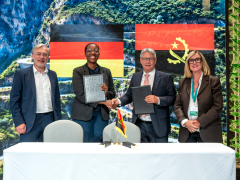
The trans-frontier conservation NGO, Peace Parks Foundation (PPF), has signed a partnership agreement with Mozambique to merge the Maputo Special Reserve (MSR) and Ponta do Ouro Partial Marine Reserve (PPMR), in an effort to support the management and transformative tourism development of these two bodies.
Initial funding of $16m (€13.56m) has been donated by the Reinet Foundation, the Wyss Foundation and other private donors, as well as the World Bank-funded MozBio programme, which is also investing into the development of the reserves.
“Mozambique is proud to partner with Peace Parks Foundation, and we are especially pleased to see continued energy and resources being devoted to the development of the Lubombo Transfrontier Conservation Area,” says Minister of Land, Environment and Rural Development, Celso Correia. “Maputo Special Reserve and Ponta do Ouro Partial Marine Reserve have tremendous potential to develop as fully-fledged tourism destinations that will benefit Mozambique and its people.”
The partnership will involve Peace Parks providing technical and financial support for conservation and tourism development activities, which will entail merging MSR and PPMR into one management structure. The adjacent reserves border South Africa’s Tembe Elephant Park and UNESCO World Heritage Site, iSimangaliso Wetland Park, and are all part of the Lubombo Transfrontier Conservation Area (TFCA).
Peace Parks Foundation CEO Werner Myburgh said: "This is the second partnership agreement that Peace Parks Foundation has signed with the Mozambique Government. The first, also with Mozambique, was signed in 2015 to help develop Zinave National Park as an integral component of Great Limpopo Transfrontier Conservation Area. The purpose of these agreements is to protect large ecosystems by connecting protected areas to the benefit of both people and nature. The Elephant Coast, one of the few protected areas in Africa where elephants occur in a park bordering the ocean, has the potential to become Mozambique’s premier eco-tourism destination. This is also the first marine transfrontier conservation area in Africa, jointly managed by Mozambique and South Africa.”
MSR falls as part of one of the world’s 36 most biologically-rich and endangered terrestrial ecoregions. It is an important component in the protected areas system of Mozambique, combining 1 040km² of coastal lakes, wetlands, swamp forests, grasslands and mangrove forests with the shores of the marine reserve, and its wide variety of remarkable bird and marine species.
The marine reserve component stretches across 678km², and is the most important leatherback and loggerhead turtle nesting ground along the entire 2 800km Mozambican coastline, with more than 1 000 turtles coming to nest on these shores every year. Together with the neighbouring iSimangaliso Wetland Park, it forms Africa’s first marine transfrontier conservation area.
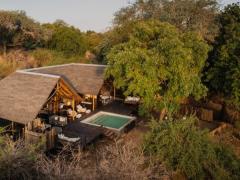
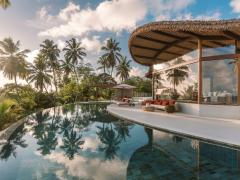
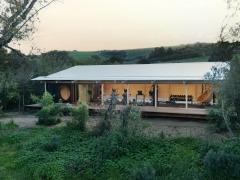
The potential for tourism development is great. In addition to the above natural assets, there is only one five-star lodge, Anvil Bay, currently in operation, which opens up the opportunity for additional accommodation across a wider cost and experiential offering. As such, two new five-star coastal lodges will be built by concessionaires, along with two mid-level, fully-serviced lodges – one along the coast, and the other on the shores of one of the many freshwater lakes occurring throughout the park. The lodges will also offer exclusive camping facilities, a network of 4x4 trails complemented with exclusive campsites, and trail camp for guided walks and kayak trails.