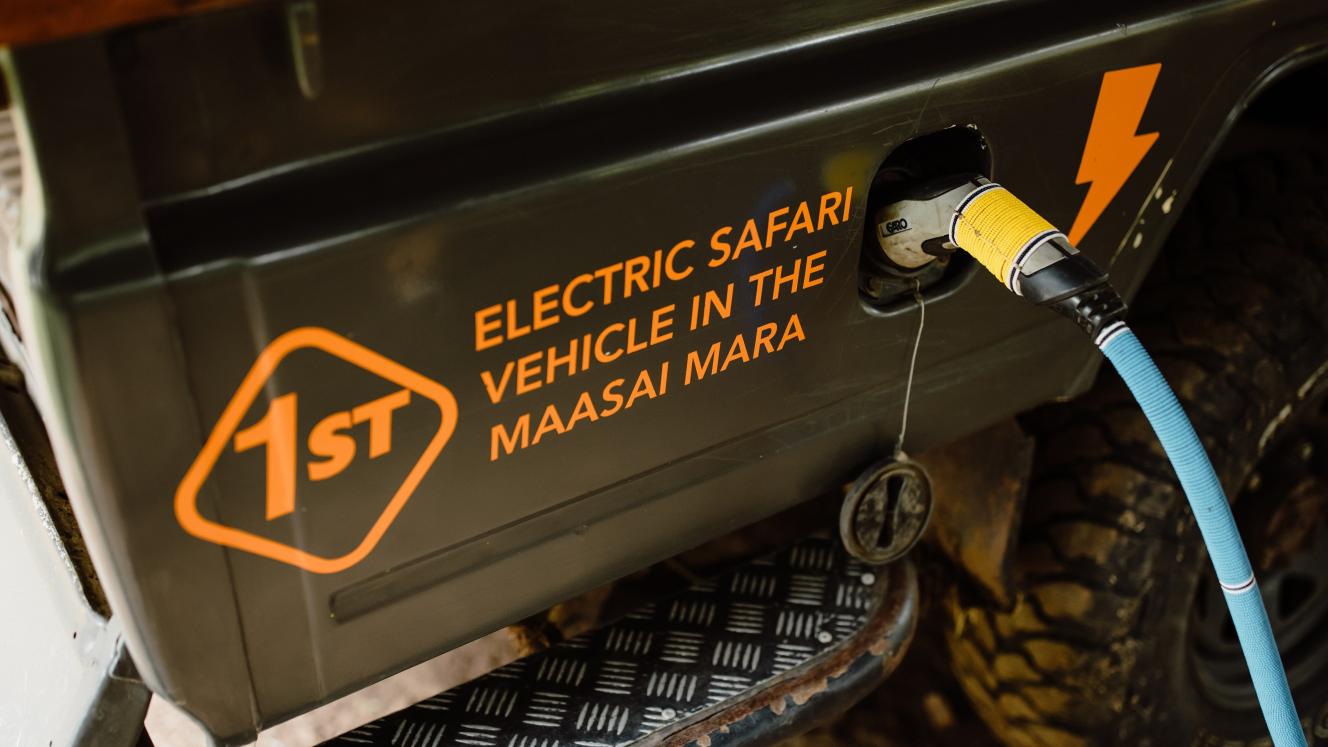
Electric vehicle (EV) safaris are moving beyond small-scale pilot projects as improving technology, reduced conversion costs and rising fuel prices accelerate adoption across the safari industry.
Operators in East and Southern Africa say the sector has reached a turning point where EV safari vehicles are becoming commercially and operationally viable for wider rollout.
According to Gerard Beaton, Head of Operations at Asilia Africa, operators across Kenya, Tanzania, Botswana and South Africa have spent the past five to seven years testing different EV solutions in safari environments.
Asilia Africa currently operates about 200 safari and transfer vehicles across East Africa with roughly 95% still fuel-powered.
Its EV fleet includes seven electric game viewers at Emboo Camp in Kenya’s Maasai Mara, one EV game viewer at Encounter Mara, an EV transfer vehicle and two hybrid city vehicles in Nairobi as well as a plug-in hybrid safari vehicle in Arusha.
Beaton expects a slow roll-out of Asilia Africa’s safari fleet of over 30 EVs although guest response to EV safaris has been overwhelmingly positive.
Operational advantages already identified include reduced fuel and servicing costs, emissions and reliance on fuel deliveries into remote areas as well as quieter wildlife sightings.
“However, most of all, an enhanced guest experience as they can hear the guide so much easier,” said Beaton.
Quieter operations are becoming one of the biggest attractions for safari lodges, he added.
“When you’re lying in your tent at dawn, as the sun rises and it’s very quiet, you hear noise from a long way,” Beaton said. “When you’re in a camp that’s operated by EVs, you suddenly don’t have five diesel engines starting up.”
Fuel prices and changing economics
Operators say rising fuel prices are also starting to shift the economics of safari EV adoption.
Beaton pointed to recent fuel increases and policy shifts in Kenya where the government has announced tax exemptions on the first 100 000 EV units.
“The fuel surge in prices is a relatively recent thing,” he said. “But I definitely think there are people who have been more conscious of it in the past few months.”
Conversion costs are also falling rapidly. Beaton said early safari vehicle conversions cost more than US$50 000, making them difficult for operators to justify alongside the cost of purchasing new Land Cruisers and safari modifications.
“The more recent prices people have been talking about are between US$25 000 and US$30 000 for that conversion,” he said. “That definitely increases the appetite for vehicle conversions.”
New conversion technology is also significantly reducing downtime.
“Our first conversion took three months,” said Beaton. “However, a company in Nairobi recently did a full conversion in 36 hours.”
Infrastructure and operational challenges remain
Despite growing momentum, Beaton said remote servicing and technical support remain major hurdles.
“One of the biggest considerations has been developing specialised technical support in remote wilderness areas, which is still an emerging space across East Africa.”
Earlier EV systems using multiple smaller batteries also proved more difficult to manage operationally.
“Recently, we operate with one or two batteries, which makes battery management a whole lot easier,” said Beaton.
Charging infrastructure remains another barrier, particularly for long-distance safari transfer operations.
“For our city-based safari cars travelling to national parks, often long distances, the charging infrastructure en route simply does not exist yet,” Beaton said.
Camp-level infrastructure investments are also substantial with systems capable of charging six vehicles overnight estimated at between US$60 000 and US$85 000. Even so, Beaton said the technology is improving quickly.
“Technology is changing very fast. Within the past 18 months, we have seen multiple suppliers emerge.”
Safari industry shift
Beaton believes EVs will become dominant in lodge-based safari operations over the next two decades.
“If we’re speaking 20, 25 years, I definitely think EVs will be the majority of the vehicles out there, which will probably be complemented by hybrids.”
He expects adoption to accelerate sharply over the next decade.
“I think we’re going to see a big change in the next three to five years when, maybe, up to 20% of the safari industry uses electric vehicles and, in another five years, it’ll be 60% to 70% using electric vehicles.”
For now, hybrid systems still play an important role in regions where charging infrastructure remains limited but, for lodge-based game drives under 100km per day, EVs are increasingly viewed as a practical long-term solution.