Tour operators in Kenya are reporting growing demand for single-country itineraries with more travellers choosing to explore multiple regions within the country rather than combining Kenya with neighbouring destinations.
Operators says the trend reflects demand for simpler itineraries and less logistically demanding journeys, longer stays and experiences that offer better value.
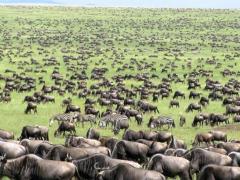
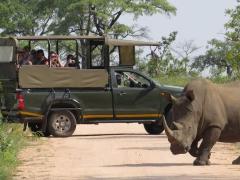
Joseph Kithitu, MD at Hemingways Travel, said: “In terms of booking patterns, we are indeed seeing a noticeable preference for single-country itineraries, particularly within Kenya. Many travellers are choosing to combine destinations such as the Maasai Mara, Amboseli, Samburu, Laikipia and the Kenyan coast rather than undertaking multi-country East African circuits.”
He attributes this trend to several key drivers. Cost efficiency remains a major consideration with travellers seeking to maximise value while still enjoying premium safari experiences. Convenience is another important factor as single-country itineraries reduce the complexity of border crossings, visa requirements and multi-leg logistics.
“There is increased interest in slower, more immersive travel where visitors spend more time exploring one country instead of rushing through several,” Kithitu added.
The impact of this trend has been broadly positive for the sector, he noted. Longer stays within Kenya translate into increased tourism expenditure across multiple regions, more balanced distribution of visitor flows and greater opportunities for local communities and tourism enterprises. Importantly, it also enhances the overall visitor experience, allowing for more relaxed and meaningful travel.
Diverse itineraries
Bainito Musumba of Private Safaris said Kenya’s wide range of safari destinations is helping to drive the trend.
“These areas all offer experiences that vary significantly,” he said, referring to the Maasai Mara, Amboseli, Tsavo, Samburu, Ol Pejeta, Solio and Meru.
Musumba also noted that evolving itineraries have contributed to the expansion of tourism infrastructure and investment into previously less-visited regions. This diversification, he argued, has positive knock-on effects for conservation, employment and local livelihoods.
He pointed to emerging conservation models in Kenya, including regenerative tourism approaches that support ecosystem restoration in arid and semi-arid regions such as parts of Laikipia and Tsavo. Wildlife populations are increasingly being supported through community conservancies and private-public partnerships enabling ecological recovery and sustainable tourism growth.
“These spaces are now supporting employment, research and conservation work. Most importantly, travellers are beginning to appreciate what the country has,” Musumba said.
Knowledgeable travellers
Tour operators are also observing more refined traveller preferences at the planning stage. According to Dianne Kokkonidis of Wild Wings Safaris, modern travellers are arriving with significantly more research and clearer expectations than in the past.
“Rather than trying to see as many parks as possible, many are looking for contrast – combining destinations that offer different landscapes, wildlife and safari experiences,” she said.
Destinations such as Laikipia are attracting growing interest, driven partly by online content and conservation success stories, Kokkonidis added.
She said the trend is helping to spread tourism benefits beyond Kenya’s traditional safari hotspots.
However, itinerary planning remains important, Kokkonidis cautioned.
“A well-paced itinerary with a handful of complementary destinations almost always delivers a better safari than trying to squeeze too much into a limited number of days,” she said.
According to Richard Trillo, East Africa Manager at Expert Africa, enquiries and bookings for Kenya have increased significantly compared to last year, with most visitors combining at least two safari destinations, led by the Mara conservancies, Laikipia, Amboseli and Samburu. There is also a clear hierarchy in the quality of visitor experiences across Kenya’s protected areas, he added.
“The best-managed destinations are the private and community-owned conservancies followed by the long-established national parks managed by the Kenya Wildlife Service. The legacy national reserves run by local authorities generally rank behind them in terms of management and visitor experience,” Trillo said.
However, he believes Kenya still has room to improve the visitor experience.
Trillo cited the Electronic Travel Authorisation process as a deterrent as some travellers find it unnecessarily complicated.