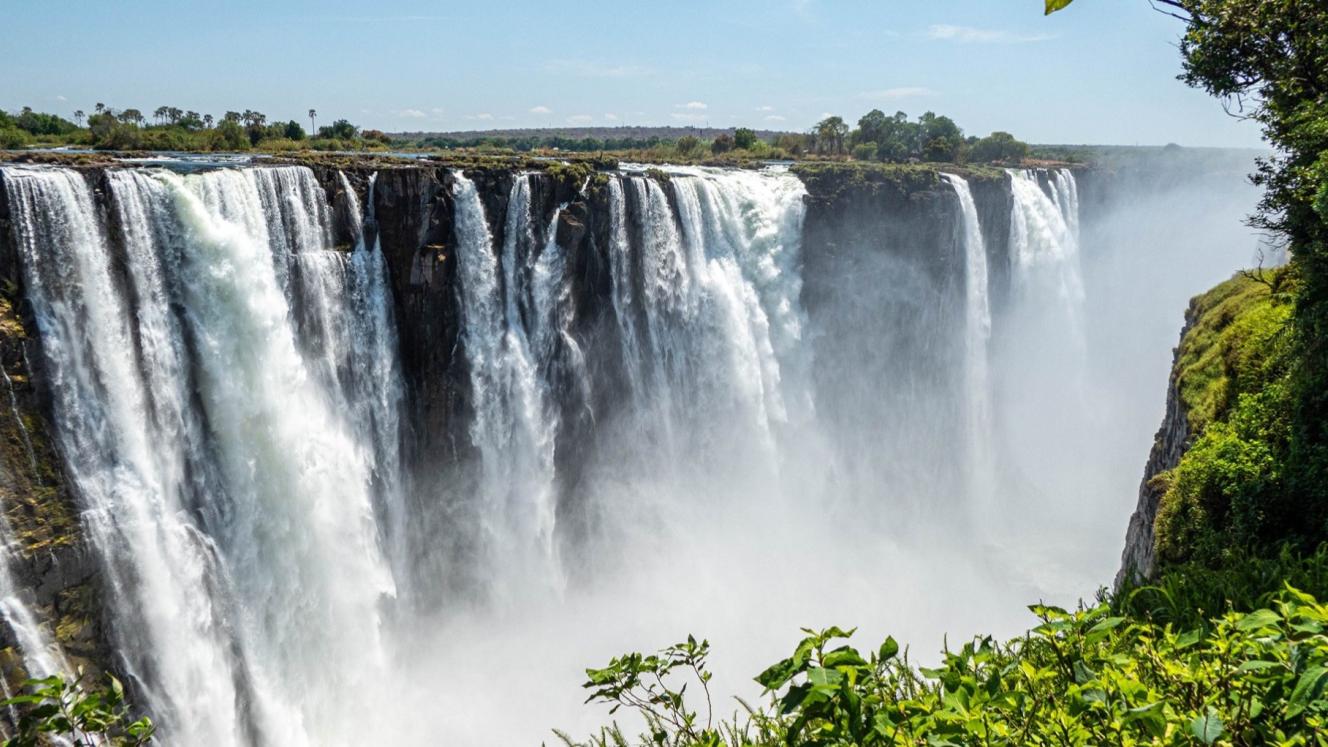
Zimbabwe has signed a US$67 million agreement to develop bulk infrastructure for a new tourism and commercial precinct at Victoria Falls ahead of the development of hotels, lodges, villas and a golf estate, among others.
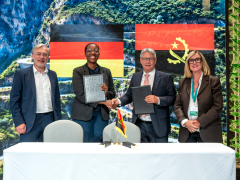
A commercial joint venture agreement will fund infrastructure at Lot 1 of the 271ha Jafuta Estate in the Masuwe Special Economic Zone about 10km from Victoria Falls.
The project will provide water and sewer reticulation, electricity distribution and telecommunications infrastructure as the groundwork for planned hotels, villas, chalets, lodges, holiday homes, a golf estate, commercial and financial facilities, medical services, Tourism Academy and the Victoria Falls International Cricket Stadium. The agreement follows Cabinet approval of the public-private partnership in April 2026.
Africa Albida Tourism Sales and Marketing Director Anald Musonza told Tourism Update that the investment is “massive”, describing it as “one of the most structured investment approaches that has been put in place to grow the destination sustainably and provide significant infrastructure that will allow future development to take place in sync with the sustainable growth of Victoria Falls”.
He said, importantly, it is also moving development away from the main attraction. “Instead of concentrating all development close to the Victoria Falls World Heritage Site, it is pulling investment away from the site, which is exactly what we need for the destination.”
Ancillary investments are also coming into the same area, including private hospitals, hotels and businesses such as banks, Musonza added.
“All of that helps establish a solid base for a world-class destination with world-class facilities. It will ensure that Victoria Falls and the surrounding area are able to accommodate future tourist arrivals and future business in a good way.”
Concerns
Africa’s Eden CEO Jillian Blackbeard has a more cautious view of the implications of further development.
While she voiced a meaningful vote of confidence in the destination and that it has real potential to create employment and strengthen supporting infrastructure, she cautioned that the scale of investment alone isn’t the measure of success.
“What matters is whether it’s channelled into planned, structured development that benefits the destination as a whole, not just the immediate precinct,” Blackbeard said.
She also identified current infrastructure gaps around Victoria Falls, including water, waste management, roads and supporting services, and warned that airlift and border crossing efficiency will need to keep pace with growth.
“Current flight capacity into Victoria Falls doesn’t yet match the pace of ground infrastructure development and border crossing efficiency needs equal attention if visitor numbers are going to scale sustainably,” she said.
Blackbeard also questioned the urgency of additional tourism capacity, noting that research by Africa’s Eden with JLL and the World Travel & Tourism Council shows room supply is already growing faster than arrivals.
“Our priority is filling and sustaining existing businesses at higher occupancy and spend rather than adding further capacity for its own sake.”
She said cumulative development is a central concern.
“Victoria Falls’ core asset is its natural environment. If development concentrates further in an already well-developed precinct, it risks amplifying – not easing – those cumulative pressure concerns,” Blackbeard pointed out.
“We’d rather see investment of this scale used as a springboard to disperse tourism value into wider, less developed regions of the country where it can support communities that haven’t yet benefited from tourism growth. Quality and distribution of development matter more than volume.”
She called for robust environmental impact assessments, protection of wildlife corridors, controlled development density and adequate water and waste infrastructure alongside improved management of visitor flows and meaningful consultation with conservation stakeholders, UNESCO and local communities.
A new phase for Victoria Falls?
The investment could ultimately change the nature of Victoria Falls as a tourism destination but the two operators differ on the conditions required for that change to be successful.
Musonza, who has lived in Victoria Falls for 30 years, believes the current development model can allow the town to grow while reducing pressure on the World Heritage Site.
“In my view, we need to embrace this development and ensure that it continues to be carried out in the properly structured manner in which it is happening at the moment,” he said.
Blackbeard similarly sees potential but warned that growth must not come at the expense of what makes the destination distinctive.
“The change can be positive but only if it strengthens Victoria Falls without over-urbanising or over-commercialising it to the point where the natural character and authenticity that draw visitors are lost.”
She supports the investment, provided it sits within a planned, carrying capacity-conscious approach rather than further concentrating development in an area that’s already commercially strong.
“Used well, this could be a springboard to disperse tourism value across the wider region through clear, targeted travel trade education that helps operators and buyers sell lesser-known parts of the destination alongside Victoria Falls. Growth can absolutely be accommodated but it has to be matched by upgraded park access management, airlift, roads and border infrastructure and a firm commitment to protecting the areas under UNESCO World Heritage status.”