Zanzibar is preparing for a 33% increase in airline seat capacity over the next six months but growing competition is putting pressure on hotel rates as the destination seeks to attract higher-value tourism and spread investment beyond its main island.
Tourism intelligence released by the African Travel and Tourism Association (ATTA) at the Essence of Africa buyer forum, in Zanzibar from October 20-22, shows that inbound air capacity increased by 11% between October 2025 and October 2026 with long-haul capacity growing by 26%.
Over the next six months, domestic capacity is forecast to rise by 36% and international capacity by 31% year on year. Forward flight bookings through global distribution systems are also up 10% for travel through March 2027.
The findings, compiled using the Data Appeal-Mabrian Travel Intelligence platform, highlight particularly strong growth in connectivity through the Gulf.
The UAE, Zanzibar’s fourth-largest international market by available seats, is forecast to record a 57% increase in capacity over the next six months. Capacity from Qatar is expected to grow by 17% while Oman is projected to increase by 108%.
European markets are also performing strongly with forward bookings from the UK up 51% year on year, Germany 14% and France 8%.
Russia is another growing market following the introduction of direct Moscow-Zanzibar services in July. Forward bookings from Russia have increased by 98% year on year for travel through March 2027.
Virginia Messina, CEO of ATTA, said the island’s reputation, natural environment and increasingly diverse visitor offering are encouraging airlines to expand capacity.
However, she cautioned that more flights and bookings must translate into sustainable commercial returns, investment in the visitor experience and benefits for local communities.
“These findings reinforce the importance of continued investment in hospitality standards, skills and tourism product development as Zanzibar expands its international reach,” she said.
Hotel rates under pressure
Despite growing demand, increased accommodation supply is putting pressure on hotel rates.
Data Appeal’s analysis shows that weighted average room rates advertised through online travel agencies fell by approximately 18% in the 12 months to October 2026 with decreases across all hotel categories.
Three-star properties account for 57% of Zanzibar’s online hotel supply, followed by four-star hotels at 28% and five-star properties at 15%.
The destination continues to enjoy a strong international reputation, scoring 86 out of 100 on the Global Tourist Perception Index. However, its Tourism Product Index stands at 65 while hospitality satisfaction scores 74. Three-star properties score 69 compared with 77 for five-star hotels and resorts.
“As Zanzibar continues to attract international investment and new hospitality brands, maintaining competitiveness while protecting the quality and value of its tourism product will be essential,” Messina said.
Beyond beach tourism
Zanzibar’s government is seeking to increase visitor spending and diversify its tourism offering as international arrivals continue to grow.
The destination welcomed 917 167 international visitors in 2025 – up 24.5% from 2024. More than 633 000 arrived between January and August 2026, including a record monthly total of more than 124 000 in August.
Shariff Ali Shariff, Minister of State in the President’s Office responsible for Labour, Economy and Investment, said: “Our ambition is not simply to welcome more visitors. It is to ensure that every visitor contributes more to our economy and that the benefits of tourism reach more of our people.”
The strategy includes developing cultural, sporting, wellness and culinary experiences to complement Zanzibar’s traditional beach offering.
According to Data Appeal, beaches account for 23% of tourism-related social media mentions, followed by active lifestyle experiences at 19% and arts and culture at 16%.
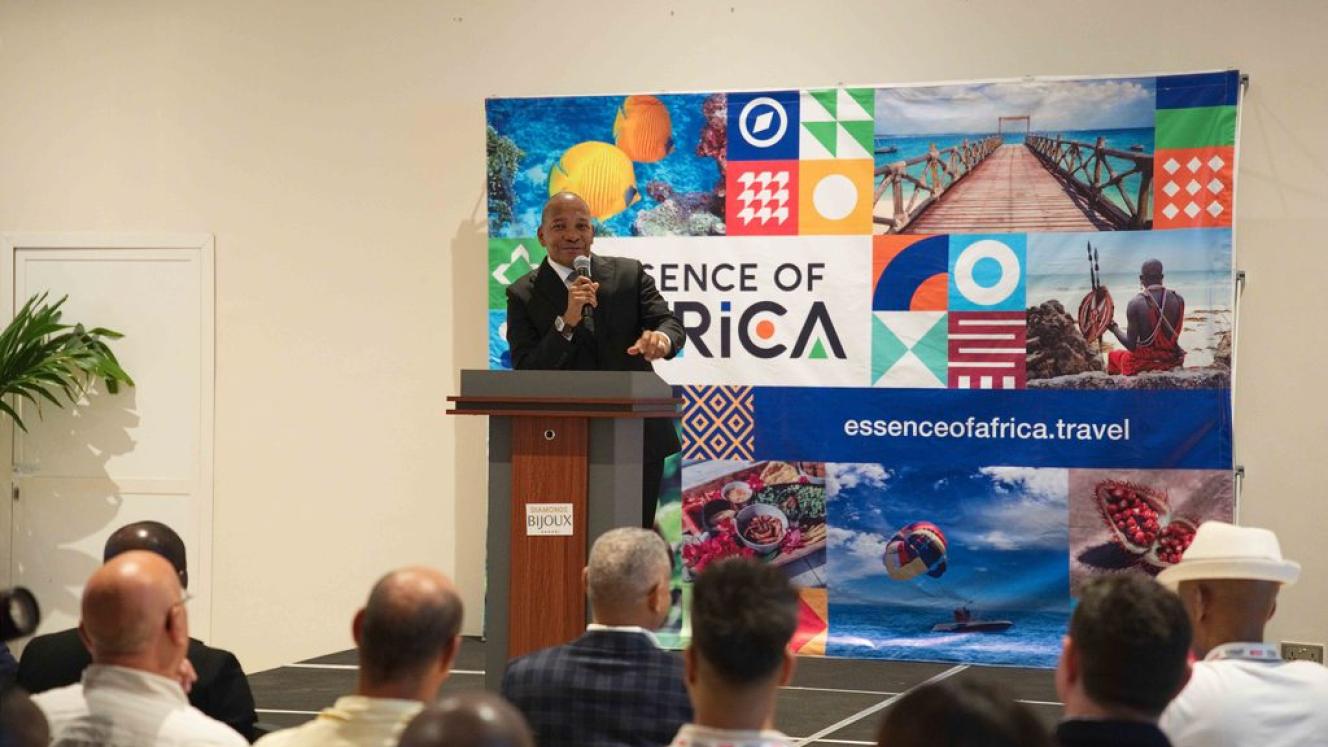
Jacqui Reynolds, Co-Founder of Essence of Africa, said the destination is increasingly presented as more than a place for a week-long beach holiday.
“Zanzibar was traditionally seen as a fly-in destination where visitors arrived on a charter flight, spent a week on the beach and then went home. But we are seeing a shift towards promoting Zanzibar as more than a beach destination,” she said.
Reynolds said the Zanzibar Commission for Tourism is positioning the island for sports tourism, medical tourism, gastronomy and cultural experiences. She cited interest from German buyers in sustainability projects and Chinese buyers engaging with the Kanga Project as signs that visitors and tour operators are looking beyond beaches.
Improved connectivity is helping that transition, she said, making it easier for buyers to develop itineraries that combine Zanzibar with mainland Tanzania and other African destinations.
Pemba targeted for investment
A key part of the government’s diversification strategy is attracting tourism investment to Pemba, which is the less-developed of Zanzibar’s two main islands.
Plans include improving infrastructure and connectivity to support ecotourism, boutique resorts, wellness retreats and marine tourism while preserving the island’s environment and character.
“We do not want Pemba to become another Unguja. We want it to develop its own identity and offer visitors something different,” Shariff said.
Arif Mazrui, General Manager of Fisherman Tours and Travels, said improvements to roads, electricity and air connectivity helped transform Zanzibar’s tourism sector with an estimated 25 hotels and resorts opening over the past six years.
He believes Pemba offers significant opportunities for further development although limited facilities and inadequate airport infrastructure remain obstacles.
Investors are showing interest in the island and government is considering an approach focused on five-star resort development, added Mazrui.
However, he warned that tourism expansion needs to be carefully managed to protect Zanzibar’s heritage, particularly in Stone Town, where the conversion of residential buildings into hotels is changing the character of the historic centre.
“They’re turning every corner and every building into a hotel. So there will be no more people living in Stone Town. It will only be guests and hotels,” he said, calling for tighter controls on new hotel licences.
Business events
Zanzibar is also seeking to strengthen its position in the MICE market.
A proposed convention centre in the Fumba area is part of these plans with government pursuing an agreement with a South Korean company and bank to support the project. Construction is expected to take approximately three years, starting in 2027.
Rahma Sanya, Marketing Director at the Zanzibar Commission for Tourism, said Zanzibar hosted several major meetings and exhibitions over the past three years, demonstrating demand for larger event facilities.