Southern Africa’s developing El Niño weather pattern could create unexpected commercial opportunities for safari operators. Some industry players expect drier conditions to extend peak game viewing into traditional shoulder season months and create new marketing opportunities.
The South African Weather Service has warned that El Niño could bring hotter and drier conditions, potentially lower rainfall, heatwaves and drought conditions across South Africa’s summer rainfall regions during the 2026/27 season.
Chris Roche, Co-Founder and Marketing Director of Wild Expeditions Africa, told Tourism Update that two successive summers (2024/25 and 2025/26) of above-average rainfall increased herbivore, such as impala, populations and replenished groundwater across parts of Botswana, Zimbabwe and South Africa.
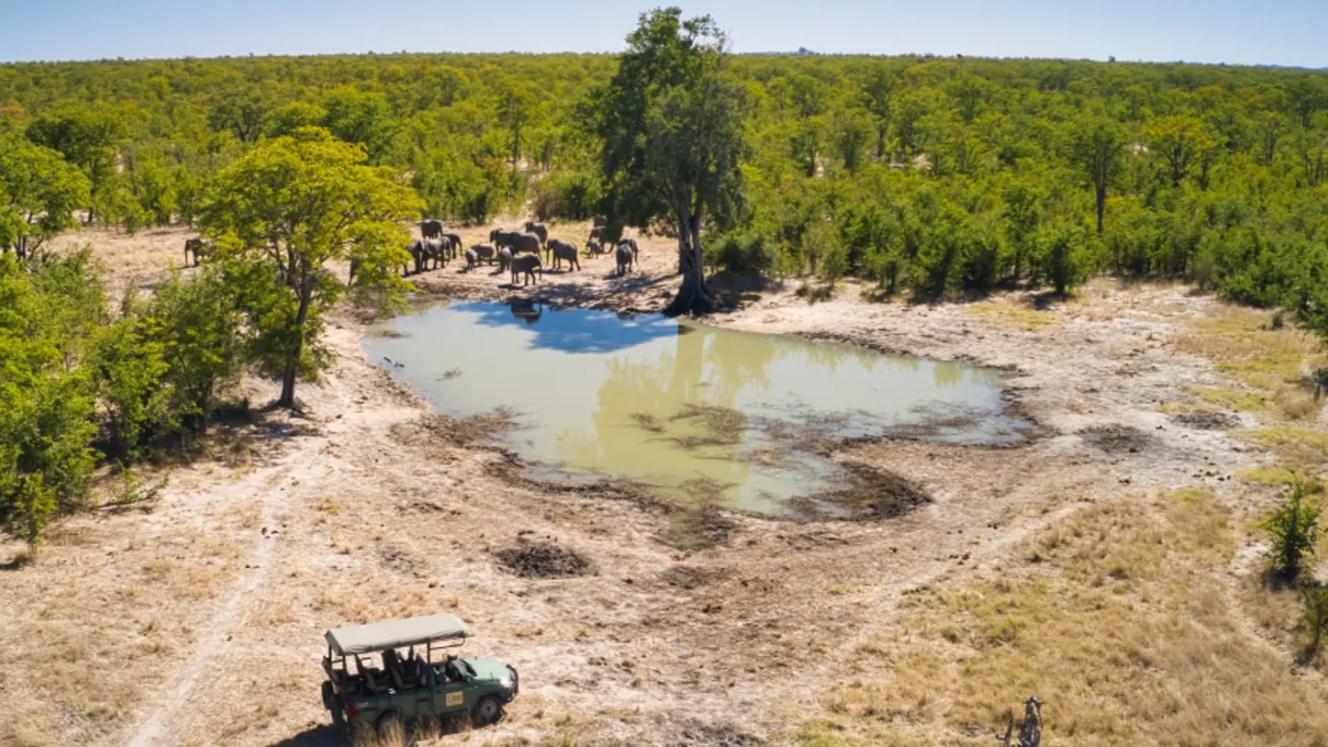
If the forecast drier conditions develop during the 2026/27 summer, he expects wildlife to concentrate around permanent water sources earlier than usual, potentially extending game-viewing opportunities into the traditional shoulder season.
“We can expect that the lushness of the summer season will give way to the dry season of 2027 earlier than has been the case in 2025 and 2026. This is where we will begin to see the effect of the below-average summer rainfall in a way that is noticeable in a safari or game viewing sense,” Roche said.
“What this means is that the so-called shoulder season of May and June, at the beginning of the usual dry season, and the month of November, at the end of the usual dry season, are going to experience game viewing more akin to the typical peak of July to October.”
Roche said this could create an opportunity for operators to market shoulder season travel by allowing travellers to experience peak-style game viewing during periods when accommodation is typically offered at lower rates.
“We believe that the 2027 dry season will extend into the shoulder season months before and after the typical dry season and, as a result, the game concentrations more typically associated with the period of high season rates will be available in months more usually charged at lower rates.”
Changing conditions make expert advice even more valuable when planning safaris, Roche added.
“This is when well-informed and experienced travel advisers working with knowledgeable local partners will differentiate themselves.”
However, he cautioned that operators should avoid overstating the outlook.
“It is critically important not to be sensationalist about this. We don’t yet know the strength of El Niño and the impact on Southern Africa. Right now, we see this as an opportunity for excellent game viewing that will benefit travellers and travel advisers. We are waiting for the Southern African Regional Climate Outlook Forum’s September update for a more informed view.”
Simon Stobbs, Wilderness Chief B2B Sales Officer, also expects drier conditions to create strong game-viewing opportunities.
“From a game-viewing perspective, which is what most travellers consider when planning a safari, we anticipate that the drier period could lead to some great sightings with wildlife naturally more concentrated around available water sources.”
Responsible operators should also consider the ecological role of dry periods, he added.
“Any responsible ecotourism operator should not look at this purely from the perspective of how it impacts game viewing. After a wet spell like the one we have just experienced, a dry spell provides nature with an opportunity to reset. Certainly, species that thrive in wetter conditions will face greater challenges, while predators typically thrive in drier periods, and one can expect predator numbers to grow.”
Stobbs said some destinations could particularly benefit from drier conditions.
“Areas with limited surface water will most likely experience exceptional sightings. Many animals will be drawn to the remaining water sources, making them easier to locate. Similarly, predators will often lie in wait at waterholes to seize the opportunity.”
He identified Hwange, Mana Pools, Lower Zambezi, the Linyanti and Chobe systems and Mababe among the areas likely to experience exceptional sightings.
Natural Selection Co-Founder and CEO Dave van Smeerdijk is more cautious. He does not expect El Niño to generate significantly higher demand during the traditional low season in Namibia and Botswana.
“The summer months are our low-demand period in Namibia and Botswana so I don’t think El Niño will be significant enough to increase volume.”
However, he agrees that, if forecasts prove accurate, game viewing could improve during 2027.
“Less rainfall will mean more concentration of game so, in theory, 2027 should be a cracker!”
Van Smeerdijk noted that Botswana has experienced good rains and floods, which he believes should support game viewing over the coming year.
“Additionally, the large expanse of water we have at the moment naturally cools the area around the Okavango Delta.”