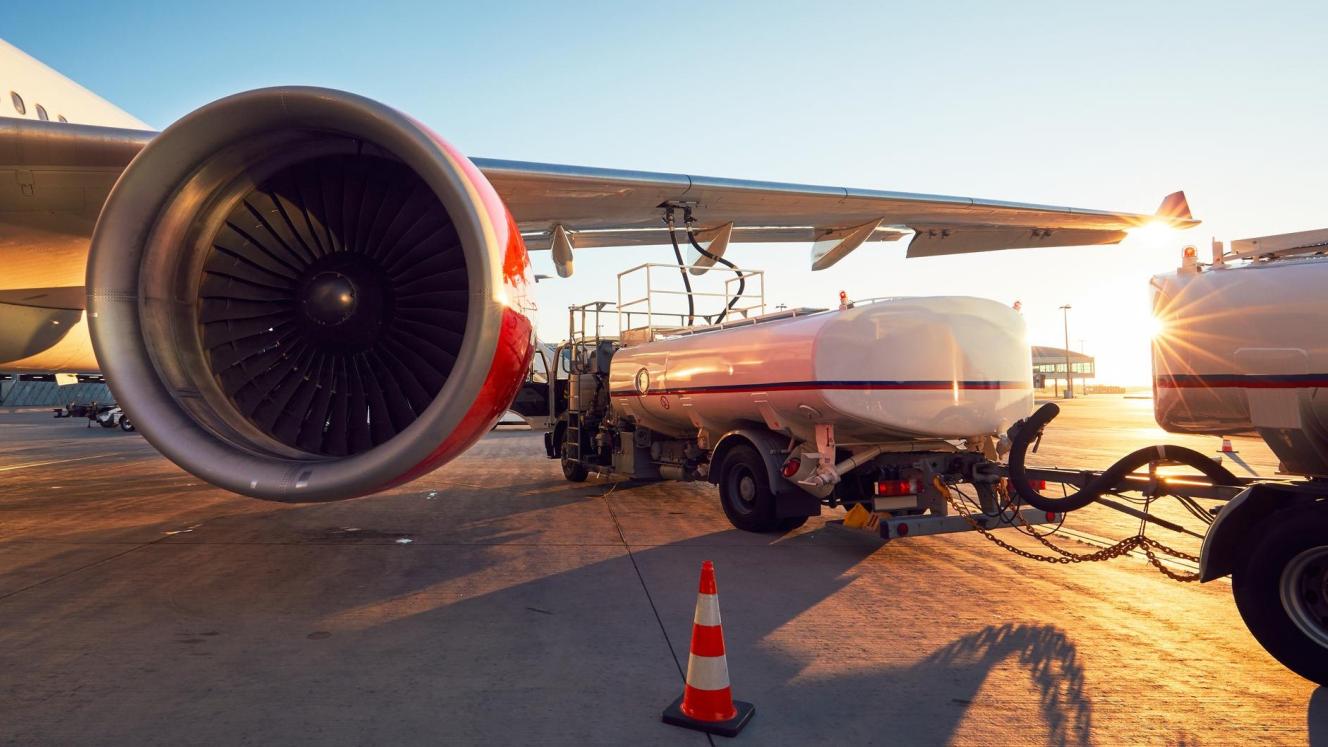
South Africa’s aviation industry is closely monitoring a developing jet fuel supply squeeze following an unplanned shutdown at Sasol’s Natref refinery.
Sasol confirmed, on August 26, that the unplanned shutdown of a downstream unit at Natref affected its ability to meet full supply commitments for certain petroleum products, including jet fuel supplied to customers at OR Tambo International Airport (ORTIA).
The company said it will continue to partially supply its jet fuel customers at ORTIA while implementing mitigation measures and working to restore normal operations.
ACSA has since moved to reassure airlines and passengers that there is no immediate threat to flight operations.
In a statement on August 27, ACSA said Jet A-1 stock levels across its major international and regional airports remain stable and flights are operating normally.
“South Africa’s aviation network relies heavily on a combination of imported and locally refined fuel and, with comprehensive mitigation plans actively deployed, there is no immediate expectation of flight disruptions. ACSA, the Board and Minister of Transport Barbara Creecy are monitoring the situation daily to keep operational impact to a minimum,” said Charles Shilowa, Acting CEO of ACSA.
At ORTIA, current stock cover is maintained at five to six days with Natref currently supplying 70% to 80% of the airport’s jet fuel demand. The remaining supply requirements are met via the Multi-Product Pipeline from the coast and dedicated rail deliveries.
At Cape Town International Airport, current demand is supported by stock levels of around 4.5 days’ cover with daily replenishments. Stock levels are expected to build to approximately 5.5 days’ cover following the return to service of a fuel storage tank from normal planned maintenance on August 26. Primary supply remains secured through the Astron refinery, which accounts for 70% to 75% of stock, with the remaining 25% to 30% sourced via marine imports stored at the Burgan terminal.
Across the rest of the network, jet fuel stock reserves remain robust, ACSA said. King Shaka International Airport maintains approximately 12 days’ stock cover. Chief Dawid Stuurman International Airport as well as King Phalo, George, Bram Fischer, Kimberley and Upington airports operate on 100% import-backed supply structures with daily replenishments. Stock levels are maintained at a minimum of six days’ cover.
“To guarantee ongoing fuel security, ACSA enforces rigorous governance controls across all locations. This includes daily stock monitoring, maintaining a minimum baseline of five days’ stock at fuel farms and holding aggregated daily stock records,” Shilowa added.
ACSA said it will trigger formal crisis management procedures if stock cover at any airport falls to three days.
Airlines consider tankering options
For airlines, contingency planning is already underway, with fuel tankering considered as an option to manage the potential impact.
Tankering involves carrying additional fuel from an airport where supply is more secure, reducing an aircraft’s reliance on fuel uplift at ORTIA. While it can provide an additional buffer during a supply constraint, carrying extra fuel adds weight to the aircraft and consequently increases fuel consumption.
Airlink told Tourism Update that it has contingency measures in place and is monitoring the situation closely.
Kirby Gordon, Chief Marketing Officer of FlySafair, also told Tourism Update that the situation is “very much in hand” for the airline with additional volumes secured through alternative suppliers.
“It’s a dynamic situation. For now, we’ve managed to put contingencies in place with our other suppliers and we’ll continue to monitor the situation closely,” he said.
Gordon pointed out that this could also impact international carriers operating larger aircraft with higher fuel requirements. During previous South African fuel supply disruptions, international airlines were, at times, required to uplift fuel elsewhere or make technical stops, he said.
The South African situation comes as Namibia faces its own jet fuel supply concerns at Hosea Kutako International Airport, as reported by sister publication Travel News.