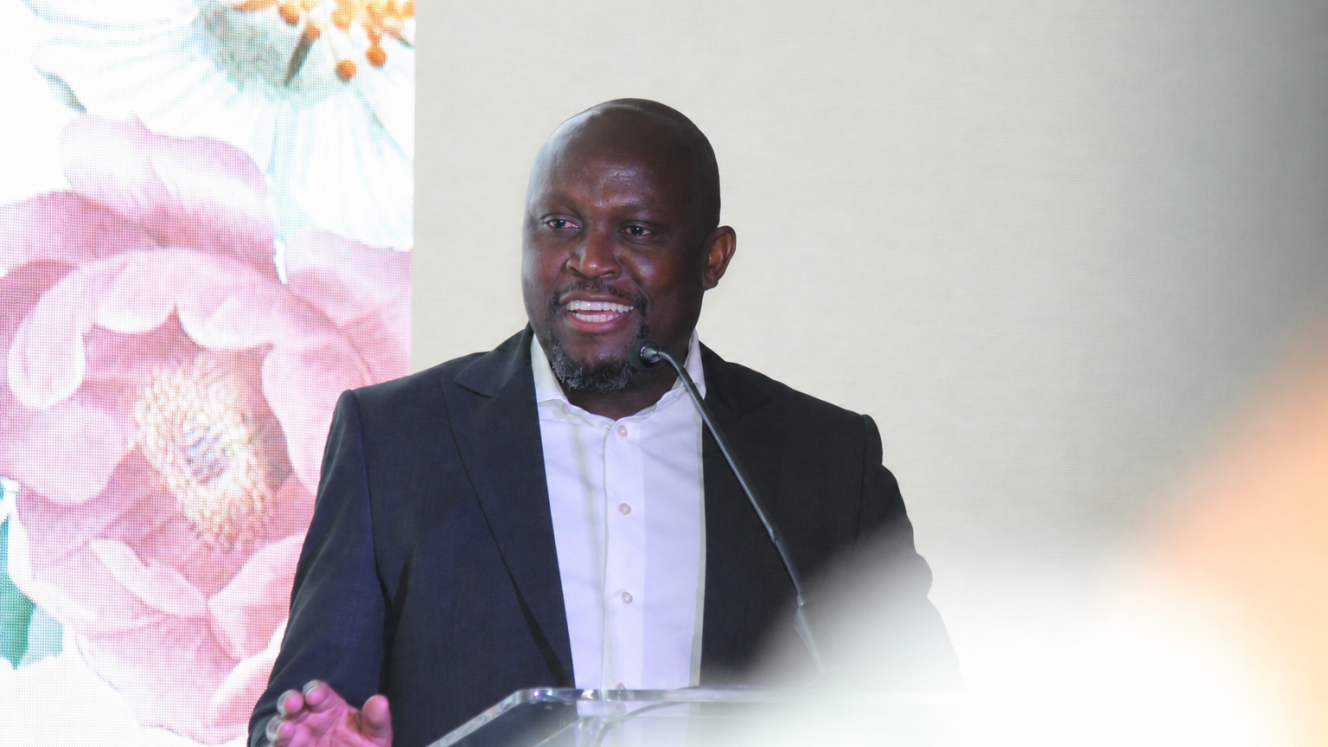
South Africa needs to move quickly with air access and destination marketing if tourism is to deliver on the growth targets set for the third phase of the Government-Business Partnership, according to TBCSA CEO Tshifhiwa Tshivhengwa.
Tshivhengwa told Tourism Update the next 18 months should focus on accelerating existing industry priorities rather than launching new initiatives with securing additional air capacity and strengthening South Africa’s performance in key source markets at the top of the agenda.
In the third phase of the Government-Business Partnership, launched by President Cyril Ramaphosa on August 20, tourism is one of three new drivers for job creation and economic development. Targets include 750 000 additional international air arrivals and an additional R9 billion to R10 billion (US$562 million to US$624 million) contribution to GDP by December 2027.
Tshivhengwa, who consulted with government on this phase, said tourism’s inclusion in the partnership represents an important shift in recognition of the sector’s economic role.
“For years, all of us in the tourism space have been talking about how tourism is a catalyst for growth and employment. The fact that tourism was chosen as one of the industries in this Government-Business Partnership shows how critical it is.”
Tshivhengwa said the partnership will work in tandem with the Tourism Growth Partnership Plan (TGPP) where many of the priorities already overlap.
“We are choosing two things that we need to do in the industry to ensure it grows and these are also part of the TGPP.”
Key priorities
The first priority is to meet targets by improving air access, Tshivhengwa pointed out. “This requires the Minister of Transport to increase slots and for us to talk to our counterparts in other countries about accommodating more frequencies or introducing new routes to South Africa. There is also a need to provide incentives to attract more airlines.”
Secondly, implementation of destination marketing plans must improve, he added. “The private sector has already tested various international markets. Now it is time to accelerate the process as South Africa cannot afford to lose market share in new and traditional markets.”
Tshivhengwa highlighted the need to build market share in China and India as arrivals from those markets have declined.
Public and private-sector roles
While the nature of the Government-Business Partnership remains to be seen, Tshivhengwa shed some light on the role the private sector.
“The private sector will invest where there is a return on investment, which will happen automatically. Public investment will take the form of infrastructure development. We need infrastructure owned by municipalities to be fixed for tourism. If roads owned by municipalities are not fixed, we have a problem.”
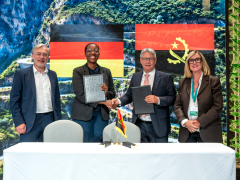
the recent agreement between the Department of Tourism and the Department of Public Works and Infrastructure is an example of public investment in tourism. The Department of Public Works and Infrastructure has committed its specialist investment and project preparation capacity to the tourism portfolio so that the Department of Tourism can convert infrastructure concepts into bankable, investment-ready projects.
Tourism interventions are expected to create around 23 200 additional direct jobs from the partnership’s focus on air access and destination marketing, Tshivhengwa said. Other tourism initiatives could create additional employment and sustain more than one million direct jobs within the next three years, he added.
Tshivhengwa said the partnership will be driven by a project plan with specific responsibilities, deadlines and measurable outcomes and progress reported to Business Unity South Africa every three months. For air access, this will include tracking additional slots secured as well as airlines adding frequencies or routes and the resulting increase in capacity and arrivals.
The TBCSA leadership conference in October will provide an early opportunity to assess progress, Tshivhengwa said.
“We want to give feedback on what we committed to do. We will discuss this partnership and how we can fully harness this opportunity and take a leadership position that the industry deserves.”
He noted that the partnership is a considerable milestone for tourism.
“For far too many years, we have collectively been fighting for tourism to be a big deal. We said tourism is important. The government is now saying ‘We heard you’. We still need to prove that it’s important. A unique opportunity with unique challenges lies ahead.”