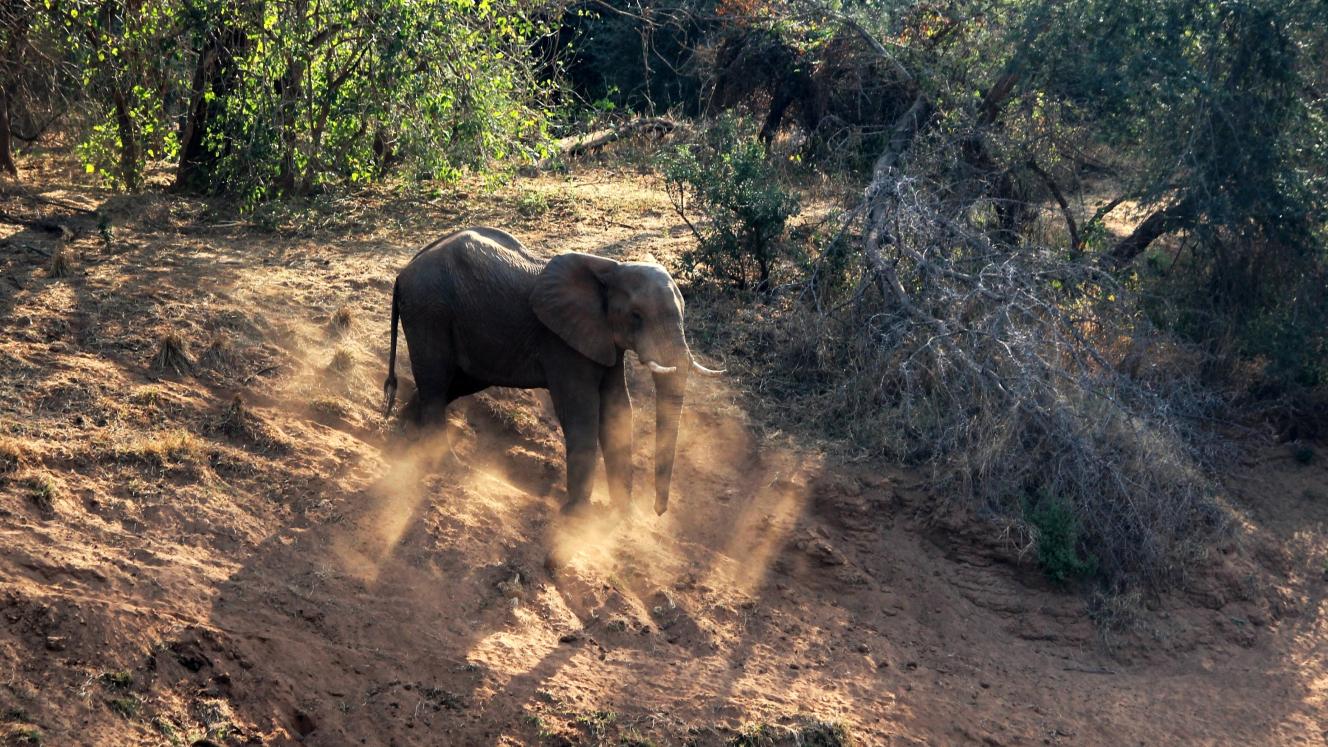
Proposals to reduce elephant populations in some of South Africa’s reserves has raised a difficult question for the tourism industry: could culling damage the country’s reputation among international travellers or could failure to manage elephant numbers ultimately undermine the safari product?
Elephant management is currently being revisited amid calls for population reductions, including lethal removals, particularly from provincial authorities in North West and KwaZulu-Natal.
On August 11, the Portfolio Committee on Forestry, Fisheries and the Environment heard the final report of the Provincial Elephant Task Team on elephant management at Madikwe and Pilanesberg. Its recommendations included immuno-contraception, habitat restoration and water management as well as targeted removals, which could involve culling.
The recommendations have implications beyond conservation. Madikwe and Pilanesberg are important wildlife tourist destinations, which raises concerns about the effect of lethal elephant management on South Africa’s appeal to international visitors alongside the threat of failure to manage the ecological impacts of elephant populations.
Adam Cruise, an investigative environmental journalist who has written extensively about the elephant management debate, argues that culling could severely damage tourism in the region.
“Negative perception will abound. Culling is a far bigger risk than any other potential consequence. It would put a big black mark against Madikwe and Pilanesberg in terms of tourist visits.”
In a Tourism Update poll, the majority (53%) of respondents said the reinstatement of elephant culling could make tourists less likely to book a trip to South Africa.
Richard de la Rey, Founder of Dark Giraffe, said the impact of lethal management on tourism is highly nuanced with risks attached to intervention and allowing elephant populations to grow unchecked.
“It really is a case of ‘damned if you do, damned if you don’t.’ From a purely tourism perspective, the biggest risk is almost certainly the controversy surrounding how population reduction is carried out. The risk is arguably greater for international visitors than domestic. Higher-value wildlife tourism markets such as the UK, Germany, the Netherlands and the US tend to have deeply emotionally, engaged wildlife audiences.”
De la Rey pointed out that conservation decisions involving lethal management, particularly those involving elephants, generate significant media coverage and social media reaction and that kind of visibility can influence travel decisions.
“A destination associated with culling, even if it is scientifically justified, risks being perceived negatively by travellers who have not engaged deeply with the reasoning behind the decision. The reputational risk is real even if the ecological rationale is sound,” he said.
“A poorly communicated or high-profile culling programme can generate immediate, global negative sentiment that is very difficult to reverse. Social media amplifies that kind of story rapidly and emotionally and a destination can be placed at the centre of a damaging narrative almost overnight.”
Economic stakes
The potential consequences for reserves like Madikwe and Pilanesberg would be substantial. In parts of North West and KwaZulu-Natal, wildlife tourism is a significant economic driver, supporting jobs, businesses and communities around the reserves. A significant dip in visitor numbers over a sustained period of time could have far-reaching consequences for parks directly as well as the local communities, small businesses and conservation funding.
However, De la Rey warned that any potential environmental degradation resulting from poorly managed elephant populations would pose an entirely different threat to the parks.
“Unchecked elephant populations can cause severe and irreversible habitat damage, stripping vegetation, destroying trees, degrading water sources and ultimately reducing biodiversity across the reserve. The long-term consequence of that is a poorer safari experience: fewer trees, less diverse vegetation, a simplified ecosystem and potentially lower overall wildlife density as other species are pushed out or struggle to survive,” he said.
“Visitors who return to a reserve they loved 10 years ago and find it visually degraded will notice even if they cannot articulate exactly why. So, while the risk of inaction is just as real as the risk of intervention, it simply plays out over a longer timeframe and in a less visible way.”
De la Rey noted that several reserves and countries have navigated this debate with varying degrees of success.
“The lesson is that transparency, proactive stakeholder engagement and a clear conservation narrative are essential. Silence or poor communication in the face of a controversial management decision almost always makes the reputational impact worse.”
He said elephants hold a unique cultural and emotional status globally and the standard of scrutiny applied to their management tends to be far higher than it would be for most other species.
“Effective communication and education can shift perceptions but that requires sustained, proactive effort, a compelling narrative and clear absence of other viable options. Even then, it will not reach everyone.”